I spent the last week traveling between East Coast cities on one of those overly-analyzed and dreaded parental excursions: the college tour. My 16-year old daughter and I trooped from New York City to New Haven to Middletown to Providence to Amherst and then Boston (read Columbia, Yale, Wesleyan, Brown, Amherst and Tufts) in search of that elusive, perfect college.
We were not alone. In every city, on every tour, we joined hundreds of other anxious parents and high school juniors and listened to surprisingly funny and eloquent descriptions of some of the nation’s most elite schools. We traipsed in large hordes behind backwards-walking student tour guides and peeked in numerous Gothic and Georgian buildings.
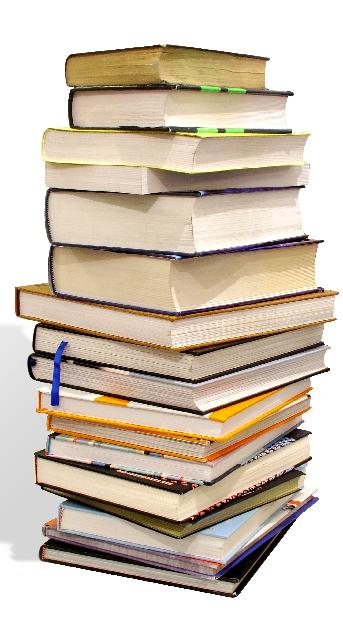
The entire tour was becoming a blur until I went into the newly-renovated BrownUniversity bookstore. I was in search of Dexter Filkins’ book, The Forever War, because my editor in New York said it was an unputdownable kind of book. I had brought two new releases on my trip from California, but hadn’t been able to get into them, so I was in search of something great.
It took the bookstore staff awhile to locate Filkins’ book, and I poked around while I waited. I picked up a book on the front table and immediately knew I had to buy it. It was called Admission, by Jean Hanff Korelitz, and it tells the story of a PrincetonUniversity admissions officer who goes through a life crisis. Tidbits about the kinds of applicants who apply to Ivy League schools are scattered throughout the book, as are snippets of admissions essays and thoughtful musings on what distinguishes a remarkable student from the merely great. How can I not buy this book, I thought? It’s what I am living through.
Korelitz, of whom I had never heard, but who must be talented since her agent is Suzanne Gluck, worked as a reader for Princeton in 2006 and 2007. (It turns out she is the cousin of Helene Hanff, who wrote 84 CharingCross Road. Her husband, Paul Maddoon, won the Pulitzer Prize for poetry in 2003) She draws heavily on her experience in this novel, which almost reads like a (fun) manual on how to apply to a prestigious university.
The book saved me. Suddenly the dreary task of driving hundreds of miles between pristine campuses seemed easy. The drone of the admissions officers made sense. The state of the dorms and the taste of the food were put in context. In short, the book was a delight, a fun read, and an informative tome for a mother of a junior in high school. And for aspiring applicants as well. My daughter and I kept fighting over who got to read Admission. In my mind, that is high praise.
I dropped into St. Martins Press in New York this week for a quick visit with my editor to talk about the paperback edition of Towers of Gold. I brought my 16-year old daughter along and thought it would be fun to show her the inner workings of a major publisher.
St. Martins is located in the historic Flatiron Building in New York, which celebrated its centennial a few years ago. It's located on 23rd Street between Broadway and Fifth and has a
great view of the city.
I asked to see the St. Martin's slush pile, which I imagined as a tower of manila envelopes and loose query pages. Vicki Lame, an assistant editor, showed me where the publisher stores unsolicited manuscripts and I was surprised to see it was smaller than I expected. She said that an editorial assistant had just gone through the pile -- a process that they do twice a year.
The slush pile only fills up one shelf in this bookshelf.
The world of reading proposals is changing as well. Editors at St. Martin's and other Macmillan imprints no longer read submissions from agents on paper. Agents e-mail proposals and they are loaded onto Sony e-readers. So there was only a minor tower of paper on the desk of Michael Flamini, my editor. (He still reads and edits completed manuscripts on paper.) Here is a picture of Michael holding up his e-reader.
I love to find out which books Michael has coming out. I picked up a galley of Mile High Fever, a book about the Comstock Lode by Dennis Drabelle, which is coming out in July. Flamini also has an autobiography of Vic Damone coming out that sounds fun. Flamini keeps the books he has edited on display in his office; if you look closely enough you can see Towers of Gold on the bottom shelf.
The Hearst Corporation is still keeping mum about the number and names of people who have taken a buyout from the San Francisco Chronicle, but a few more names have come out.
One of the paper’s top reporters, Seth Rosenfeld, who has produced stories that have garnered national attention, is leaving. Rosenfeld has written extensively about the secret doings of the University of California, and won awards for a 2002 series on how the FBI illegally gathered information at the university during the Cold War, and then tried to cover up its involvement.
Steve Rubenstein, who wrote column-like stories on quirky people and places around the Bay Area is departing.
Other departures include:
Ruthe Stein, who writes about the film world.
Tanya Schevitz, an education reporter.
Bill Burnett, real estate editor
Jennifer Thelen, a copy editor
Steve Hornbostel, a page designer
John Batteiger, a business wire editor
Rich Pestoric, an arts and graphics designer
Long time culture and arts reporter Steve Winn left recently as well.
UPDATE April 3, 2009:
Here are some additional names of reporters and editors leaving the Chronicle:
Elizabeth Fernandez, health and medicine reporter
George Raine, business reporter (advertising and marketing)
Gwen Knapp, sports columnist
Rico Mendez, page designer
Janet Fletcher, food reporter
Reyhan Harmanci, Datebook trends reporter
Glenn Schwarz, sports editor
Greg Ambrose, news and business copy editor
Rod Jones, news copy editor
Beth Hughes, news copy editor
The business side – advertising and classified – is also losing many employees.
Many of these reporters apparently were motivated to accept a buyout in order to preserve their pensions. The pension fund has lost about $25 million in value with the recent stock market dip. If reporters agreed to depart by April 3, 2009, they could get their pension paid out in a lump sum and retire by 55.
With the drop in the pension fund’s value, Hearst apparently plans to change its retirement rules, moving up the age of retirement to 65 and switching to an annuity, which pays out annually, rather than a lump sum retirement. For many reporters in their 50s, staying on under those circumstances just didn’t pencil out.
In response to all these departures, the Newspaper Guild is forming a new unit for freelancers. They are going to hold their first meeting Friday April 3 at noon at the California Media Workers building at 433 Natoma Street in San Francisco.
The wisteria outside my door is just coming into bloom
April 1 is the start of National Poetry Month. Norton has put up a fun website where you can listed to poets like Robert Pinsky and Kim Addonizio others read their own poems as wall as other people’s poems.
A lot of Bay Area writers have new books coming out:
Joan Gelfand ‘s newest book of poetry, A Dreamer’s Guide to Cities and Streams, has just been released.
Catherine Brady’s latest collection of short stories, The Mechanics of Falling, has also just come out. Brady is a San Francisco resident and the stories are set largely in the city.
Jill Wolfson, a former Mercury News reporter who now lives in Santa Cruz, has a new YA novel. It's called Cold Hands, Warm Heart, and it tells the story of two teenage girls, one a fit gymnast who has a terrible accident, and the other a girl born with her heart on the wrong side. When the gymnast's heart is transplanted into the chest of the other girl, interesting things happen.
Brian Eule’s narrative nonfiction book. Match Day, was released in early March to coincide with the day that medical students learn which hospitals have chosen them to be residents. Eule went to Stanford and lives in Northern California.The New York Times wrote about his book and the process.
Michelle Richmond has written a wonderful essay about how both San Francisco and the South feel like home to her, and how those feelings show up in her fiction.
I have also started to blog at SFGate in a section called "City Brights." The San Francisco Chronicle has asked various members of the community -- artists, politicians, lawyers, sport enthusiasts, etc. to write blogs. (A case of a paper laying off its own reporters and getting content for free. More on that later.) My latest entry is about the grind and glory of the book tour.
Names are trickling in of the San Francisco Chronicle reporters who are taking a buyout. More than 40 are leaving in this round, and collectively they have more than 1,000 years at the institution. (This is only a partial list, as more than 80 people have applied for the buy out.)
Some of the paper's veteran reporters and biggest names are leaving. It looks like music, books and arts coverage will be hit hard, as well as the photo department.
Here are the names:
Joel Selvin, who has covered the rock and roll scene for 30 years or so.
Carl Hall, a longtime science reporter currently on leave.
Tom Meyer, editorial cartoonist.
Zachary Coile, a long-time reporter in the WashingtonD.C. bureau.
Nancy Gay, who covers 49ers football and other major league teams.
Three of the papers top culture writers are departing, including Jesse Hamlin, Edward Guthmann, and Heidi Benson. They frequently profile authors, actors, and musicians.
Sabin Russell, who has covered science for decades.
Alison Biggar, the long-time editor of the Chronicle Magazine.
Sylvia Rubin, who covers fashion.
Bernadette Tansey, a biotech reporter. (She has been writing a new feature each Sunday that I love, a round-up of books on a particular business topic, but done in a very clever way.)
The photography department will take a big hit as six photographers, including Pulitzer-Prize winner Kim Komenich, are departing. The others include Michael Maloney, Craig Lee,Eric Luse, Mark Costatiniand Kurt Rogers, a sports photographer
Other departures include:
Kevin Albert, editorial assistant
Greg Ambrose, copy editor
Charles Burress (who has covered Berkeley for years.)
Peter Cafone, sports copy editor
Ken Costa, graphic designer
Dan Giesin, sports copy editor
Janice Greene, editorial assistant on the op-ed page
Elizabeth Hughes, copy editor
Leslie Innes, Datebook editor
Timothy Innes, foreign news wire editor
Rod Jones, copy editor, news
Eric Jungerman, designer
Kathy Kerrihard, library researcher
Simar Khanna, editor of Home and Garden section
Bonnie Lemons, copy editor, news
Glenn Mayeda, editorial assistant, sports
Johnny Miller, library researcher
Shirley-Anne Owden, copy editor, features
Courtenay Peddle, copy editor, news
Lee Sims, copy editor, news
Michelle Smith, a sports reporter who covers women’s basketball
Patricia Yollin, metro reporter
The deadline for taking a buyout is Tuesday, and after that the Hearst Corporation plans to layoff more editorial, production, and advertising staff to bring the cuts to 150. So the list will grow longer. Hearst had wanted to lay off as many as 225 workers, (and threatened to shutter the paper) but backed off after the Newspaper Guild agreed to cuts in vacation time and seniority rules.
Just two years ago the Chronicle, which is losing about $1 million a week, laid off 100 people.
The LA Times Festival of Books has just announced its lineup, and I am delighted to say I will be appearing on a panel titled History: Unknown Los Angeles at 3:30 in Saturday April 25.
I will join fellow authors D.J. Waldie, who wrote Holy Land: A Suburban Memoir, and other books on Los Angeles and Chip Jacobs whose book Smogtown explores one of Los Angeles' most famous products. Bill Deverell, my old friend from Stanford and now the head of the USC-Huntington Center for the Study of California and the West, will moderate.
I have always wanted to go to this festival. Around 450 authors and 140,000 congregate on the campus of UCLA for a weekend. But since I live in the Bay Area, it's a little far to go. Now I have an excuse.
During his two years at UC Berkeley from 1961-63 he was part of the crowd that surrounded the police car holding Free Speech activist Jack Weinberg. But he didn’t go to the follow up sit-in in Sproul Hall because he had a date with a hot chick.
He has worked for Oui, the soft-porn magazine and for Rolling Stone. He served as west coast editor for the Village Voice and edited New West magazine.
Part of his deal with New West made the magazine pay for his children to fly down from San Francisco to Los Angeles twice a month so they could visit their father.
His first job at the Chronicle was as vacation relief; at the end of his time then-editor Bill German asked Carroll if he wanted to write a column. He has been writing it now for 29 years.
His first column explored the idea of the universe as a guest on the Johnny Carson show.
He is the last remaining five-day a week urban columnist in the United States.
He writes from his home in Oakland and has to meet a daily 4 pm deadline.
He loves cats. (But you knew that)
He doesn’t like dogs, not even the dog owned by his beloved granddaughter, Alice.
He is a recovering alcoholic (and says once an alcoholic, always an alcoholic, even when sober.
He suffers from diabetes, but he doesn’t have to inject himself with insulin. He takes pills instead.
He lost 50 pounds in the last year by going on a gruel-based diet.
His favorite books are Pat Barker’s Regeneration trilogy about WWI; Nicholson Baker’s books “TheMezzanine” and “You and I,” and anything by Richard Powers.
All of this information came out March 23 when UC Berkeley Journalism Professor Cynthia Gorney interviewed Carroll in a benefit for ParkDay School in Oakland. It was a terrific evening; Gorney was relaxed and funny and obviously has a lot of fun interviewing her old friend.
I am delighted to report that Towers of Gold: How One Jewish Immigrant Named Isaias Hellman Created California, has been nominated for a Northern California Book Award. The award was established by the Northern California Book Reviewers in 1981 “to honor the work of writers and recognize exceptional service in the field of literature in northern California.”
The non-fiction nominees are:
* Physics for Future Presidents: The Science Behind the Headlines,Richard A. Muller, W.W. Norton
* The Dominant Animal: Human Evolution and the Environment,Paul R. Ehrlich and Anne H. Ehrlich, Island Press
* A Romance on Three Legs: Glenn Gould's Obsessive Quest for the Perfect Piano,Katie Hafner, Bloomsbury
* Towers of Gold: How One Jewish Immigrant Named Isaias Hellman Created California,Frances Dinkelspiel, St. Martin's Press
* In Defense of Food: An Eater's Manifesto,Michael Pollan, The Penguin Press
The nominees in fiction are:
Lady Lazarus,Andrew Foster Altschul, Harcourt
* Doctor Olaf van Schuler’s Brain, Kirsten Menger-Anderson, Algonquin Books of Chapel Hill
* The Delivery Room, Sylvia Brownrigg, Counterpoint
* Requiem for the Author of Frankenstein , Molly Dwyer, Lost Coast Press
* No One You Know, Michelle Richmond, Delacorte Press
There are other nominations in poetry, translation, and children’s literature. I don't know who they are yet.
The 28th Annual Northern California Book Awards will be held Sunday, April 19, at Koret Auditorium, San Francisco Main Library, 100 Larkin at Grove, at 1:00 p.m. Immediately following the awards, a reception with book signing will begin in the Latino/Hispanic Room at the Library. The ceremony and reception are free and open to the public.
But the newspapers’ loss has been the web’s gain. At least a dozen former reporters have transferred their expertise to the Internet, creating a lively, if diffuse, way to figure out what is going on in California. There are websites and blogs about politics, food, radio, books, and fashion.
This is what everyone is predicting as the future of the news business. Instead of centralized, organized news gathering, there will be a cluster of sites run by “citizen journalists” out in the world gathering information. Well, the future is now in the Bay Area, and it’s interesting to see what’s going one. While these sites are entertaining, none are breaking any news – or doing investigative reporting. And it’s unclear how these reporters are making any money, let along a living running these sites.
Here is how the Bay Area’s former best and brightest reporters are spending their time:
which aims to improve coverage of issues in California.
Catherine Bigelow, the former society columnist for the Chronicle, is in Paris with Brown, tweeting about her experiences as well as collecting information for the magazine 7 X 7.
Eve Batey, whom the Chronicle hired as their Deputy Manger for Online in 2007, has just launched the San Francisco Appeal, a website that covers news, politics and culture in the SFist style. (Read: short, fun, and full of graphics) The founding team also includes former Chronicle and Examiner reporter Chuck Finnie and former Chronicle staffer Tim Ehhalt.
Michele (Marcucci) Ellson, a former reporter for the Oakland Tribune and MediaNews, now runs a news site called The Island, which covers Alameda in the EastBay. The site, started in February 2008, is currently drawing about 200 to 300 visitors a day. Here’s an interview with her from the San Francisco-Peninsula Press Club blog.
Of course, the majority of the former reporters are freelancing, working in other news organizations, or at places like Stanford News Service, UC Boalt School of Law, and as communications directors for politicians and non-profits.
The Newspaper Guild agreed over the weekend to deep cuts in benefits and other giveaways in an attempt to save the San Francisco Chronicle from closing.
By agreeing to only take three, instead of four, weeks of paid vacation and waiving seniority rules for firing, the guild will save about 100 editorial jobs. Now the Hearst Corporation will only lay off 150 reporters and editors and other workers instead of 225.
I do not know how the Chronicle will continue to publish. It currently has about 250 editorial employees. The proposed layoffs mean Hearst plans to put out a major metropolitan newspaper with only 100 reporters and such.
If you thought your Chronicle was short on news before, just wait.
There will be a number of public discussions this week about the future of the Chronicle. The UC Berkeley School of Journalism is hosting one tonight, March 16, at 6 pm at Northgate Hall on the UC campus. This is sort of a curious one for it features geographer and author Grey Brechin, journalist Lowell Bergman and “San Francisco civic leader” Clint Reilly, the man who sued Media News for creating a monopoly and got a column in exchange.
The northern California chapter of the Society of Professional Journalists is hosting a meeting Tuesday at 5:30 pm at the Main Library in San Francisco to discuss the same topic. Also a curious mix: Bruce Brugmann, the owner of the Bay Guardian, Louis Freedberg, a former Chronicle columnist who has started a non-profit media foundation called the California Media Collaborative, Martin Reynolds, the editor of the Oakland Tribune, David Weir, an investigative journalist formerly associated with Wired magazine and the Center for Investigative Reporting. (These are the people who have RSVP'd to the event of Facebook)
What’s missing from both these gatherings is representatives from the Hearst Corporation and people who actually work for the Chronicle. Perhaps they don’t want their attendance broadcast publicly and will just show up instead.
Still, there clearly is concern in the community about the fate of the paper and a willingness to stave off its demise.
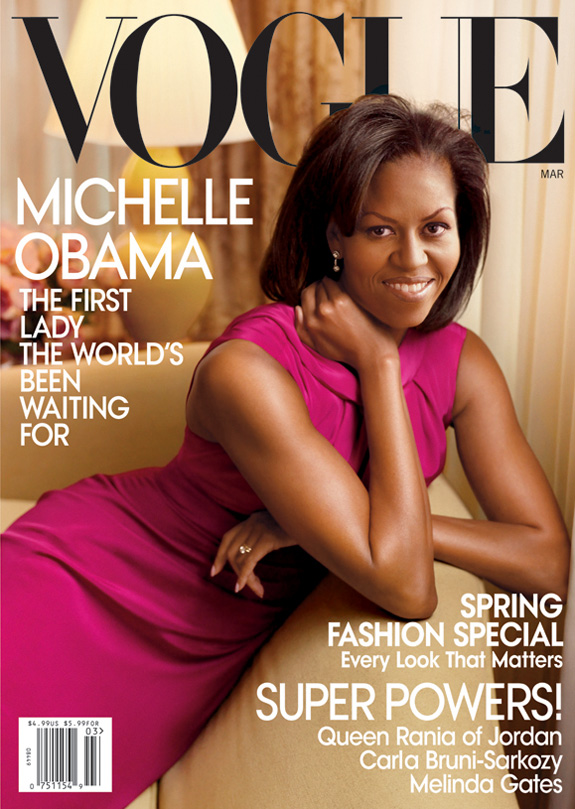
I, like most Americans, am wowed by Michelle Obama’s arms.
They are sleek. They are smooth. They are strong.
When she puts on one of her sleeveless dresses, it immediately draws attentions to her triceps, which bulge slightly – and in a most captivating way – when she moves. Obama’s upper arms make a statement: I am a strong American woman who works out, takes pride in my appearance, and is not afraid to show off my assets.
But not everyone is pleased with Obama’s display of skin. In a recent column,Maureen Dowd revealed a conversation she had with fellow New York Times columnist David Brooks about the First Lady. He confessed he wanted her to cover up more. He was particularly critical of the fact that she wore a sleeveless dress to President Obama’s first speech to Congress. In the dead of winter, no less!
I just dismissed Brook’s disapproval as the ranting of a slightly right-wing, slightly overweight writer who hasn’t seen a treadmill in years.
But it turns out others share his point of view. In my exercise class this morning, four women said they thought Obama should be a bit more modest. She could wear a cap sleeve, for example, rather than a sleeveless shift.
A Daily Beast columnist who wrote a post titled “The History of Michelle’s Arms” also concluded that the First Lady should cover up more often. She actually said “mix it up,” as if to imply that a desire for variety, not modesty, drove the criticism.
This isn’t an issue that will go away. As the economy continues to tank, and a focus on the trivial distracts grim realisty, this could become a major topic of conversation. And just yesterday Obama visited a Washington soup kitchen and suggested people eat more fresh foods, as local as possible. That, too, may be controversial.
Eve Pell’s blue-blooded mother had a saying about their family: “We are not the huggy-kissy type.”
Call that an understatement. In Pell’s riveting new memoir We Used to Own the Bronx,she exposes an upper class world that put more emphasis on pedigree, pecking order, club membership, and the right way to do things than loving and understanding one’s children. Distance and criticism were the tools with which Pell was raised, not encouragement and affection.
This was a family who thought men were better than women, horses better than dogs, and Harvard better than anything. Marriage counted for little – Pell’s family is filled with people who had two, three, and even four spouses. The number wasn’t important, as long as they belonged to the same elite WASP world of the Pells. “I come from a family in love with itself,” writes Pell in the opening line of her book.
The family fortune started with the arrival of Thomas Pell from England in 1635. He made a small fortune trading furs, married well (thus setting an important precedent) and amassed thousands of acres of land in what is now WestchesterCounty and the Bronx. Pell cemented his family’s place as true-blooded American aristocrats when New York’s colonial governor conferred on him the “Lordship and Manner” of Pelham. His nephew later sold some of the land to a group that founded the city of New Rochelle, which is still obligated to provide the Pells with one “fatt calfe” every four years.
Pell, now 71 and living in San Francisco, grew up as an honored member of the East Coast elite. Many of her relatives occupied huge mansions in the gated and exclusive gated community of Tuxedo Park, N.Y. Her mother and stepfather owned huge farms stocked with thoroughbred horses on Long Island and in Pennsylvania. Her grandmother has a massive apartment on the upper East side of Manhattan. Pell men were all members of the best (read no Jews, no blacks, no merely rich) social clubs like the Racquet and Tennis Club of New York. Pell children populated the debutante dances. Appearance counted for everything, creating a world which Pell describes as “seductive and crippling.”
A few cousins, however, betrayed their roots. Claiborne Pell became a senator from Rhode Island (shocking the family by both holding a regular job and entering the dirty world of politics). He is best known for getting Congress to set up Pell grants, which loan money to college students. Pell herself became a prison reform activist and an award-winning investigative reporter.
This world of the upper class WASP elite is now losing its firm grip on American culture, and Pell does a wonderful job recreating its social morays. She takes readers on a journey from that cloistered environment into the world of radical politics and hard-hitting reporting, and we see her transformation from meek child nicknamed Topsy to dutiful wife and mother, to 1960s revolutionary, respected journalist, and world-class runner. Equally fascinating as her childhood is Pell’s description of the prisoner/revolutionary George Jackson and the Berkeley lawyer who once defended him, Fay Stender.
Pell will be talking at Book Passage at 7 p.m. Wednesday March 11 and at Books, Inc in OperaPlaza at 7 p.m. on March 20. She answered a few questions about the writing of We Used to Own the Bronx:
How and why did you decide to write a memoir? Your book takes a critical look at upper class life with its emphasis on looks, club life, and social order at all cost. How did you family react to these revelations? Do any of them still embrace the lifestyle you lived as a child?
First off, I am a writer and that's what we do. I've been keeping notes about my family for 30 years or more--conversations, scenes, feelings.... Members of my family reacted very differently while I was working on the book: some were sympathetic and supportive. My Aunt Goody, for example, told me many stories and years before had started writing a critical book with the great title "The Sting of the Wasp" (which was never published). My father, on the other hand, hated my attitudes and though he did not live to see the book published or even read it, he didn't speak to me for years and, though he didn't tell me about it, disinherited me for writing about the family and its values.
Some of my relatives share my feelings; others, I suspect, feel that I have revealed too much-- but in good WASP style they button their lips....None of them can afford that lifestyle any more and they all pretty much have to WORK, shocking as that may be.
How did you research this book? How did you uncover new information about your family, such as the shocking news that one of your forbearers actually held a job and made a fortune in the grubby oil fields of California? What kind of documentation did you find?
For many years, I went to libraries from Boston to San Francisco seeking out genealogical and historical material. I interviewed those relatives and family friends who would talk, but not quickly enough as some died before I got to them. I visited places like FortTiconderoga, which we once owned, where there are stashes of Pell material, as well as Pelham, New York, which we also once owned. FDR's library had a lot about my Great-uncle Bertie. Claiborne, the long-time senator who is responsible for Pell grants, was a huge help. I found out about Mr. Tilford's pre-robber baron career by going to the Chevron library in San Francisco. (It was a big surprise when I went to the movie "There Will Be Blood" to see Mr. Tilford as a character in the film.)
Do you feel you have overcome the difficulties of your childhood? And now that you are a grandmother and have greater distance, do you think it gave you some strength you might not otherwise have?
I am definitely happier and more comfortable in my own skin than when I was younger, but getting there has taken a lot of work and has been a long process. I did learn something about grit and determination along with pretty good manners, which have helped along the way
When you went to raise your children, how did you do it differently from your own upbringing?
I did not hire full-time nurses, I made their breakfasts and drove car pools. I didn't send them away to boarding school. But I know they have had to cope with fallout from my mothering style, which was not as warm and kind as I wish it had been. We have talked about this, and I'm touched by how willing they are to forgive my mistakes.
In We Used to Own the Bronx, you show readers an upper class world that embraced tradition and class allegiance above all else, sometimes even more than family affection. Did you parents ever come to understand how their upbringing and the one they imposed on their children were detrimental?
Mostly, no. Doing so would have called into question their whole lives. But when my mother got dementia in her old age, she would ask me quite anxiously over and over whether I had had a good childhood. Seeing no point in telling her the truth at that stage of her life, I assured her that it had all been fine.
How has your family reacted to the book’s publication?
It's just out. I guess I'll find out soon. So far so good.
Do you think the wealthy have evolved at all in the US – i.e. become more interested in people of other classes, in becoming friends with them or in helping the disadvantaged?
I don't know so many rich people any more, can't say.
Why do you think you became so attracted and interested in the movement to free African American prisoners? Did you trade one set of rules for another?
First, let me rephrase your question. It was not a movement to free African-American inmates but rather to end some of the cruel, racist and violent practices in the California prison system. My involvement began by accident in 1970 when I was just starting as a writer and a friend suggested that I report on a prison case at Soledad. I was appalled when I learned about the conditions that prevailed inside and I wanted to expose those evils to the public at large. Also, as a woman then beginning to develop a sense of myself and to break free from the attitudes I had grown up with, I wanted to join with others in what we called The Movement to bring about a more just and humane society. Being new at it, I went a bit overboard into the heady spirit of that time. Later, I came to see that the situation was more complicated than I had thought. Check out chapter 13.
Are they any aspects of your life you wish you had handled differently?
Kemble Scott has made a video of the last author reading at Stacey's. Cara Black was the featured reader, and many other authors came out to support her and thank the store.
Stacey's Bookstore on Market Street in San Francisco is closing at the end of March and today is the store's last author reading. Cara Black, the Bay Area writer whose books feature Aimee Leduc, a half-American/half-French detective, will be reading from Murder in the Latin Quarter at 12:30 pm.
Dozens of local authors who have read at Stacey's famed noontime lectures plan to join Black in a community-wide goodbye. Local author Kemble Scott is helping organize the send-off and so far Julia Flynn Siler, Michelle Gagnon, as well as Joe Quirk, Kathi Kamen Goldmark and others hope to be there. I can't attend, unfortunately, but I will say a note of thanks in that hour.
Ingrid Nystrom, the long-time events coordinator at Stacey's, sent out a last email about the store:
"As this is my final email post, I’d like to again say thanks for all of your support over the years. When I first started working for Stacey’s, I was excited at the opportunities open to me but a bit disappointed that I wasn’t in a neighborhood bookstore. What I have realized in my eleven years here is that I am in a neighborhood bookstore. It may be a slightly strange neighborhood that arrives at 8 in the morning and goes home by 8 in the evening, but it has its regular rhythms, its regular characters, and a sense of community for anyone wishing to extend themselves.
After talking with so many customers disappointed by Stacey’s closure, I’ve been reminded that Stacey’s has served as a decompression zone between work and home, a welcoming island of culture, a Christmas treat, a literary community, an escape from corporate-land, an interesting talk with lunch, and, of course, a bookstore. Whatever Stacey’s did or didn’t mean to you, I would like to remind you to look around you at your physical community and think about what matters. And if it matters, remember to step outside of your virtual world, unplug your iPods, look up from your Blackberrys and shop it, talk it, engage it."
In other vein, I will be speaking about Towers of Gold tonight, March 4, at 7:30 pm at the Jewish Community Library at 1835 Ellis Street in San Francisco.
One of the funnest parts of promoting Towers of Gold is getting invitations to beautiful places in the Bay Area. In recent months, I have visited some of San Francisco's private women's clubs, which invariably have spectacular libraries. These photos are from the library at the Francisca Club, a women's club that resides in a beautiful building on Sutter Street. The Francisca Club was started in 1903 during a period of great growth of women's clubs. The role of women in American society had expanded beyond that of motherhood to social service and to good fellowship and cheer. Women banded together to create retreats where they could meet for meals, talk about books and other cultural events, and to hear speakers. Many of these clubs are still going strong today.
I also visited the Metropolitan Club, which is just up the street from the Francisca Club. The club has been doing extensive work to its building, which should ensure it survives another century. The Metropolitan Club was formed for women to pursue athletic, as well as social pursuits. It has a spectacular swimming pool in its basement.
The Sutter Street building was designed by the architect Walter Bliss, the same man who designed Isaias Hellman's summer home in Tahoe, Pine Lodge (now Sugar Pine Point State Park) and the St. Francis Hotel.
The woman who invited me to give a talk at the Metropolitan Club took a look at some of the club's early ledgers. To my surprise (and hers) Hellman's two daughters, Clara Hellman Heller and Florence Hellman Ehrman, were early members, joining in the first decade of the 20th century. The women's clubs are dotted with descendants of the city's early pioneers and it has been really fun to talk San Francisco history with them.
Another private club with a spectacular library is the Town and Country Club which is located in a building on Union Square. The club was started in 1893 as a place for women to rest while shopping. Unlike the Metropolitan and Francisca clubs, which are marked with large awnings, the Town and Country Club does not have any sign. Unless you are looking for it, you would not know it is there.
I attended a luncheon there recently and was astounded when I walked into the library. It is beautiful. The room is lined with floor-to-ceiling bookcases and large comfy chairs to read int. The club's librarian is Lauren John, who also leads book groups around the Bay Area and also serves as a moderator at Book Group Expo each year. The fact that the club has a full-time librarian and one as knowledgable as John shows that it holds books in high regard.
I found this complete description of elite private clubs in the Bay Area on the web. While not all the dates seem right, it does have pictures of the exteriors of the clubs I describe here, plus some interiors of various men's clubs.


.jpg)
.jpg)