Pages

Monday, May 05, 2008

Mad about Madapple

http://www.christinameldrum.com/images/madapple_press.jpg

I have been to a lot of nice book parties. The one with the best food was thrown by Nancy Oakes and Pamela Mazzola for the release of their cookbook, Boulevard, named after the well-regarded restaurant. That’s the only book release party I have attended where I was served tuna tartare in ceramic spoons, prawns in saffron rice, and buttermilk fried chicken. More than 600 people showed up to sample the food and ogle over the glossy cookbook.

Julie Flynn Siler had a great party, too, at a beautiful estate in Ross, the wealthy enclave in Marin County that is home to Sean Penn and Robin Wright. The caterer set up food in a rustic barn and the guests spilled out onto a lawn facing the house and pool. There were shade trees everywhere, creating a cool green canopy. And since the book, The House of Mondavi, was about wine, there was plenty to drink.

My writing group, North 24th, threw a really fun party in November for the release of Susan Freinkel’s book American Chestnut: The Life, Death, and Rebirth of a Perfect Tree. We all brought dishes to share and hung out in a beautiful house in Sea Cliff. I knew a lot of the people there, so it was a really intimate and fun affair.

But I have a feeling I am about to see the best party yet.

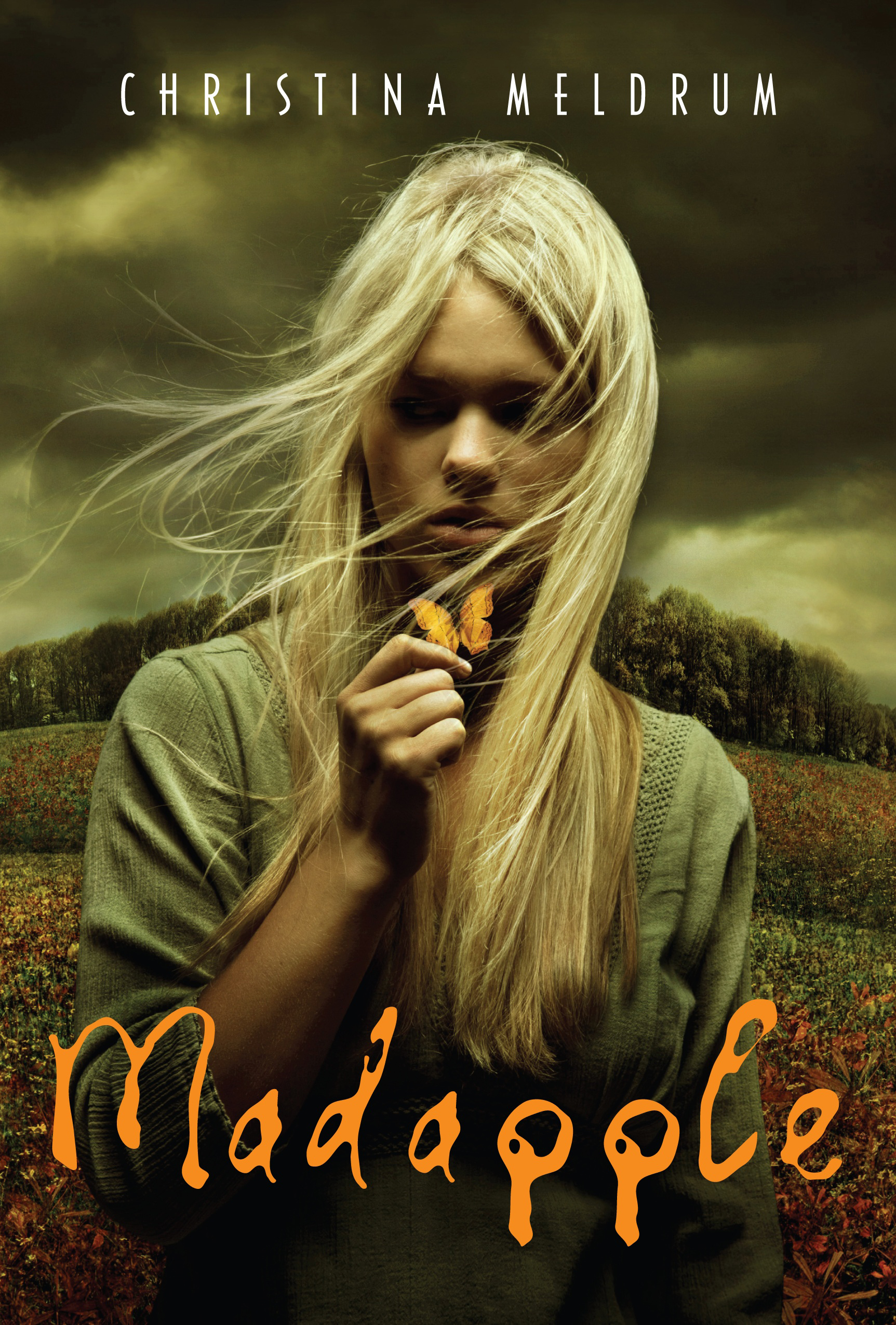
Last week, I went to my mailbox and pulled out a large format envelope. It was so big and fancy I thought it was a wedding invitation. I opened it to find an invitation on thick green cardstock mounted on black velvet. It was a request to attend a May 17 party for the release of Christina Meldrum’s book, Madapple.

Underneath the invitation was a 5 x 6 replica of the book. It had Madapple’s glossy cover and a few chapters of the book. The invitation screamed “important” and “noteworthy” and “fun” from every page.

Now Christina is a class act and one of the most beautiful women I know. But this small sampler is not just her creation. Her publisher, Knopf, helped pay for the invitation and reprint, which is highly unusual in this day of penny pinching and declining profits. It’s all part of the publisher's concerted push behind Madapple. A few weeks ago, Knopf hosted a party in San Francisco to introduce Northern California booksellers to Christina. The company wined and dined the store owners and made sure they knew that Madapple was going to be big.

There is already great buzz about the book, which will be released May 13. It’s a book about a teenager girl that is part thriller and courtroom drama, sprinkled with lessons on botany and spirituality. Madapple is being marketed to the young adult market, but is really a cross over that appeals to adults as well. It got starred reviews in Kirkus and Booklist.

It's going to be great fun to watch this ride.

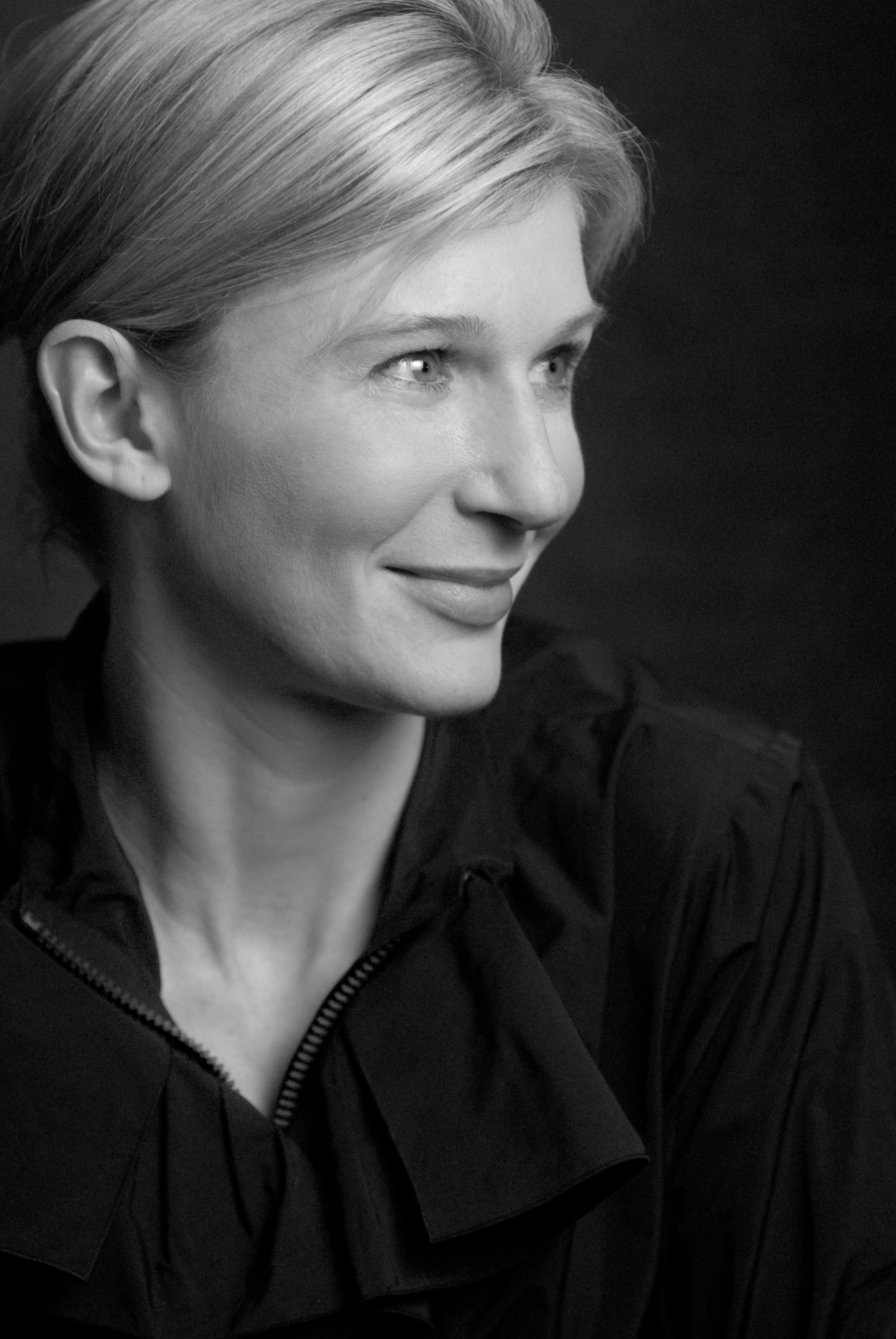
http://www.christinameldrum.com/images/christina_bw_press.jpg

Christina Meldrum

Monday, April 28, 2008

Copy Edit Purgatory


For the last few weeks I have been ensconced in my office, furiously making corrections to my manuscript. I have been in copy editing purgatory, that never-never land between a mess and a finished book.

I now appreciate the merits of a copy editor. I thought I had turned in a fairly clean manuscript, but my copy editor caught dozens of mistakes. I would spell a company's name one way on one page and another way fifty pages later. And he caught those discrepancies.

Those errors were easy to correct. What was excruciating was fixing my footnotes. I have been researching the life of Isaias Hellman for eight years now and have gotten information from a half dozen libraries, dozens of newspapers and books, and visits to places around the world. I thought I had documented the sources of all my information, but I soon discovered that I was missing a page number here, a folder number there, or a title or publisher. It took hours and hours and more hours to track everything down.

The photo is a picture of my office after I had finished. Papers everywhere.


Here is a close up of a page of my footnotes. The copy editor's comments are in red and my corrections are in blue and green. The picture below is my manuscript, finally completed! It's close to 470 pages, which will be about 380 in book form. Now I am just waiting for the finished cover.


Tuesday, April 15, 2008

Detritus of Life


phones
Originally uploaded by hellvetica
Martin Gee, a Mercury News designer, has posted a series of photos of the remainders of the dozens of journalists who recently left the building. It's all as you would expect -- empty desks, empty bulletin boards, stacks of chairs, etc -- and quite moving. (via Peninsula Press Club)

John King, the Chronicle's architectural critic, talks about the new Cody's Books on Shattuck Avenue in downtown Berkeley and how bookstores contribute to neighborhood life.

Lisa Margonelli won a Northern California Book Award in nonfiction for her book Oil on the Brain: Adventures From the Pump to the Pipeline. Cristina Garcia won the fiction prize for A Handbook to Luck. Robert Hass won the prize in poetry for Time and Materials. You can find a complete list of winners here.

Lucky authors can be on their very own trading cards. The latest to get this honor?
Bonk author Mary Roach.

The Grotto, the San Francisco Writers' Collective, has started its own blog.

Monday, April 14, 2008

Writing California

http://www.montereybay.com/creagrus/California-cbccircles.gif I attended a fascinating conference over the weekend, one that was stimulating and depressing at the same time. It was the California Studies Association conference at Berkeley City College, put together by a group of writers and academics interested California politics, culture, art, ecology, and social movements.

There were many incredible panels, including one on immigration and the border, one on the Port of Oakland, and one on how California will be affected by global warming. And Jackie Goldberg, a former state assemblywoman, gave a rousing and scary speech about the state of education. You can hear it here.

But my favorite panel, of course, had to do with books. It was called Writing California, and it examined the work of four distinguished authors: John Steinbeck, Carey McWilliams, Wallace Stegner, and Mike Davis.

Rick Wartzman, a BusinessWeek columnist and former reporter for the Wall Street Journal and the Los Angeles Times, talked about his upcoming book Obscene in the Extreme: The Burning and Banning of John Steinbeck’s Grapes of Wrath, which will be released in September. The Grapes of Wrath is set in Bakersfield, and the town reacted badly when the book was released in 1939. Wartzman’s narrative nonfiction account explores a week where the Board of Supervisors banned the book and locals burned it. The heroine is a librarian who defends the book’s publication. The book is also an exploration of race relations in California at the time.

Phillip Fradkin, the author of a new biography about Wallace Stegner, talked about the writer and teacher. Peter Richardson, the author of a biography about the writer Carey McWilliams, talked about he was “one of the most important writers of whom we have never heard.” Richardson said McWilliams was one of the most versatile public intellectuals of the 20th century, who was alternately called “liar,” “dupe,” and “doe-faced Typhoid Mary of the left.” (The latter came from Arthur Schlesinger, Jr.) He wrote about race relations in California before it was topical, and released a book Factories in the Field, about those in the agricultural industry, just two months after the publication of Grapes of Wrath.

UC Berkeley Professor Richard Walker discussed the works of Mike Davis, a prolific writer who came to great public attention with the publication of City of Quartz. It was wonderful to hear Walker’s explanation of Davis’ scholarship. Like most of the other authors discussed on the panel, Davis is a combination of investigator, academic, and activist. He has Irish working class roots, has always felt like something of an outsider, and writes convincingly about an astonishing range of subjects, from the rise of the car bomb, to the urban slums of the world, to the reason why we should let Malibu burn.

What stood about these authors is that they all wrote elegantly and prolifically about California, yet they all left the state in the latter part of their careers. It was true then (and is still true now) that real fame and glory are anointed back East, and these writers sought greater recognition by traveling to the country’s intellectual center. (Stegner didn’t actually leave California, but he did have his ashes spread over his farm in Vermont, a nod, according to Fradkin, to East Coast values that venerated history, allowed its landscape to recover, and held constant a core set of values.)

“Maybe there is no such thing as a California writer,” said Fradkin. “Either they die an unnoticed death by the Eastern literati or they go back East.”

Sunday, April 13, 2008

Does This Mean I am a Real Author?

I found my book listed on Amazon last night. What a thrill. I guess this means it is really happening. I've had a lot of clues recently -- a payment from my publisher that was triggered by their acceptance of the manuscript, the returned manuscript, covered with more red copy-editing comments than I could have imagined, and long discussions over the title. The one that is listed on Amazon is not the right title. (More on all this later.)

Still, what a thrill.

Tuesday, April 08, 2008

2008 Pulitzer Prizes

My old journalism school colleague, Sam Roe, won a Pulitzer Prize on Monday for the Chicago Tribune’s investigative series on the hidden hazards in Chinese-made toys, car seats and cribs. The companies making the toys apparently knew that they posed choking hazards, as did the federal government, but no one did anything about it. Several kids died as a result.

In these days of gloom and doom in the newspaper industry, the Pulitzer Prizes serve as reminder of what journalism can do: that old adage, comfort the afflicted and afflict the comfortable.

Now people are looking first to the Web for their news content. Many newspapers are still turning out important stories but the ranks of decently-paid reporters are growing thinner.

Sam and I graduated from the Columbia Journalism School in 1986. Sam has been honing his reporting skills for 22 years. Experience counts. Not just the ability to throw up a quick blog post. (where, alas, I have landed.)

Friday, April 04, 2008

Northern California Book Awards

http://photos5.flickr.com/5031452_95e33e1708.jpg

Interior of San Francisco Public Library

There are so many book-related awards that it’s hard to know which ones to trumpet and which ones to ignore. Since this blog deals in part with the Bay Area literary scene, I try and mention prizes and contests that concern local authors.

It’s April, award season. The Pulitzer Prizes will be announced on Monday, always an exciting day in the publishing and journalism worlds.

The book critics of the Northern California will be handing out their annual awards on April 13 at 1 p.m. at the San Francisco Main Library. This event honors Northern California writers, so it is an interesting snapshot of the talent that surrounds us. The awards are sponsored by many of the Bay Area institutions that form the backbone of the literary community, including The Mechanic’s Institute, Poetry Flash magazine, PEN West, the San Francisco Public Library and the Friends of the San Francisco Public Library.

Here are the nominees:

FICTION

* Sacred Games, by Vikram Chandra, HarperCollins

* The Great Far Away, by Joan Frank, The Permanent Press

* A Handbook to Luck, by Cristina Garcia, Alfred A.

Knopf

* A Far Country, by Daniel Mason, Alfred A. Knopf

* Locke 1928, by Shawna Yang Ryan, El Leon Literary Arts

GENERAL NONFICTION

* The Science of Leonardo: Inside the Mind of the Great Genius of the Renaissance, Fritjof

Capra, Doubleday

* Oil on the Brain: Adventures from the Pump to the Pipeline, Lisa Margonelli, Nan A.

Talese/Doubleday

* Alice Waters and Chez Panisse: The Romantic, Impractical, Often Eccentric, Ultimately

Brilliant Making of a Food Revolution, Thomas McNamee, The Penguin Press

* Supercapitalism: The Transformation of Business, Democracy, and Everyday Life, Robert

B. Reich, Alfred A. Knopf

* Arsenals of Folly: The Making of the Nuclear Arms Race, Richard Rhodes, Alfred A.

Knopf

CREATIVE NONFICTION

* Ticket to Exile, a memoir, Adam David Miller, Heyday Books

* Back on the Fire: Essays, Gary Snyder, Shoemaker & Hoard

* Storming the Gates of Paradise: Landscapes for

Politics, Rebecca Solnit, University of

California Press

* Poor People, William T. Vollmann, Ecco

* The Fragile Edge: Diving and Other Adventures in the South Pacific, Julia Whitty,

Houghton Mifflin

POETRY

* Frail-Craft, Jessica Fisher, Yale University Press

* Time and Materials: Poems 1997-2005, Robert Hass, Ecco

* Expectation Days, Sandra McPherson, University of Illinois Press

* The Second Person, C. Dale Young, Four Way Books

* Embryoyo, Dean Young, Believer Books/McSweeney's

TRANSLATION

* Translation by Robert Alter, The Book of Psalms: A Translation with Commentary, by

Robert Alter, from Hebrew, W.W. Norton

* Translation by Alison Anderson, The Palestinian Lover by Sélim Nassib, from French,

Europa Editions

* Translation by John Balcom, Driftwood by Lo Fu, from Chinese, Zephyr Press

* Translation by Carol Cosman, Exile and the Kingdom by Albert Camus, from French,

Vintage

* Translation by Anne Fountain, Closed for Repairs by Nancy Alonso, from Spanish,

Curbstone Press

CHILDREN'S LITERATURE

* Penguins, Penguins Everywhere!, Bob Barner, Chronicle Books

* The Apple Doll, Elisa Kleven, Farrar, Straus and Giroux

* Do the Math: Secrets, Lies, and Algebra, Wendy Lichtman, Greenwillow Books

* The Hound of Rowan: Book One of The Tapestry, Henry H. Neff, Random House

* Why War Is Never a Good Idea, Alice Walker, illustrated by Stefano Vitale, HarperCollins


Local critics read the books, discuss their merits and pick the winners. All of the nominated books will be saluted at the ceremony, but only six authors will walk away with the honors.

In addition, a SPECIAL RECOGNITION AWARD will go to River of Words, the Annual Environmental Poetry & Art Contest Conducted in affiliation with The Library of Congress Center for the Book

Fred Cody Award for Lifetime Achievement to be presented to Al Young

This year's Fred Cody Award for lifetime achievement will be presented to Al Young. Poet-novelist-essayist Al Young has authored two recent collections of poetry

- Coastal Nights and Inland Afternoons: Poems

2001-2006 (Angel City Press, 2006) and Something About the Blues (Sourcebooks Media Fusion, 2008).

To Go:

The 27th annual Northern California Book Awards takes place on Sunday, April 13, 2008, 1:00-2:30 pm at the Koret Auditorium of the San Francisco Public Library's Main Branch, 100 Larkin Street in San Francisco.

A book signing and reception with the authors follows the Awards Ceremony in the Latino/Hispanic Room from 2:30-4:00 pm. Nominated books will be on sale at the Book Bay, San Francisco Main Public Library.

Thursday, April 03, 2008

David Sheff and Nic Sheff and their Tales About Crystal Meth

The image “http://www.davidsheff.com/images/beautiful_boy_2.jpg” cannot be displayed, because it contains errors. Drugs suck. That was the overwhelming feeling I came away with last night after attending a reading by the best-selling writer, David Sheff and his son, Nic Sheff.

That observation may seem mundane, even obvious. But I came of age in the 1970s when teenagers regarded drugs as recreation, a way to change life’s tempos. Since I never developed a drug habit, I had little reason to reexamine my assumptions.

But as the Sheffs’ searing books make clear, using drugs is a form of Russian Roulette. You might smoke some pot and snort coke and never get that bullet in the chamber. On the other hand, the bullet can fire in the first round.

David and Nic Sheff spoke to more than 200 people at a benefit for Beyond Borders, a summer program at Marin Country Day School that brings together kids from every socioeconomic class. David served on the Beyond Borders Advisory Board. His two younger children also attend Marin Country Day School, so he was really talking to his community. It was clear that the evening was an emotional one for David. The people in the audience were his friends, those he relied on during the five year odyssey of Nic’s dependence on crystal meth.

The evening started out with an announcement by journalist Gary Pomerantz, who also served on the Beyond Borders Advisory Board, that David Sheff’s book Beautiful Boy will be #1 on the New York Times Bestseller list this week. The crowd roared and clapped at the news. Nic's young adult book, Tweak, is also selling briskly.

It’s not surprising to hear this. In the age of memoir, this one speaks to an enormous audience. Drug addiction pervades our society and the treatment options are poor. So hundreds of thousands of Americans are left to muddle through a hodge podge of rehabilitation centers, detox clinics, hospitals and the like.

Throughout the tour, audiences have shared their own stories about addiction and that was also the case last night. One woman stood up to ask if love would help her brother through his addiction. The sad answer was no. Nic Sheff said that while he was gripped by drugs, all he could think of was himself. He rarely pondered how his family was reacting to his drug use and he certainly wasn’t thinking about their best interests.

Other people with addicted sons, brothers, and husbands came to hear how the Sheff family worked their way through Nic’s addiction. Nic said he finally confronted the empty feeling inside of himself and realized he could no longer try to obliterate it by getting high. Surprisingly, Nic said, once he focused on his inner feelings of inadequacy, he didn’t find them too hard to overcome. It was the fear of those feelings that pushed him into drugs. That path ultimately proved more difficult than just coping with himself.

The image “http://www.davidsheff.com/images/51w5rnobg8l._aa240__1_.jpg” cannot be displayed, because it contains errors.

Tuesday, April 01, 2008

April Fools Day Musings

The image “http://www.elon.edu/images/e-web/pendulum/April-Fool-ILLUS.jpg” cannot be displayed, because it contains errors. For a laugh, read Ed Champion’s April Fools' Day posts.

I was very happy to see this film deal reported in Publisher’s Marketplace:

Mark Kurzem's THE MASCOT: UNRAVELING THE THE MYSTERY OF MY JEWISH FATHER'S NAZI BOYHOOD, to Heathcliff Productions, in a significant deal, by Sarah Self at The Gersh Agency, on behalf of Robert Guinsler at Sterling Lord Literistic.

The Mascot is the amazing story of Kurzem’s father, who escaped annihilation during the Holocaust and lived like a pet with Latvian soldiers during the war. He dressed up in miniature Nazi uniforms and had to pretend he was not Jewish, all the while living among soldiers who were hunting other Jews. After the war, he moved to Australia and promptly repressed his history until it came back to haunt him. It's a remarkable survival story.

Another shout-out:

http://www.alisonlarkin.com/images/english_american_cov338.jpg I went to see novelist/performance artist Alison Larkin on Sunday in a benefit for PACT, an adoption alliance. I went because I was intrigued by Larkin’s new book, The English American, but left with a deeper appreciation for the conflicts and identity crises that can face adopted children.

Larkin was born in Bald Mountain Tennessee and was adopted by a British couple. The family lived in Africa and then moved back to England. Larkin didn’t know she had American roots until her adolescence and she created a one-woman show about her dual identity that was a smash hit in Britain.

From that, Larkin wrote The English American, a very funny novel with an adoptive heroine at its center. The protagonist has a happy childhood, but still wants to uncover her roots. For a taste, consider these opening words:

“I think everyone should be adopted. That way, you can meet your birth parents when you’re old enough to cope with them. Of course it’s all a bit of a lottery. You never know who you’re going to get as parents. I got lucky. Then again, if I’d been adopted by Mia Farrow, rather than Mum and Dad, today I could be married to Woody Allen.”

Monday, March 24, 2008

Orange Prize

http://i201.photobucket.com/albums/aa258/anelson823/Blood-of-Flowers.jpg

Berkeley writer Anita Amirrezvani’s first novel The Blood of Flowers, has been nominated for an Orange Prize, a British award that honors fiction written by women.

I heard Anita read this summer at the Squaw Valley Community of Writers, and her book about a young Iranian carpet weaver is beautifully written. It also has one of the most beautiful covers I have ever seen.

Julia Flynn Siler's book, The House of Mondavi, has been nominated for a James Beard Award.

The new Cody's Books opened this weekend on Shattuck Avenue in downtown Berkeley. David Hadju inaugarated the new store. Eric Alterman speaks on March 25th. Let us hope this is the final move and the new location works.

Don't forget that Jon Carroll and Leah Garchik will interview one another tonight at Berkeley Rep in a benefit for Park Day School.

Friday, March 21, 2008

Year of Fog Makes New York Times Bestseller List

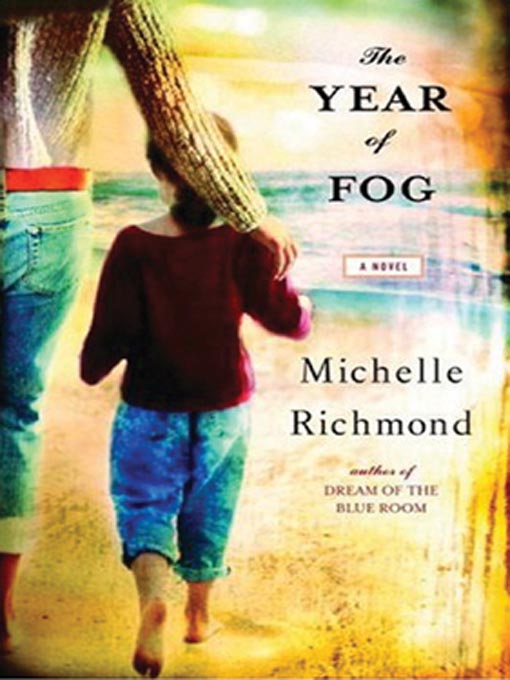
http://images.contentreserve.com/ImageType-100/0887-1/%7B89324817-2B4F-4BD9-9C54-8E3B02CD76B5%7DImg100.jpg Michelle Richmond’s marvelous Year of Fog is #19 on the New York Times paperback list this week! It hit the San Francisco Chronicle list in hardback when it came out a year ago, and now appears to be becoming a book club favorite. I wrote a review of Year of Fog for a website called Culture Vulture, a one-stop place to find out the latest on books, movies, television shows, dance performances, plays, video games and more. It’s run by Michael Wade Simpson, a writer and former dancer.

Read Michelle’s reaction when she heard the news about the New York Times bestseller list. This is from her blog Sans Serif. (Although she has another blog just for her book, as well.)

“I just received the prettiest bouquet of roses from my publisher, with a note that said, “Dear Michelle, Congratulations on your very first New York Times bestseller.” Well, I would like to be very dignified and nonchalant about this, but I just about peed in my pants, as we say down in Alabama. Granted, they told me about it yesterday–a phone call from Nita Taublib and my editor, Caitlin Alexander, which began with the question, “Michelle, are you sitting down?”, and which resulted in my hurling a joyful expletive at Caitlin, as in, “Are you f-ing kidding me?”–but by this morning I’d kind of convinced myself I was dreaming, so when the flowers arrived it was like, oh, that really did happen, I wasn’t making it up."

Congrats, Michelle.

Michelle writes about a missing child and the love her would-be-stepmother feels for her. Well, San Francisco Chronicle columnist Leah Garchik writes about a different kind of love in her new book, Real Life Romance: Everyday Wisdom on Love, Sex, and Relationships. Leah will be appearing at Berkeley Repertory Theater Monday March 24th in conversation with her fellow Chronicle columnist Jon Carroll. The two will sort of interview one another. This is a benefit for my daughter’s school, Park Day, a wonderful progressive elementary school in Oakland. Ticket information is here.

I want to highlight another benefit, this one for PACT, an adoption alliance. Susan Ito, blogger extraordinaire, is bringing writer and performance artist Alison Larkin to Oakland on Easter Sunday. Larkin wrote the book The English American, and it is getting great buzz. This benefit will be at 4 pm on Sunday.

The Lit-Blog Coop is disbanding. This was the effort of a small group of litbloggers (not me) to highlight books they thought were overlooked or underappreciated. They nominated a pick every quarter and had on-line conversations about the book and author. I did end up reading Kate Atkinson’s Case Histories as a result of their recommendation so I imagine others were influenced by their selections as well. But most of the bloggers have gone on to other endeavors and I guess they just ran out of steam.

Monday, March 17, 2008

The New York Times Explains Itself

Clark Hoyt, the public editor of the New York Times, explored how the paper of record was duped by false memoir writer Margaret Jones, who wrote Love and Consequences.

This is a story that fell between the cracks and I can see why. Hoyt does a good job of showing how the initial glowing book review gave the author instant credibility, enough that the reporter writing a profile for the Home section gave Jones an easy pass. He also debunks the notion that the Times reviewed the book because its editor was Sarah McGrath, the daughter of Times writer and former book review editor Charles McGrath.

However, this should be the last time this mistake is made. Now every book reviewer, blogger, reporter, and writer should realize that people can't be taken for their word. Remember the mantra: Check! Check! Check!

Sunday, March 16, 2008

Literary Tidbits

Julia Flynn Siler, who wrote the bestselling House of Mondavi, has started a blog. She’s at the Neiman Narrative Nonfiction Conference in Boston and her reports are fascinating.

Garrison Keiller pens an ode to San Francisco. His sweet spot? A café on Irving Street in the Sunset.

“It was a glorious four days and I didn't even go to the beach. I just sat in a coffee shop on Irving Street near Golden Gate Park and smelled spring and watched the passing parade of youth.

Everybody in my coffee shop seemed to be in their 20s, locked into laptops, clicking and dragging, jumping to new links, sending IMs while text-messaging with the left hand, and the sheer volume of communication was impressive to behold. Here I was, chugging along writing a novel in which a guy meets up with his own mortality and is shocked into an outburst of passion, a sort of coming-of-old-age novel, typing taptaptaptap, and all around me beautiful young people were disseminating information in all directions by all media.”

The future of conversation is noise. Read Bay Area freelancer Dan Fost’s incredible article on how Twitter and social networking is changing lectures, conferences, and other gatherings.

Thursday, March 13, 2008

Good Old-Fashioned Reporting led to the Eliot Spitzer Story; Too Bad There Won't Be Enough Bay Area Reporters to Do the Same

The New York Times deconstructs how it uncovered the Eliot Spitzer prostitution ring story. The Times reporters got the information through good old-fashioned beat reporting. The Attorney General's office had sent out a press release announcing the break-up of a prostitution ring. There was nothing unusual about that. But reporters noticed that the lead prosecutor in court on March 6 was very high up in the Manhattan U.S. Attorney’s office. That got people thinking.

“No one had talked of the escort ring’s inner workings, and certainly no one mentioned the governor’s name,” according to a story in the Times. “Just one fact piqued interest for some in the room: The lead prosecutor on the case was Boyd M. Johnson III, the chief of the public corruption unit of the Manhattan United States attorney’s office."

"Later that day, reporters at The New York Times learned of the unusual presence of three lawyers from the corruption unit, including the boss of that division and an F.B.I. agent from one of the bureau’s public corruption squads. The public corruption units often look at the conduct of elected officials."

"Within hours, the reporters were convinced that a significant public figure was involved as a client of the prostitution ring.”

That’s how reporters get stories. By being around and working sources. That’s the kind of gumshoe reporting that will now be missing all around the Bay Area as virtually every paper has slashed its staff to the bone.

Wednesday, March 12, 2008

The Donner Party

The story of the Donner Party, which survived a winter in the snowy Sierra through incredible courage, determination, and a touch of cannibalism, has fascinated the American public ever since the ill-fated 1846-47 trip.

Dozens of books and memoirs have been written about the wagon train party that left Missouri in late October 1846, part of a massive migration west that would pick up steam after gold was discovered in California in 1848. The 81-member group made a major miscalculation by taking a time-consuming and improperly named shortcut over the Wasatch Mountains that prevented it from crossing the Sierra before the winter snows set in.

Surprisingly, the best-known non-fiction book on the subject, Ordeal By Hunger, was published by George Rippey in the 1930s. Since then, new documents, diaries and letters have come to light and archeologists have led new expeditions to Donner Lake and Alder Creek, the two sites members of the Donner Party spent the winter.

Now journalist Ethan Rarick has written Desperate Passage: The Donner Party’s Perilous Journey West, drawing from the new documents and new information about what happens to humans as they slowly starve. It got a rave review in the New York Times Book Review. I went to hear him speak last night at Cody’s Books in Berkeley. Even though I thought I knew about the Donner Party (I had read Ordeal by Hunger as well as James Houston’s magnificent novel Snow Mountain Passage) I was moved by Rarick’s descriptions of those who survived.

Rarick believes that the Donner Party continues to fascinate people not because of the cannibalism, but because the story illuminates how regular people survived in extraordinary circumstances. Most survival stories turned into books feature military men or famous explorers like Shakelton or Hilary, not ordinary mothers and fathers.

“There’s much we can learn about regular people in extraordinary circumstances,” Rarick said. “That’s the story of the Donner Party.”

Rarick was one of the last writers to speak from the Cody’s on Fourth Street. The store is moving to Shattuck Street in downtown Berkeley and will reopen on April 1. All the books in the store are 40% off and as Rarick spoke, I saw people with stacks of books walking to the cash register. The store is looking pretty empty but there are still lots of great deals.

I also had a chance to go last week to hear Michelle Richmond read from her book The House of Fog, just released in paperback. Richmond will talk tonight (March 12) at A Great Good Place for Books in Montclair. I stopped in that bookstore yesterday and the owner Kathleen Caldwell said the book was selling briskly. I see that it is #8 on the Chronicle paperback best-seller list. The Chronicle named it one of its ten best books of 2007. I have just started it and can vouch that it is a page turner. Richmond is a beautiful writer who can also craft a compelling plot.

Monday, March 10, 2008

Better Get Your MBA Before You Write That Book

So it turns out being an author now means learning to market yourself to corporations. The days of just trying to get a booking in a local bookstore, a radio interview here and there and a profile in a paper just don’t cut it.

The New York Times ran a story in the business section on Sunday on how Seattle is becoming the new power center for book sales. The reason? Its triumvirate of Amazon, Starbucks, and Costco.

These three corporations are increasingly driving book sales as more and more of the market shifts from conventional bookstores to other points of sale. The good part of the shift is that the people in power at those companies clearly love books and often advocate for titles that are not just mass market easy reads. The downside is that there is just a narrow funnel to capture their attention, often driven by the publicity departments of publishers.

I went into a Whole Foods the other day and was surprised to see a rack of books and CDs right next to the prepared foods section. I guess the store figures people will browse while they wait for their number to come up. I think we are going to see more and more of this kind of unusual marketing for books. The rack was small, so I don’t know if this is a good thing.

In other book news, Ed Champion and friends are carrying on a week-long discussion about Nicholson Baker’s new book on World War II, Human Smoke. The reviewer for the Los Angeles Times, Mark Kurlansky, really liked the book, which challenges long-held assumptions about the causes of the war. But Ed and friends are suggesting that Baker’s newspaper-snippet-long sections are less historical than carefully selected to present an argument and that a book that poses as a historical treatise may in reality be much more manipulative. (I think that is what they say.) Anyway, all these discussion have gotten my attention and I definitely want to check out the book.

The Annual Tournament of Books has begun. Today it is The Savage Detectives vs. Let the Northern Lights Erase Your Name.

The website of blogger Maud Newton was hacked over the weekend and all of her 8,000 posts were deleted. Fortunately, her webhosting site had back-ups.

Goodbye, The Wire. It was too short.

Friday, March 07, 2008

Mercury News Layoffs -- New Proof that Media News is Short-sighted

The Mercury News lost some of its best reporters today as its new owner, Media News, continued its desperate slash of costs. Twenty-three reporters and editors are leaving, most involuntarily, although some took a buyout. Look for a much thinner paper and many more unnoticed shenanigans.

I haven’t worked at the Mercury in nine years so I don’t know all those who are leaving, but there are a few who were let go whose work has consistently been outstanding.

Barry Witt, for example, broke more hard-hitting stories than most everyone, including the news that Alameda County had vastly overpaid to lure the Raiders to Oakland.

Carolyn Jung has been a food writer and the food section editor and consistently made the section interesting.

Lisa Chung was a columnist, metro reporter, and editor and a visible face of the paper.

Sue Hutchinson’s column held prime real estate in the paper for years. She was nimble with words and wrote about an astonishing variety of topics.

A few veterans took buyouts, including Steve Wright, the editorial page editor (and my former editor) and Rebecca Salner, the assistant managing editor of business. They both had been at the paper for almost 20 years.

These people were assets to the newsroom. It’s a crime they will no longer be part of this news-gathering operation. In protest, Charles Matthews, a former Merc reporter, cancelled his subscription to the paper today. Read his reasons.

Here’s the list:

Layoffs

Lisa Chung, Metro feature writer, ex-columnist

Steve Chae, Library

Katherine Conrad, commercial real estate reporter

Barbara Egbert, copy editor

Barb Feder, medical writer

Dennis Georgatos, 49ers beat writer

Elizabeth Goodspeed, features designer

Joanne HoYoung Lee, photographer

Carolyn Jung, food columnist

Dave Kiefer, sports writer

Thu Ly, photographer

Mike Martinez, travel writer

Erik Olvera, Metro reporter

Connie Skipitares, metro reporter

Barry Witt, Metro reporter

Buyouts

Alvie Lindsay, state bureau chief

Matt Mansfield, deputy managing editor

Pam Moreland , features editor

Rebecca Salner, AME of Business

Steve Wright, head of editorial pages

Voluntary departures

Sue Hutchison, features columnist

Julie Kaufmann, food editor

Levi Sumagaysay, assistant Business editor

Thursday, March 06, 2008

Goodbye Newspapers (Sung to the Tune of Elton John's Goodbye Yellow Brick Road)

The demise of newspapers continues. The Mercury News, my old stomping grounds, plans to lay off 30 reporters and editors tomorrow. The paper once had 400 editorial employees; it will soon have 170.

My former colleague Michael Bazeley has a wonderful eulogy for the Merc.

Peggy Drexler wrote a moving opinion piece in the Chronicle today about the death of newspapers.

Here’s another view.

When I left the Mercury News nine years ago to write essays and books, I never thought it was a good career move. Now it looks like it was.


Wednesday, March 05, 2008

Will the New York Times Investigate its Role in the Margaret Jones/Seltzer Flap?

The heat is on for the New York Times to do an examination on how its reporters (or more accurately, book reviewer and free-lance writer) completely bought into the false story perpetuated by Margaret Jones/ Seltzer.

Some people are calling for the Times ombudsman Clark Hoyt to examine whether Jones’s book got extensive coverage since its editor, Sarah McGrath, was a daughter of Charles McGrath, the former editor of the Book Review.

“What the Times has not really done is deal effectively with the big ugly toad squatting on the center square of this story...The New York Times,” writes Hartfort Courant reporter Colin McEnroe.

"Seltzer's book got the kind of ride from the Times that authors dream of. A rave in a featured daily review by alpha critic Michiko Kakutani and then a truly gushy piece in the House and Home section. How did it get that kind of star-making treatment?

One has to think it has something to do with Seltzer's editor, Sarah McGrath, who worked for three years on this book without ever noticing that it was 100 percent hooey and who is the daughter of Times writer-at-large Charles McGrath. In identifying papa this way, the Times kind of covers up who he really is -- the editor emeritus of the Times Book Review. So, Mr. Hoyt, one thing I would like you to look into is how many times Mr. McGrath slouched into this or that office around the building and suggested that a little more than usual could be done for this book by one of Sarah's authors. "Never" would be a wonderful answer.”

I remember when I was an intern reporter at the Fremont Argus, way back in 1982. One of the veteran reporters was profiling a guy for a routine story. But he checked the guy’s credentials anyway, going as far as calling his college to confirm that he had graduated when he said he had.

I was impressed by that level of care and tried to emulate it whenever possible. You would be surprised by how often people distort the innocuous details of their lives.

That said, I don’t think it was Michiko Kakutani’s role to fact check the book. The feature reporter who wrote the piece for the Home section should have done some fact-checking. Unfortunately, she was a freelancer which meant she was trying to do the piece in a timely fashion so as to maintain a decent work to pay ratio. When you are not on staff, you can’t be expected to be as thorough as a regular reporter. And the Home section is not intended to be a bastion of hard-hitting journalism.

That leaves the publisher, Riverhead. Acquiring editors are usually so pressed for time they don’t investigate prospective authors. They want to establish a good relationship, not an adversarial one. But clearly an interim step is needed with memoir. Why can’t the publisher ask a writer to provide documentation to back up key elements of a story? It can be submitted shortly after a manuscript is delivered.

Monday, March 03, 2008

Look What Came to Visit

I came home on Monday afternoon and was surprised by three wild turkeys sitting on my porch. I knew that the turkeys were roaming all over the East Bay, but I didn't expect to see them where I live, up in the hills. When I shooed them away (you should see how much they pooped in just a short time) they flew! That's how little I know about turkeys. I thought they just waddled.

Another Author Caught Lying

I wasn’t surprised by James Frey, (his opening sentences were too far out to be believed) but I didn’t expect this one.

Last week, in positive book review and a long and colorful profile in the Home and Garden section, the New York Times heaped praise on Margaret B. Jones for her affecting memoir about growing up as a gang member in Central Los Angeles.

It was all made up.

Margaret B. Jones is not really a half-white, half Native American foster child who joined the Bloods, but Margaret Seltzer, a privileged girl from an affluent family in Sherman Oaks, CA. She was outed after her sister saw the profile and called up Riverhead, the book’s publisher. Love and Consequences is a lie.

“In a sometimes tearful, often contrite telephone interview from her home on Monday, Ms. Seltzer, 33, who is known as Peggy, admitted that the personal story she told in the book was entirely fabricated,” according to an article in the New York Times. “She insisted, though, that many of the details in the book were based on the experiences of close friends she had met over the years while working to reduce gang violence in Los Angeles.”

I paid attention to this one because I am so dismayed by the killing that is taking place on the streets of Oakland and San Francisco. I thought of writing a book by following all of Oakland’s murders for a year, but ultimately decided it would be too dangerous. When I read about Love and Consequences I said to myself that this memoir was probably a much better, more effective way to shine light on all the killing that is taking place.

I was wrong on that account, as well.

Monday Musings

Michael Chabon’s and Michael Pollan’s fundraiser for Barack Obama in Berkeley on Friday raised more than $50,000, according to Chabon.

As I drove by the scene on the Uplands in the Berkeley Hills around 6:30 p.m., cars and valet attendants were so stacked up that the street was nearly impassable. Some of those who attended apparently donated $4,600, the maximum permitted by law, according to Chabon. Alice Waters, a longtime supporter of the Clintons, was supposed to attend.

The evening was billed as “Fine Talk, Fine Food, and A Fine Candidate,” and was one of a series of Obama fundraisers put on by Chabon and his wife Ayelet Waldman. Months ago they pledged to raise $25,000 for the candidate; they have been so successful that they have upped their goal to $75,000. Their website says they have raised $65,000 but I think Friday’s event puts them over the top.

The party took place in one of the most generous, politically-minded parts of Berkeley. The 94705 zip code has donated $415,000 to Democratic candidates this election and only $17,000 to Republican candidates. No surprise, as this is Berkeley.

Mary Roach, whose new book Bonk is coming out next month, had a sweet piece in Play, a New York Times magazine, on Sunday, about learning to swim as an adult.

Thursday, February 28, 2008

Wallace Stegner

Philip Fradkin’s new biography of Wallace Stegner has just been released, both to acclaim and criticism. Fradkin is speaking Thursday night at the Mechanic’s Institute and I am hoping to attend.

I have read and enjoyed many of Stegner’s books. While Angle of Repose won the Pulitzer Prize, my favorite was always Crossing to Safety, about the friendship of two couples who are very different in temperament and upbringing.

And since I went to Stanford, I knew about the prestigious Stegner writing fellowship program that has helped along the careers of many illustrious writers, including Ken Kesey, Edward Abbey. Robert Stone, Raymond Carver, Larry McMurtry, and Vikram Seth, among many others.

Imagine my surprise, then, when my mother recently attended a lecture on Stegner and later informed me that he has been accused of plagiarism. Apparently Angle of Repose is based on the letters and unpublished memoir of Mary Hallock Foote, who moved to California in the 19th century. Entire pages were lifted almost verbatim from Foote’s work.

These accusations of plagiarism aren’t well known, despite the fact that Stegner is considered one of the West’s greatest writers. The author and playwright Sands Hall created a play about the controversy, called Fair Use, and other biographers have discussed the plagiarism, but Fradkin's book places the issue front and center. It's a complex question because Stegner apparently had permission to use Hallock's material. He acknowledged her contribution in Angle of Repose, but didn't reveal the extent to which he relied on her writings.

In an editorial published in the Los Angeles Times, Fradkin wrote:

“The book evolved in the following manner. After hearing Stegner lecture in 1954, a graduate student asked if he thought that Foote would be a proper subject for his dissertation. She would, Stegner said. Her letters and manuscripts were obtained from a relative of Foote's in Nevada City, Calif., and brought to the Stanford University library. The student failed to produce anything, and by mutual consent, Stegner took over the subject in 1967.

Foote had died in 1938, and her closest relatives were her grandchildren. Stegner dealt solely with one, Janet Micoleau, who he had met in Nevada City through mutual friends. When she thought it necessary, Micoleau contacted two sisters for concurrence in her dealings with Stegner.

Stegner assured Micoleau in 1967 that the book would contain no recognizable characters and "no quotations direct from the letters." Was this all right with her? She replied that the family would "be delighted to have the MHF materials used as background." Stegner thanked Micoleau for her "blanket approval."

He wasn't sure at first if the book would be a novel or a biography. He settled on a fictional account because "she just wasn't a big enough figure for a biography to be a big book."

Stegner's concept of the book kept evolving. He then told Micoleau he wanted to mix fact with fiction. He was bending the characters "so you may not recognize your ancestors when I get through with them."

At most, Stegner assured her, he was using only selected paragraphs from the letters and memoir. (Actually, the borrowed passages would be considerably longer.) Would she read a draft of the manuscript? "I'm having to throw in a domestic tragedy of an entirely fictional nature," Stegner warned.

Micoleau declined. She was busy, and a 600-page manuscript was a lot to read. "I'm sure all concerned are content to trust your judgment," she wrote Stegner. "We all wish you well with the undertaking and have no desire to censor or interfere with it in any way."

The subject will surely come up this weekend, when Fradkin and others put on a weekend long conference on Stegner at Pt. Reyes in Marin County.

Saturday, February 23, 2008

New Tabloid-Sized San Francisco Chronicle Book Review

The new tabloid-sized San Francisco Chronicle Book Review arrived on my doorstep today, and I must pronounce it a success.

The Chronicle’s editors reduced the size of the section to save printing costs, but it has the unintended consequence of making the review feel more intimate and cohesive. Editor Oscar Villalon has taken the opportunity to introduce some fun, bright features to the review, like a literary cartoon drawn by Lisa Brown, a children’s book author and the wife of Daniel Handler, and a section called “Blurbs.” In the February 24th edition, the Blurb section asks writers Anne Lamott and Jack Bouleware to name the best book that features San Francisco.

There is also a new section named “Lit Pics” where the editors recommend previously reviewed titles. In another addition, kids reflect on the best books they have read recently. There are still literary listings but they get a pick-me-up with a column named "In Town" which highlights some author talks. The Chronicle’s best-seller lists are also there.

Of course, it would be great if the book review got an extra two pages. There are four major reviews in the section and five shorter reviews of books for young readers. That’s around the same number of reviews that have been appearing in the old broadsheet format. It’s hard to imagine that adding a few more pages would cost a lot, but apparently it does.

Last note: The cover reviews are of Philip Fradkin’s new biography, Wallace Stegner and the American West and Irving Yalom’s book Staring at the Sun: Overcoming the Terror of Death. Both books were praised.

Friday, February 22, 2008

Literary Tidbits for a Rainy Day

Cody’s Books is packing up its Fourth Street store and moving to Shattuck Avenue in downtown Berkeley. Not a bad move, me thinks.

Stephen Elliot of the Grotto makes a sale.

The latest on Laura Albert, aka JT Leroy, as revealed in the LA Weekly.

Lindsey Crittenden, author of the memoir, The Water Will Hold You: A Skeptic Learns to Pray, connects with prisoners in San Quentin.

Daniel Handler and Andrew Sean Greer dressed up in tuxedos and served martinis and cheese balls to Amy Sedaris at a recent talk at City Arts and Lectures.

Thursday, February 21, 2008

San Francisco Chronicle Book Review will Shrink ... Even More

Well the newspaper business has been imploding all around the country, but the Bay Area continues to lead the way. (This is one time I wish California wasn’t a trend setter)

Just two day after Dean Singleton’s Media News announced that its papers must immediately cut reporters, (which round is this? Two? Three? Four?) the San Francisco Chronicle revealed that it is combining sections in an attempt to cut printing costs.

Starting this week, the Book Review Section will shrink to tabloid size and will be inserted inside the Insight section. Readers will still be able to pull out the book review, which means technically it is not being discontinued. The four-page broadsheet will become an eight-page tabloid, but editor Oscar Villalon says the number of review should remain the same. The Chronicle runs about 7-8 reviews on Sunday and 4 during the week.

The Sunday Book Review was once hefty and vibrant. It's still clinging on, but its slow death is a loss to the very literate and literary Bay Area.

Remember 8 years ago when Chronicle’s readers were so outraged by the plan to fold the Book Review into another section that they bombarded Editor Phil Bronstein with angry emails and letters? The outpouring of support was so strong that not only did Bronstein rescind the changes, he created a full-size, stand along book review section.

Bronstein left earlier this month. The Chronicle has a new editor, Ward Bushee, with a mandate to stop the bleeding. This is one of his bandaids.

Wednesday, February 20, 2008

Carrie Fisher

Carrie Fisher is a hoot. Some of the time.

That’s the feeling I took away from Tuesday’s opening of “Wishful Drinking” at Berkeley Repertory Theater. During the almost two-hour, one-woman play, which details Fisher’s parents’ marriage, her own disastrous liaisons, her addiction to drugs and her battle with manic depression, I found myself alternately laughing out loud at Fisher’s acerbic reflections on her life, and daydreaming.

The play is marred by Fisher’s peculiar delivery style. First of all, I was surprised by her appearance. She came out on stage in a free flowing long black skirt and tunic, clearly much heavier than she used to be. Her voice was also different, which I found disconcerting. It was smoky and gravelly. She delivered some of her lines too casually, which ramped down whatever tension there was in the narrative. And she smokes clove cigarettes and sips Coke Zero constantly throughout the performance, which may be a technique to make it look like there is some action, but proves distracting.

Yet I really enjoyed myself. Fisher has lived her life bright in the Hollywood spotlight, with all its perks and perils. She has been at the top and the bottom, and she shares it all with the audience.

The evening was enhanced considerably by the presence of the people who figure so prominently in the play. Fisher’s parents, the crooner Eddie Fisher and the actress, Debbie Reynolds were there, although they were deliberately seated at opposite ends of the theater. The director George Lucas, who cast Fisher as Princess Leia in Star Wars, traipsed through the theater during intermission, followed by a posse of what looked to be young teenagers. Fisher pokes fun of Lucas’ stern, never changing countenance in the play, and he definitely looked movie-star don’t touch me formidable as he paraded around.

I was sitting in the balcony, just a few feet away from Eddie Fisher, who is in his 80s now, bound to a wheelchair, with thin hair. Fisher showed lots of pictures of her father during the show, from the days when he was married to Reynolds and then Elizabeth Taylor, to his succeeding marriages. Fisher is a charmer, according to his daughter, and you could still see that spark in the elderly gentleman who sipped white wine during the performance and caused his companion to laugh many times during intermission.

It’s clear that Fisher’s parents’ troubled marriage has scarred her deeply; growing up the daughter of Hollywood scandal is not easy. Yet Fisher is able to turn much of her pain into humor. My favorite bit of the play is when she diagrams her parents’ various romantic entanglements in order to determine whether her daughter, Billie, was related to her boyfriend, the grandson of Hollywood Producer Michael Todd and Elizabeth Taylor.

Fisher decided they were not related by blood, but were related by scandal.

Saturday, February 16, 2008

Eco-Anxiety


Leslie Crawford, a friend and member of my writing group North 24th, wrote a wonderful piece this month for San Francisco Magazine all about the anxieties caused by global warming. We know its coming (or is here, if you haven’t stuck your head in the sand like George W. Bush). We try to do our part by changing to compact fluorescent light bulbs and walking whenever possible, but the depressing reality is that our environment is disintegrating at a rapid rate. Some people are so frightened and paralyzed by this that they seek out the attention of therapists.

Well, it was a great story, which was to be expected as Leslie is a wonderful and insightful writer. San Francisco Magazine is big and glossy and chock full of fashion ads but it also offers cutting edge journalism. Its editor Bruce Kelley always manages to put out a magazine that I actually want to read, rather than flip through. And did I mention that my brother, Steven Dinkelspiel, is the president of the magazine?

All of this is a long way of saying that the New York Times ran a front page story on Saturday about eco-Moms, women who get together to try and use environmentally safe products in their homes. Mentioned prominently in Patricia Leigh Brown's piece was Leslie’s article from San Francisco Magazine. There was even a sidebar on eco-anxiety. And by 9 am California time, the story was the second-most emailed story from the Times.

This is just one more example of how California is on the leading edge of social and political movements. Not only are we organizing to fight global warming, we are in the forefront of a self-help movement to assist us in the long battle.


By the way, Leslie and her son Sam are the authors of City Walks with Kids: San Francisco, a boxed deck of 50 cards that map entertaining walks parents can do with their kids (Chronicle Books 2007).

Wednesday, February 13, 2008

Is Hollywood Cruel to Writers?


Maria Van Trapp sold away the rights to her memoir for only $9,000 and didn’t reap any of the profits from the enormously successful “Sound of Music.” She had to watch from her mountaintop home in Stowe, Vermont as the producers of the musical and movie made millions. She never got over it.

While giving away prose to the movies for nothing may not be Michael Chabon’s problem, (see below) it apparently afflicts other writers. Poor Deborah Gregory. Her bestselling series Cheetah Girls was made into two Disney movies, with a third on the way, and the Disney merchandise machine spewed out dolls, toothbrushes, video games, etc.

How much has Gregory reaped? A mere $125,000.

Hollywood is cruel to its writers.

Tuesday, February 12, 2008

Michael Chabon's Not Even Last, but Two Times Ago, Book to become a Movie


Joel and Ethan Coen, whose film “No Country for Old Men” is racking up honors and money, will direct an adaptation of Michael Chabon’s The Yiddish Policeman’s Union.

The producer will be Scott Rudin, who put together the screen version of Chabon’s Wonder Boys. He also is developing The Amazing Adventures of Kavalier and Clay for Paramount.

Come to think of it, the movie version of Chabon’s Mysteries of Pittsburgh should be out soon.

Monday, February 11, 2008

Want a Piece of San Francisco History? It's (illegally) for sale on Ebay.

This apparent theft of hundreds of old photographs from the San Francisco Examiner archives makes my blood boil. The donor got an $18.4 million tax write off for giving the photos to UC Berkeley, yet they are showing up on Ebay. (via Peninsula Press Club.)

Wednesday, February 06, 2008

That Musty Smell


When I got into a tussle with SFist, a corporate/local website, someone on the site called me a “noted lover of the way old books smell.”

I thought it was an incredible characterization, both for its impertinence and its accuracy. I do love old books, libraries, archives, and manuscripts. I was at the Judah L. Magnes Museum on Monday looking at its rare book collection; I got to hold in my hand a book transcribed in the 16th century. Let me tell you, it was a thrill.

So I was astounded that someone could hold that love against me. I had never considered an appreciation for old books an insult, but to a twenty or thirty something who was being deliberately snarky to draw attention to a website, liking something other than hyperlinks is apparently an anachronism. The Internet is clean, fast, interactive and involves very few bodily functions. (like smell.)

I got a chance this week to combine the old and the new. As part of research for my book, I read a lot about the 1906 San Francisco Earthquake. It plays a big role in the last third of the book and I have one scene-based chapter where the walls are tumbling down and the fire rages.

I went on Ebay to browse its old books, which I had never done before. I noticed that there were a slew of books about the earthquake, many of them first editions published in 1906. Before I knew what my fingers were doing, I had bid on about five of them! With bids going from 50 cents to $15, I figured I couldn’t go wrong.

Well you know where this is going. So far I have won every bid. I now have a “collection” of earthquake books. My library has a “focus.” None have arrived yet, but I am looking forward to taking a deep breath to smell the must and age emanating from the pages.

Monday, February 04, 2008

A few Bay Area Literary Tidbits

Andy Ross, the former owner of Cody's Books, is going into the agent business. According to Publisher’s Marketplace, Ross is forming the Andy Ross Literary Agency in Berkeley, CA. "Ross will focus on general nonfiction, politics and current events, history, biography, journalism and contemporary culture.”

Well, this is a good sign. We know Ross has excellent taste in books, as his bookstores were among the most diverse and interesting in the country. (Even if they struggled to compete.) It will be fascinating to see what authors he finds.

A British article on the rise of Dave Eggers’ publishing empire.

Ethan Rarick’s new book on the Donner Party hasn’t shown up in Bay Area libraries yet, but the New York Times already has a review. It’s called Desperate Passage: The Donner Party’s Perilous Journey West. Quick assessment: read it.

Rarick wrote a great book on former California Governor Pat Brown, which was published by UC Press. His new book is published by Oxford Press. This is the first narrative account of the Donner Party since 1936, according to Rarick, and the book incorporates some new scientific findings about the ill-fated wagon train.