I’m heading out on vacation for a week, but here are some ideas worth pondering:
Monday, June 26, 2006
Monday Meanderings
Anthologies are hot, as are attempts to understand the intersection of American and Middle Eastern culture. This is a don’t miss event: Persis Karim, Beatrice Motamedi, Haleh Hatami and Esther Kamkar will read from their new anthology Let Me Tell You Where I’ve Been: New Writing by Women of the Iranian Disapora. Tonight, June 26, Cody’s Books on
Nobody does it better than Rebecca Solnit. I thoroughly enjoyed this piece, which ran in the San Francisco Chronicle. It looks at immigration and bloodshed using a pivotal moment in
See ya after the Fourth.

Friday, June 23, 2006
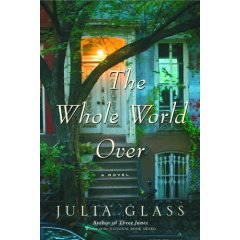
Julia Glass' The Whole World is Watching
Thursday, June 22, 2006
Summer Reading
It’s too hot to blog. The Bay Area is in the grip of a heat wave. The
If you buy a book from Oprah’s recommended reading list, you can get an additional 10% off at Amazon. (At checkout enter code oprahmag)
Tuesday, June 20, 2006
Tuesday Tidbits
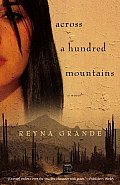
Daniel Olivas has a profile of Reyna Grande, whose new novel about a young illegal immigrant, Across A Hundred Mountains, draws on her own flight from Mexico to the U.S.
“There is no question that Grande is living the American dream. She was born in Guerrero, Mexico, in 1975, and entered the United States at age 9. She earned her bachelor of arts degree in creative writing from the University of California at Santa Cruz. With that, she became the first person in her entire family to obtain a degree. In 2003, Grande became a PEN USA Emerging Voices Fellow, which led to her getting a literary agent who placed Grande's novel with Atria Books.”
Across A Hundred Mountains, which got a starred review in Publisher’s Weekly, will be released this week.
Edward Guthmann has a sympathetic and moving portrait of Berkeley writer Judith Moore in the San Francisco Chronicle. Moore, a senior editor at the San Diego Reader and the author of the acclaimed memoir, Fat Girl, died in May of colon cancer.
Speaking of the Chronicle, its Sunday book review section has gone from six to four pages – all without any comment from the editors. Bad news. But the paper seems to have increased the number of reviews it is running during the week.
A few new blogs from people in the East Bay:
Wendy Lesser, the editor of the ThreePenny Review, is starting a blog called TheLesser Review. It looks interesting, but it has already raised the hackles of the blogosphere with its slightly better-than-thou attitude. (Naturally Ed and Dan Green are already all over this.) She seems to suggest that most blogs are just a collection of random thoughts strung together without intending to make a point. This is from her introduction:
“Speaking of blog rules, this one is not going to follow most of them.
For one thing, it will be very organized, with listings of its contents (once it accumulates any contents, that is).
For another, I will not be making daily or even weekly postings, and the format will in no way resemble a diary or journal. Each posting will be a little (or not so little) self-contained essay, perhaps more chatty than my usual essays in the magazine, but nonetheless resembling a printed article more than most blog entries do."
And finally, I do not plan to include any photos of my cat or best friends or any other personal items that you would be required to take an interest in. This should come as something of a relief — a blessedly impersonal blog."
Other new blogs include Dibs, by a mystery man (or woman) with lots of access to Advanced Readers copies and Confessions of a Crazy Chick, by an unnamed 22-year old in publishing.
Friday, June 16, 2006
Another Independent Bites the Dust
Ed has the bad news: A Clean, Well-Lighted Place for Books in San Francisco is closing its doors.
This is a terrible blow to Bay Area book lovers. A CWLPB is one of the best bookstores in the region, and reading there is like grabbing the brass ring. It’s the store that shows up at community lectures, particularly those put on by City Arts and Lectures down the street, and sells books.
First Kepler’s, which got a second chance.
Then Cody’s on Telegraph
Now A Clean Well Lighted Place for Books.
Somehow, when some of the smaller bookstores closed, I comforted myself by thinking the owners probably didn’t have enough business savvy or they were in the wrong location, or something.
I was deceiving myself. The Bay Area is considered one of the most literate and book-loving areas in the country, yet we are losing major bookstores all over. The closures are in communities that regard themselves as book friendly: Menlo Park, right near Stanford University, Berkeley, right near UC Berkeley, and San Francisco, just a block from City Hall, the Opera House, the Symphony, and a few blocks from the Main Library and Asian Art Museum.
Which store is next?
On a bright note, one of the owners of A CWLPB has opened a new store in West Portal, My writing companion, Sharon Epel, apparently told Neal Sofman, the owner about a vacant space, and he pounced. Here is her report:
“When Neal's wife Anna learned that we lived near West Portal, she said, "I'm always telling Neal he should open a shop there." And I-who have always felt that the one thing missing from our neighborhood shopping district (good restaurants; an arty movie theater, Peets), is a real bookstore--told Anna that an amazing retail space--big, with floor to ceiling windows on two sides, across from the theater, next to an ice cream shop, was up for lease.
To make a long story short, they tried to get the place, almost lost it to some finance company(gasp), and then, one day this fall, they called to thank me---they got it and they were opening up. They've opened now, and it is beautiful. It seems like an amazing story in these times of fabled independents closing.”
Update: The New York Times weighs in on Cody's closure.
This is a terrible blow to Bay Area book lovers. A CWLPB is one of the best bookstores in the region, and reading there is like grabbing the brass ring. It’s the store that shows up at community lectures, particularly those put on by City Arts and Lectures down the street, and sells books.
First Kepler’s, which got a second chance.
Then Cody’s on Telegraph
Now A Clean Well Lighted Place for Books.
Somehow, when some of the smaller bookstores closed, I comforted myself by thinking the owners probably didn’t have enough business savvy or they were in the wrong location, or something.
I was deceiving myself. The Bay Area is considered one of the most literate and book-loving areas in the country, yet we are losing major bookstores all over. The closures are in communities that regard themselves as book friendly: Menlo Park, right near Stanford University, Berkeley, right near UC Berkeley, and San Francisco, just a block from City Hall, the Opera House, the Symphony, and a few blocks from the Main Library and Asian Art Museum.
Which store is next?
On a bright note, one of the owners of A CWLPB has opened a new store in West Portal, My writing companion, Sharon Epel, apparently told Neal Sofman, the owner about a vacant space, and he pounced. Here is her report:
“When Neal's wife Anna learned that we lived near West Portal, she said, "I'm always telling Neal he should open a shop there." And I-who have always felt that the one thing missing from our neighborhood shopping district (good restaurants; an arty movie theater, Peets), is a real bookstore--told Anna that an amazing retail space--big, with floor to ceiling windows on two sides, across from the theater, next to an ice cream shop, was up for lease.
To make a long story short, they tried to get the place, almost lost it to some finance company(gasp), and then, one day this fall, they called to thank me---they got it and they were opening up. They've opened now, and it is beautiful. It seems like an amazing story in these times of fabled independents closing.”
Update: The New York Times weighs in on Cody's closure.
Thursday, June 15, 2006
James Joyce
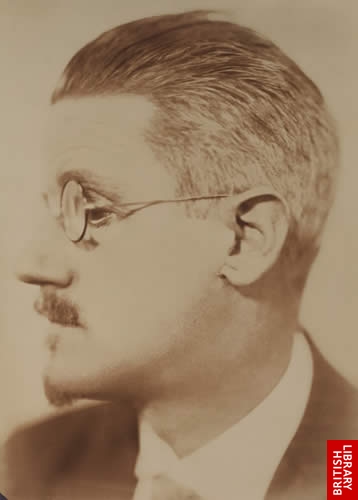
The June 16th issue of the New Yorker has a fascinating story on James Joyce’s grandson.
All of this is timely. The events in Ulysses take place on June 16, 1904. This Friday is Bloomsday.
Wednesday, June 14, 2006
Summer Reading

I haven’t been posting much because life has gotten busy. Summer is here, which means more kids running around. There was a graduation. Three performances of a play. Teachers’ gifts to buy, And of course all the time it took to get the house set up with a new TV for World Cup soccer.
Monday, June 12, 2006
The Pleasure of Private Libraries
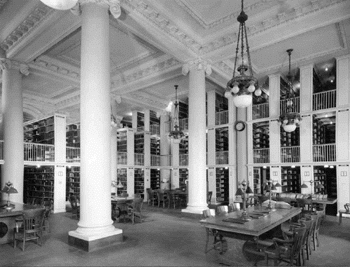
The New York Times has a story about the beauty of membership libraries, where people pay dues of around $90 a year to join a private sanctuary. Besides easy access to copies of all the latest books, members get to hear authors talk, lively discussions of books and themes, and access to their own private research librarians.
People in the Bay Area are lucky to have The Mechanic’s Institute, a private library, located in our midst. Founded more than 150 years ago, the Mechanics is housed in a gracious five-story building on Post Street in downtown San Francisco. Its chess room – and chess competitions – are famous around the region, and it’s a treasure trove for book lovers, all for $95 a year.
When Joan Didion came to the Bay Area to promote The Year of Magical Thinking, crowds clamored for tickets to her talk at City Arts and Lecture. You could have seen her for free in a small, intimate room at the Mechanics, and even had a good cup of coffee while you sat.
During the 100th anniversary celebration of the San Francisco earthquake, the Mechanics hosted both Dennis Smith, the former New York City firefighter and best-selling author who wrote the narrative, San Francisco is Burning, and Simon Winchester, who wrote A Crack in the Edge of the World.
This Friday is the annual Bloomsday celebration, an extravaganza of everything James Joyce. Put together by the Mechanics Institute’s Mark Singer, a research libraian who has more than 400 piece of Joycean memorabilia, the evening promises:
“Hilarity and ribaldry reign during our annual reading of James Joyce’s, Ulysses, marking the modern day odyssey of its protagonist Leopold Bloom through Dublin. Enjoy performances by local actors, readings by the audience, and our special Bloomsday Menu. Dress smart for the part!”
On Thursday June 22, Mark Danner, a writer and professor of journalism at the Berkeley School of Journalism, will talk about the secret Downing Street memos and the war in Iraq. He will be introduced by Frank Rich, the columnist for the New York Times.
These kinds of programs, put together by the events coordinator Laura Sheppard, rival anything being presented in the Bay Area.
Sunday, June 11, 2006
Rockin' With the Author
Who says all the good book parties are in New York?
I went to a fabulous one on Friday night. It honored Neil MacFarquhar, the New York Times correspondent whose new novel, The Sand Café, has gotten fantastic reviews. Neil read from his book and then talked about various aspects of the Middle East. The audience was rapt.
The party was a who’s who of Bay Area journalism, with a smattering of authors and other creative types. Not everyone knew one another, but you couldn’t tell that from the buzz of voices in the room. Ready for the Bold Faces:
The host was Peter Waldman, a reporter for the Wall Street Journal and a former Middle East correspondent. Peter, an insightful writer, did a lot of research for The Sand Café while Neil was recuperating from a horrific bike accident. Peter figures prominently in the book’s acknowledgments. Charene Zalis, his wife, shared hosting duties (as did I). She is an accomplished broadcast journalist in her own right.
For at least one evening, the New York Times and Wall Street Journal didn’t compete with one another. Neil’s colleague, the investigative journalist Lowell Bergman, called right before the party to say he couldn’t make it. But Jesse McKinley, the new San Francisco-based national correspondent for the New York Times, did. (He’s only been in the Bay Area for a few months, but has already picked up the pulse of the region. He wrote a lengthy article on Oakland Mayor Jerry Brown and another on the TV show Deadwood, which appeared Sunday). Marilyn Chase, a science reporter for the Wall Street Journal and the author of The Barbary Plague, picked Neil’s brain about writing fiction. Julia Flynn Siler, another WSJ type and the author of the forthcoming House of Mondavi, came as well.
There were scads of other reporters/writers as well: Dan Fost, a technology reporter for the San Francisco Chronicle came, as did Frontline correspondent Mark Shapiro, who is writing a book on how American businesses have responded to the formation of the European Union.
Tom Barbash, who works out of the Grotto and writes fiction (The Last Good Chance) and narrative non-fiction (On Top of the World) partied with the crowd. Barbash and Neil (and I) were all reporters at the Syracuse Post-Standard in upstate New York in the 1980s, although at different times.
Much of my wonderful writing group, North 24th, mingled with the crowd. There was Susan Freinkel, who is writing a book for UC Press about the decline of the American Chestnut Tree, Jill Storey, who writes for Salon and other magazines, Allison Hoover Bartlett, whose work has appeared in the New York Times and the Washington Post (she’s started a book project now), Katherine Neilan, a doctor whose personal essays about medicine have won lots of awards, and Sharon Epel, who most recent personal essay was published in Alternative Medicine.
There was a private eye set too: Alex Kline, (the brother of the actor Kevin Kline, who went to Stanford with Neil and whose brother, the actor Kevin Kline starred in the movie The Emperor’s Club, based on a short story written by Ethan Canin, one of Neil’s best friends.) Betsy Blumenthal, who works for Kroll Associates, came as well.
The company was good, the margaritas cold, and the food excellent. Best of, more than 25 people bought copies of The Sand Café.
Thursday, June 08, 2006
Will There Be a Big Bash at Cody's?
Leah Garchik, the Chronicle columnist who seems to have spies everywhere, reports that the last reading at Cody's on Saturday night will include some film cameras:
It makes sense. Wilsey is the co-editor of "The Thinking Fan's Guide to the World Cup," and we know how crazy those soccer fans are. (I won't even go into the very large TV and new cable service that are being installed in my house for this particular sporting event. Thank you, hubby) The World Cup starts this week, Cody's ends its reading series this week, so PARTY??
Unfortunately, I can't be there. I'd love to hear what happens, though.
Wednesday, June 07, 2006
Whole Foods Very Politely Criticizes Michael Pollan
In his new book, Michael Pollan spends a lot of time criticizing Whole Foods for becoming an industrialized “Big Organic.” The CEO and co-founder of the company has written an open letter to Pollan, complaining that the author never tried to talk to the company’s top leadership before bashing the grocery store in The Omnivore’s Dilemma.
“I regret that you did not engage in any serious research about how Whole Foods Market actually does business or you would have discovered that we support local and small farm food production all over the United States as well as in other parts of the world. Whole Foods Market, despite its size, does not operate as a typical monolithic corporation such as Wal-Mart (with which you associate Whole Foods Market several times in your book). Our company continues to operate on a decentralized model wherein each of our 11 regions, as well as each store, has a high level of autonomy. Differences in product offerings, suppliers, and seasonal availability result in a significant variation of items on our shelves from region to region and even store to store within the same city. However, our strict quality standards, the highest in the industry, are observed with every supplier and retail outlet. In other words, you may find a variation in the types and kinds of products, but each has been screened by our rigorous quality standards.”
Read the entire letter here.
(via Kevin Smokler)I'm Not Sure I Can Ever Swing This Performer Thing
MJ Rose who runs the blog Buzz, Balls, & Hype, has some thoughts on the difficulties of promoting a book. She points out that book tours are a crapshoot at best. Who knows if 5 people will show up to hear an author or 50? So publishers now expect authors to turn into solo performers and entertainers to sell books. MJ isn't sure that most writers are up to this:
“Why demand that authors be something they are not. We're not asking our best singers to write novels, not asking our thespians to craft commanding stories.
I think blogs/vlogs/podcasts are the best thing that has happened for authors. We can write - or perform if you will - in the way that we feel comfortable and the way we excel.
Now if we can just harness the power of the net in a more functional way. No, Virginia, Publishing is not broken, but the navagation system is. We still can't get enough new titles in front of enough new readers in an economial and motivating way.”
Monday, June 05, 2006
More Paeans to Cody's Books on Telegraph
From an article in UC Berkeley News, written by Wendy Edelstein:
Maxine Hong Kingston, an emeritus senior lecturer in English, recalls another tribute, one that occurred in 1966 when Anaïs Nin made a much-anticipated appearance for a publication party celebrating the first volume of her memoirs. The petite author wore a long ivory gown, and when she moved into the middle of the room to speak, Lawrence Ferlinghetti stepped behind her, raised a pail over her head, and showered her with red rose petals. "I think that was the most wonderful thing that happened at Cody's," says Kingston, who has often recalled that image. Kingston —whose books include The Woman Warrior, Tripmaster Monkey, and, most recently, The Fifth Book of Peace — says she is gratified to have read from every one of her books at Cody's.
Here’s another wonderful one:
Professor of Asian American Studies Elaine Kim remembers trying to cram her way into the bookstore during a standing-room-only reading in the mid-'80s given by Barbara Christian, the first black woman to earn tenure at Berkeley. The capacity crowd was flowing down the stairs, she says, and kept her from getting close to the upstairs room where Christian was reading.
A former employee, shares her memories, too.
Sunday, June 04, 2006
Last Week of Readings at Cody's
This is the last week that Cody’s bookstore will be holding author readings in its Telegraph Avenue store.
It’s painful to consider that this era is at an end. The upstairs loft where Cody’s holds its reading is almost like a sacred place. It’s not beautiful by any means – the floor is scarred from the scraping of thousands of chairs and the fluorescent lighting is not particularly flattering. But high up on the walls there is a gallery of photographs of the authors who have read there. It covers almost the entire canon of American literature. There are pictures of well-established authors – John Updike, Toni Morrison, Phillip Roth, Susan Sontag, Allan Ginsberg, Annie Proulx, Diane Johnson, Amy Tan, and others. (And they look so young!) There are photos of the young Turks, like Daniel Handler, Michael Chabon and Dave Eggers. There’s the poet Adrienne Rich, humorist Garrison Keiller, novelist Dorothy Allison, and more.
The photographs remind me that this is the kind of place where the beauty of literature shines brightest. It’s not in the fancy hotels or halls that hand out the Nobel Prize of the National Book Award, but in bookstores scattered around the country. Authors come to read; readers come to listen and a special bond forms, one that continues long after the store has closed for the night. The photos illustrate that even famous authors cherish that interaction.
Cody’s has lined up – as usual – a wonderful, eclectic mix of authors for this week. You’ve got to admire a place that has such a broad appreciation of authors. (So why aren’t more people shopping there?)
On Monday at 7:30 p.m., my good friend and New York Times reporter Neil MacFarquhar will read from his satirical novel about the first Gulf War, The Sand Café.
On Tuesday, Jason Roberts will read from A Sense of the World, his new biography of the blind traveler James Holman. The book has gotten excellent buzz, and the San Francisco Chronicle Book Review featured it prominently on Sunday.
On Wednesday, Greg Palast will read at 12:30 from Armed Madhouse: Whose Afraid of Osama Wolf, a humorous, yet well-researched investigation into the perils of George W. Bush’s foreign policy.
At 7:30 Nando Parrado will talk about Miracle in the Andes, which details how he survived the famous plane crash in the Andes that killed most of the Chilean rugby team. Parrado and other survivors trekked over 45 miles of glacier to find help.
On Thursday, Chris Abani (his last novel was Graceland) will talk about Becoming Abigail, the novel of a young Nigerian girl whose relatives force her into prostitution when when she moved to London. He will be joined by the Jamaican author Colin Channer, the editor of Iron Balloons, an anthology of emerging Jamaican writers.
The list goes on: Douglas Copeland will speak on Friday night; at 4 p.m. on Saturday Alex Polikoff, an attorney, will talk about Waiting for Gautreaux, his memoir about the landmark Chicago housing discrimination lawsuit he fought all the way to the Supreme Court. That night, Sean Wilsey will talk about the anthology he edited on the World Cup.
Then that’s it. The store won’t close until mid-July, but the readings will stop. Cody’s has two other bookstores – one on Fourth Street in Berkeley and one on Stockton Street in San Francisco, but they have neither the space nor the atmosphere of the Telegraph Avenue store. When you attend a reading at those stores, as well as many other independent bookstores, you feel squeezed into the space. There’s never enough room and all the other patrons milling around can be distracting.
I never felt that tug at Cody’s on Telegraph. When I was in that loft for a reading, I felt as if the author and his or her audience were in a world all their own. I'll miss it.
Friday, June 02, 2006
Elizabeth Rosner
Elizabeth Rosner, the Berkeley author whose new book, The Blue Nude, is getting glowing reviews, will talk and sign books at The Magnes Museum in Berkeley on Sunday. Her book examines a relationship between a German artist whose father was a Nazi and a young Israeli model.
Rosner will talk on the day the Magnes opens “My America,” an exhibit of paintings and photographs from the Jewish Museum in New York. The exhibition features work from 1900-1955, “a period of great social and artistic activity during which Jewish artists played a major role in shaping the direction of America art.”
Rosner’s talk is part of the Magnes’ new literary series, “For Review,” which will bring Jewish authors into the museum to discuss how their Jewish background has – or has not – affected their work. Other authors include Joshua Braff, Ayelet Waldman, and Jack Marshall.
Thursday, June 01, 2006
Maya Angelou Calling Me?
I just got a “personal” phone call from Maya Angelou urging me to vote for Ron Dellums for mayor of Oakland. Gee, that sure beats the phone call I got from current Mayor Jerry Brown suggesting I vote for the candidate Ignacio de la Fuente.
There is something so melodic about Angelou’s voice. Did you know she grew up in Oakland?
Another Way to Measure Yourself
Bud Parr, who put together the interesting site Metaxucafe, which gathers the headlines of various lit blogs, is now editor of related site that will either make you deliriously happy or deeply depressed.
It’s called The Literature List and its on a new site called PubSub. The main purpose seems to be to rank various books blogs and show if their readership goes up or down on any particular day.
For example, a site named Catch and Release got the most new traffic on Wednesday May 31. Other big winners included Gwenda Bond’s site, Shaken and Stirred.
I don’t know what this all means in the greater scheme of things, except to make me depressed by how little traffic Ghost Word gets. (Down 4% on Wednesday) But it’s definitely a great time-waster and an introduction to a bunch of literary blogs I had never heard of. So click through and enjoy!
Wednesday, May 31, 2006
The Fuss over the New York Times Book Review

I’ve been really surprised by the vitriol spewed in the blogosphere about last week’s New York Times Book review. The section, with a big graphic of a ketchup bottle on the cover, was devoted to books on food.
A number of sites were incredulous at the selection, pointing out with disdain that this was the second themed Book Review in two weeks. The other one was a review focused on literature.
One blogger even went so far as to call the special section a “repulsive pretender,” and say he did not see one book reviewed that he wanted to read.
Now I understand the general griping about the NYTBR and its editor Sam Tanenhaus. It goes something like this: the section doesn’t review enough fiction and barely even considers fiction in translation or novels from emerging authors. Its reviewers are almost all male and white, with a few white female reviewers thrown in occasionally to appease the masses.
Fellow blogger Ed Champion has almost made a second career out of critiquing the New York Times Book Review. For months, he has graded the section and if he found it well-balanced in terms of fiction and non-fiction, male and female authors, male and female reviewers, he would award Sam Tanenhaus a brownie. If he found the section wanting he would DENY the brownie!!!
Now, while this is funny, I have never figured out if it is a literal or figurative brownie. (Ed, did you ever really send anything?) But the brownie metaphor came up again at a panel at the recent BEA conference. The NYTBR took it upon itself recently to select the best American novel of the last 25 years. They queried a number of authors and selected Toni Morrison’s Beloved as THE BOOK. The runners-up were mostly male (Phillip Roth and Don DeLillo’s books got a lot of votes). Naturally, almost no one except the editors of the NYTBR thought the nominated books reflected the canon of American literature, so the panel discussion at BEA was lively. Ed tried to make some points:
“I stood up and pointed out to Tanenhaus that the list of judges was mostly male and that this reflected a continuing trend by the NYTBR as a whole to give the majority of its reviews to men over women. I also asked how a weekly book review section that continued to prioritize nonfiction over fiction could legitimately put out a “Best Contemporary Fiction” list. I then revealed myself to be the Tanenhaus Brownie Watch guy and playfully asked why I hadn’t received a single thank you note for the brownies. “Is this a New York thing?” I asked.”
Why do so many bloggers care about the New York Times Book Review? After all, isn’t their reason for being to provide alternative voices to the mainstream? Isn’t that why they created the LitBlog Coop? To share fiction that hasn’t received wide-spread recognition?
I think the anger at the New York Times Book Review stems from this: most people rebel against authority at some stage in their lives and to lit bloggers, the NYTBR represents the mainstream publishing industry. It’s a difficult industry to break into, a very insular and often myopic group, and bloggers are pissed off they are not regarded with as much respect as they think they deserve. (Why else would they crow every time they are praised by a newspaper or other vehicle of the mainstream media? For example, Mark Sarvas has as a tagline at the top of his blog with these comments: A Forbes Best of the Web Pick; A Los Angeles Magazine Top Los Angeles Blog) Bloggers keep telling publishers that lit blogs are the way to create buzz for books, but the technology-phobic publishing industry hasn’t really caught on yet.
I think this rebellion may prove ultimately to be a good thing. I just think it will take years before the NYTBR redefines what it considers important literature. Every year the critics anoint some new writer, and increasingly they are people who write about our multicultural world. (Zadie Smith, for example) But the NYTBR will always reflect a New-York centric viewpoint and we all know New Yorkers consider their city to be the center of everything important. (Sort of like how the U.S. thinks it’s the greatest – and only important – country in the world)
But back to the food section. I want to disagree with all the negative ranting. I really enjoyed this section. Having just finished Michael Pollan’s book on the food industry – a book I consider really important – I loved finding out about books that explored American passion for food. After reading the review of Bill Buford’s Heat, a memoir that talks about his internship with chef Mario Batali, I immediately reserved it at the library. The review also made me want to read Julia Child’s memoir on food and France. I had heard a lot about the book but before I read the review I was lukewarm.
And isn’t this what a book review section is for? To make us go out and read new books? Honestly, how many books can an average person read a year? 20? The NYTBR reviews that many books each week. So even if the section give short shrift to contemporary fiction and emerging authors, it does provide great suggestions for books on a regular basis. And that is its job.
Sunday, May 28, 2006
Has Anyone In Congress Read a Book Like This?
It took Reyna Grande three tries before she was able to illegally cross the border from Mexico into the United States. She was 10.
The first time, she was so sick with a fever that her father had to carry her on his back. They got caught.
On the second attempt, they crouched in the bushes next to a dead man covered with flies. Her father said the man had probably been murdered for his money by the coyote leading him across the border. They were caught again.
The third time Reyna made it. Now 30 years later she is a college graduate, a teacher in the Los Angeles Unified School District, and the author of the forthcoming novel Across A Hundred Mountains.
California Authors has an essay of Reyna’s, describing her childhood, flight to the U.S. and thoughts on the current debate on immigration.
The first time, she was so sick with a fever that her father had to carry her on his back. They got caught.
On the second attempt, they crouched in the bushes next to a dead man covered with flies. Her father said the man had probably been murdered for his money by the coyote leading him across the border. They were caught again.
The third time Reyna made it. Now 30 years later she is a college graduate, a teacher in the Los Angeles Unified School District, and the author of the forthcoming novel Across A Hundred Mountains.
California Authors has an essay of Reyna’s, describing her childhood, flight to the U.S. and thoughts on the current debate on immigration.
Saturday, May 27, 2006
Bloggers Are Considered Journalists
There was good legal news on Friday, for once. A California court ruled that bloggers who gather news and other information should be afforded the same protection as traditional journalists.
The case came about when Apple Computer sued some bloggers who revealed news about an upcoming product. Apple argued that the bloggers should be forced to reveal their source since they weren’t journalists. Three judges disagreed.
In their decision, the judges wrote: "We can think of no workable test or principle that would distinguish 'legitimate' from 'illegitimate' news. Any attempt by courts to draw such a distinction would imperil a fundamental purpose of the First Amendment, which is to identify the best, most important, and most valuable ideas not by any sociological or economic formula, rule of law, or process of government, but through the rough and tumble competition of the memetic marketplace."
From the San Francisco Chronicle:
"This was a huge win for the First Amendment and for journalists who publish online," said Lauren Gelman, associate director for Stanford's Center for Internet and Society, who filed a brief supporting the Electronic Frontier Foundation. "The court recognized that in the modern era, one way journalists publish information is through the Internet."
The ruling makes sense. The lines are already blurred between news that comes out in traditional outlets like newspapers, radio, and television, and news that is released on-line. Anyone who gathers information for public distribution now has added protections.
The case came about when Apple Computer sued some bloggers who revealed news about an upcoming product. Apple argued that the bloggers should be forced to reveal their source since they weren’t journalists. Three judges disagreed.
In their decision, the judges wrote: "We can think of no workable test or principle that would distinguish 'legitimate' from 'illegitimate' news. Any attempt by courts to draw such a distinction would imperil a fundamental purpose of the First Amendment, which is to identify the best, most important, and most valuable ideas not by any sociological or economic formula, rule of law, or process of government, but through the rough and tumble competition of the memetic marketplace."
From the San Francisco Chronicle:
"This was a huge win for the First Amendment and for journalists who publish online," said Lauren Gelman, associate director for Stanford's Center for Internet and Society, who filed a brief supporting the Electronic Frontier Foundation. "The court recognized that in the modern era, one way journalists publish information is through the Internet."
The ruling makes sense. The lines are already blurred between news that comes out in traditional outlets like newspapers, radio, and television, and news that is released on-line. Anyone who gathers information for public distribution now has added protections.
Subscribe to:
Posts (Atom)