Pages

Monday, June 05, 2006

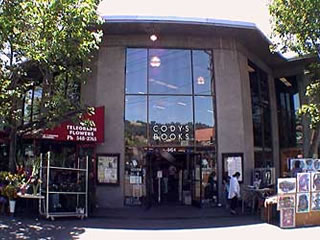
More Paeans to Cody's Books on Telegraph

From an article in UC Berkeley News, written by Wendy Edelstein:

Maxine Hong Kingston, an emeritus senior lecturer in English, recalls another tribute, one that occurred in 1966 when Anaïs Nin made a much-anticipated appearance for a publication party celebrating the first volume of her memoirs. The petite author wore a long ivory gown, and when she moved into the middle of the room to speak, Lawrence Ferlinghetti stepped behind her, raised a pail over her head, and showered her with red rose petals. "I think that was the most wonderful thing that happened at Cody's," says Kingston, who has often recalled that image. Kingston —whose books include The Woman Warrior, Tripmaster Monkey, and, most recently, The Fifth Book of Peace — says she is gratified to have read from every one of her books at Cody's.

Here’s another wonderful one:

Professor of Asian American Studies Elaine Kim remembers trying to cram her way into the bookstore during a standing-room-only reading in the mid-'80s given by Barbara Christian, the first black woman to earn tenure at Berkeley. The capacity crowd was flowing down the stairs, she says, and kept her from getting close to the upstairs room where Christian was reading.

A former employee, Sumana Harihareswara, shares her memories, too.

Sunday, June 04, 2006

Last Week of Readings at Cody's

This is the last week that Cody’s bookstore will be holding author readings in its Telegraph Avenue store.

It’s painful to consider that this era is at an end. The upstairs loft where Cody’s holds its reading is almost like a sacred place. It’s not beautiful by any means – the floor is scarred from the scraping of thousands of chairs and the fluorescent lighting is not particularly flattering. But high up on the walls there is a gallery of photographs of the authors who have read there. It covers almost the entire canon of American literature. There are pictures of well-established authors – John Updike, Toni Morrison, Phillip Roth, Susan Sontag, Allan Ginsberg, Annie Proulx, Diane Johnson, Amy Tan, and others. (And they look so young!) There are photos of the young Turks, like Daniel Handler, Michael Chabon and Dave Eggers. There’s the poet Adrienne Rich, humorist Garrison Keiller, novelist Dorothy Allison, and more.

The photographs remind me that this is the kind of place where the beauty of literature shines brightest. It’s not in the fancy hotels or halls that hand out the Nobel Prize of the National Book Award, but in bookstores scattered around the country. Authors come to read; readers come to listen and a special bond forms, one that continues long after the store has closed for the night. The photos illustrate that even famous authors cherish that interaction.

Cody’s has lined up – as usual – a wonderful, eclectic mix of authors for this week. You’ve got to admire a place that has such a broad appreciation of authors. (So why aren’t more people shopping there?)

On Monday at 7:30 p.m., my good friend and New York Times reporter Neil MacFarquhar will read from his satirical novel about the first Gulf War, The Sand Café.

On Tuesday, Jason Roberts will read from A Sense of the World, his new biography of the blind traveler James Holman. The book has gotten excellent buzz, and the San Francisco Chronicle Book Review featured it prominently on Sunday.

On Wednesday, Greg Palast will read at 12:30 from Armed Madhouse: Whose Afraid of Osama Wolf, a humorous, yet well-researched investigation into the perils of George W. Bush’s foreign policy.

At 7:30 Nando Parrado will talk about Miracle in the Andes, which details how he survived the famous plane crash in the Andes that killed most of the Chilean rugby team. Parrado and other survivors trekked over 45 miles of glacier to find help.

On Thursday, Chris Abani (his last novel was Graceland) will talk about Becoming Abigail, the novel of a young Nigerian girl whose relatives force her into prostitution when when she moved to London. He will be joined by the Jamaican author Colin Channer, the editor of Iron Balloons, an anthology of emerging Jamaican writers.

The list goes on: Douglas Copeland will speak on Friday night; at 4 p.m. on Saturday Alex Polikoff, an attorney, will talk about Waiting for Gautreaux, his memoir about the landmark Chicago housing discrimination lawsuit he fought all the way to the Supreme Court. That night, Sean Wilsey will talk about the anthology he edited on the World Cup.

Then that’s it. The store won’t close until mid-July, but the readings will stop. Cody’s has two other bookstores – one on Fourth Street in Berkeley and one on Stockton Street in San Francisco, but they have neither the space nor the atmosphere of the Telegraph Avenue store. When you attend a reading at those stores, as well as many other independent bookstores, you feel squeezed into the space. There’s never enough room and all the other patrons milling around can be distracting.

I never felt that tug at Cody’s on Telegraph. When I was in that loft for a reading, I felt as if the author and his or her audience were in a world all their own. I'll miss it.

Friday, June 02, 2006

Elizabeth Rosner

Elizabeth Rosner, the Berkeley author whose new book, The Blue Nude, is getting glowing reviews, will talk and sign books at The Magnes Museum in Berkeley on Sunday. Her book examines a relationship between a German artist whose father was a Nazi and a young Israeli model.

Rosner will talk on the day the Magnes opens “My America,” an exhibit of paintings and photographs from the Jewish Museum in New York. The exhibition features work from 1900-1955, “a period of great social and artistic activity during which Jewish artists played a major role in shaping the direction of America art.”

Rosner’s talk is part of the Magnes’ new literary series, “For Review,” which will bring Jewish authors into the museum to discuss how their Jewish background has – or has not – affected their work. Other authors include Joshua Braff, Ayelet Waldman, and Jack Marshall.

Thursday, June 01, 2006

Maya Angelou Calling Me?

I just got a “personal” phone call from Maya Angelou urging me to vote for Ron Dellums for mayor of Oakland. Gee, that sure beats the phone call I got from current Mayor Jerry Brown suggesting I vote for the candidate Ignacio de la Fuente.


There is something so melodic about Angelou’s voice. Did you know she grew up in Oakland?

Another Way to Measure Yourself

Bud Parr, who put together the interesting site Metaxucafe, which gathers the headlines of various lit blogs, is now editor of related site that will either make you deliriously happy or deeply depressed.

It’s called The Literature List and its on a new site called PubSub. The main purpose seems to be to rank various books blogs and show if their readership goes up or down on any particular day.

For example, a site named Catch and Release got the most new traffic on Wednesday May 31. Other big winners included Gwenda Bond’s site, Shaken and Stirred.

I don’t know what this all means in the greater scheme of things, except to make me depressed by how little traffic Ghost Word gets. (Down 4% on Wednesday) But it’s definitely a great time-waster and an introduction to a bunch of literary blogs I had never heard of. So click through and enjoy!

Wednesday, May 31, 2006

The Fuss over the New York Times Book Review


I’ve been really surprised by the vitriol spewed in the blogosphere about last week’s New York Times Book review. The section, with a big graphic of a ketchup bottle on the cover, was devoted to books on food.

A number of sites were incredulous at the selection, pointing out with disdain that this was the second themed Book Review in two weeks. The other one was a review focused on literature.

One blogger even went so far as to call the special section a “repulsive pretender,” and say he did not see one book reviewed that he wanted to read.

Now I understand the general griping about the NYTBR and its editor Sam Tanenhaus. It goes something like this: the section doesn’t review enough fiction and barely even considers fiction in translation or novels from emerging authors. Its reviewers are almost all male and white, with a few white female reviewers thrown in occasionally to appease the masses.

Fellow blogger Ed Champion has almost made a second career out of critiquing the New York Times Book Review. For months, he has graded the section and if he found it well-balanced in terms of fiction and non-fiction, male and female authors, male and female reviewers, he would award Sam Tanenhaus a brownie. If he found the section wanting he would DENY the brownie!!!
Now, while this is funny, I have never figured out if it is a literal or figurative brownie. (Ed, did you ever really send anything?) But the brownie metaphor came up again at a panel at the recent BEA conference. The NYTBR took it upon itself recently to select the best American novel of the last 25 years. They queried a number of authors and selected Toni Morrison’s Beloved as THE BOOK. The runners-up were mostly male (Phillip Roth and Don DeLillo’s books got a lot of votes). Naturally, almost no one except the editors of the NYTBR thought the nominated books reflected the canon of American literature, so the panel discussion at BEA was lively. Ed tried to make some points:

“I stood up and pointed out to Tanenhaus that the list of judges was mostly male and that this reflected a continuing trend by the NYTBR as a whole to give the majority of its reviews to men over women. I also asked how a weekly book review section that continued to prioritize nonfiction over fiction could legitimately put out a “Best Contemporary Fiction” list. I then revealed myself to be the Tanenhaus Brownie Watch guy and playfully asked why I hadn’t received a single thank you note for the brownies. “Is this a New York thing?” I asked.”

Why do so many bloggers care about the New York Times Book Review? After all, isn’t their reason for being to provide alternative voices to the mainstream? Isn’t that why they created the LitBlog Coop? To share fiction that hasn’t received wide-spread recognition?

I think the anger at the New York Times Book Review stems from this: most people rebel against authority at some stage in their lives and to lit bloggers, the NYTBR represents the mainstream publishing industry. It’s a difficult industry to break into, a very insular and often myopic group, and bloggers are pissed off they are not regarded with as much respect as they think they deserve. (Why else would they crow every time they are praised by a newspaper or other vehicle of the mainstream media? For example, Mark Sarvas has as a tagline at the top of his blog with these comments: A Forbes Best of the Web Pick; A Los Angeles Magazine Top Los Angeles Blog) Bloggers keep telling publishers that lit blogs are the way to create buzz for books, but the technology-phobic publishing industry hasn’t really caught on yet.

I think this rebellion may prove ultimately to be a good thing. I just think it will take years before the NYTBR redefines what it considers important literature. Every year the critics anoint some new writer, and increasingly they are people who write about our multicultural world. (Zadie Smith, for example) But the NYTBR will always reflect a New-York centric viewpoint and we all know New Yorkers consider their city to be the center of everything important. (Sort of like how the U.S. thinks it’s the greatest – and only important – country in the world)

But back to the food section. I want to disagree with all the negative ranting. I really enjoyed this section. Having just finished Michael Pollan’s book on the food industry – a book I consider really important – I loved finding out about books that explored American passion for food. After reading the review of Bill Buford’s Heat, a memoir that talks about his internship with chef Mario Batali, I immediately reserved it at the library. The review also made me want to read Julia Child’s memoir on food and France. I had heard a lot about the book but before I read the review I was lukewarm.

And isn’t this what a book review section is for? To make us go out and read new books? Honestly, how many books can an average person read a year? 20? The NYTBR reviews that many books each week. So even if the section give short shrift to contemporary fiction and emerging authors, it does provide great suggestions for books on a regular basis. And that is its job.

Sunday, May 28, 2006

Has Anyone In Congress Read a Book Like This?

It took Reyna Grande three tries before she was able to illegally cross the border from Mexico into the United States. She was 10.

The first time, she was so sick with a fever that her father had to carry her on his back. They got caught.

On the second attempt, they crouched in the bushes next to a dead man covered with flies. Her father said the man had probably been murdered for his money by the coyote leading him across the border. They were caught again.

The third time Reyna made it. Now 30 years later she is a college graduate, a teacher in the Los Angeles Unified School District, and the author of the forthcoming novel Across A Hundred Mountains.

California Authors has an essay of Reyna’s, describing her childhood, flight to the U.S. and thoughts on the current debate on immigration.

Saturday, May 27, 2006

Bloggers Are Considered Journalists

There was good legal news on Friday, for once. A California court ruled that bloggers who gather news and other information should be afforded the same protection as traditional journalists.

The case came about when Apple Computer sued some bloggers who revealed news about an upcoming product. Apple argued that the bloggers should be forced to reveal their source since they weren’t journalists. Three judges disagreed.

In their decision, the judges wrote: "We can think of no workable test or principle that would distinguish 'legitimate' from 'illegitimate' news. Any attempt by courts to draw such a distinction would imperil a fundamental purpose of the First Amendment, which is to identify the best, most important, and most valuable ideas not by any sociological or economic formula, rule of law, or process of government, but through the rough and tumble competition of the memetic marketplace."

From the San Francisco Chronicle:

"This was a huge win for the First Amendment and for journalists who publish online," said Lauren Gelman, associate director for Stanford's Center for Internet and Society, who filed a brief supporting the Electronic Frontier Foundation. "The court recognized that in the modern era, one way journalists publish information is through the Internet."

The ruling makes sense. The lines are already blurred between news that comes out in traditional outlets like newspapers, radio, and television, and news that is released on-line. Anyone who gathers information for public distribution now has added protections.

Thursday, May 25, 2006

Summer Reading 2006

Summer must be coming because newspapers and on-line magazines are trotting out their “Best Summer Reads.”

In USA Today, John Grogan, the author of Marley and Me, says he wants to read Michael Pollan’s Omnivore’s Dilemma, because “he makes me question my comfortable assumptions and understand the true costs of the lifestyle choices I make."

Wally Lamb, the author of She's Come Undone, intends to read The March by E.L. Doctorow, Ted Williams by Leigh Montville and The Glass Castle by Jeannette Walls: "These are the books my wife has raved most about from the other side of our bed."

Here’s USA Today’s complete list.

Slate asked authors to name their favorite beach books.

Michael Chabon said he doesn’t change what he reads when he’s at the beach. He just reads more.

Ruth Reichl, the editor of Gourmet, recently devoured Hima Wolitzer’s Doctor’s Daughter. Wilma is the mother of author Meg Wolitzer (Who knew?) Now I definitely want to read this book.

Thriller writer Michael Connelly intends to read James’ Swanson’s Manhunt: The Hunt for Lincoln’s Assassin.

Other authors have this to say.

Booksense has some interesting picks for June:

They’ve recommended The Whole World Over, the new novel by Julia Glass, author of The Three Junes; Let Me Finish, a memoir by Roger Angell, Water, for Elephants, by Sara Gruen, and many more.

I’m still on my winter reading. My TBR stack from the library includes The Colony: The Harrowing Story of the True Exiles of Molokai by John Tayman; Once Upon a Day by Lisa Tucker; Sweet and Low: A Family Story by Rich Cohen.

I foresee large library fines ahead.

Is There Any Hope for Cody's Bookstore?

A group is forming to try and save Cody’s on Telegraph, similar to the successful attempt made last year to keep open Kepler’s in Menlo Park.

Berkeley City Councilman Kriss Worthington is working with the group, which plans to hold a meeting on June 8, according to an article in the Oakland Tribune.

Owner Andy Ross announced a few weeks ago that the flagship Cody’s would close in July because it had lost more than $1 million in recent years.

The news spurred the city to pledge to clean up Telegraph Avenue, which has long been a favorite hang out for hippies, runaways, homeless people as well as students from Cal.

Berkeley is promising to clean the street more frequently, improve lighting, and streamline the requirements for new business permits.

Andy Ross told the Tribune he welcomes any attempts to keep the store open, but
“I don't have a solution. It's going to have to come from outside."

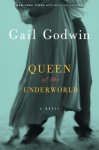
Gail Godwin's Queen of the Underworld


I’ve long been a fan of Gail Godwin’s. She has a way of penetrating the intricacies of human relationships that is both illuminating and satisfying. I adored The Good Husband, a story of two couples in a small university town. The main character, Magda, a professor, is dying and the book brings up questions about love, loyalty, and the true character of devotion.

So I was looking forward to reading Godwin’s latest book, Queen of the Underworld. And in the beginning, I was not disappointed. It tells the story of young Emma Gant as she graduates from college and heads down to Miami to start her first job as a newspaper reporter. Emma is talented and ambitious and thinks she understands more of the world than she actually does. This attitude comes because she has been involved in a year long liaison with a Jewish club owner, the married Paul Nightingale.

The scene Godwin sets is unforgettable. It is 1959, months after Fidel Castro has seized power in Cuba, and scores of disillusioned wealthy Cubans are streaming to Miami. They don’t know if Castro will remain in power or be ousted by the Americans, so their exile has a temporary quality to it. Emma is staying in a hotel filled with these Cuban refugees, and Godwin does an excellent job is creating vivid characters, like Alex, the hotel manager, a Harvard graduate, and wanna-be fighter. Alex’s mother Lidia has been married five times and is a beautiful, larger-than-life figure who organizes opposition to Castro by throwing cocktail parties around the pool.

Godwin also does an wonderful job describing the newsroom of the fictional Miami Star and the challenges facing young female reporters. Godwin worked as a reporter for the Miami Herald in 1959 until she was fired. (And turned to fiction) Al Neuharth, the loquacious and slick founder of USA Today was the assistant managing editor of the Herald when Godwin was there. She gets her revenge on him 46 years later by creating the character Lou Norbright, a newspaper man so ambitious and odious that colleagues call him Lucifer behind his back.

A third plot element has to do with a newspaper series Norbright wrote called “Queen of the Underworld,” about a beautiful young farm girl who became engaged to a member of the Mafia, and then went to work as a madam in a brothel.

So Godwin sets up a wonderful environment. Emma keeps being sent on to cover inane stories and I kept waiting for her to realize that the biggest story of all – the Cuban migration into Miami – is sitting right in front of her at her hotel. But does Emma see this? Is there ever a moment of epiphany? No.

This is where Godwin falls short. There really is no plot, no dénouement, and this ultimately proves disappointing. The book instead just seems to be a reflection of the choices Godwin made in her life. In the end, Emma decides to write a fictional account of the Queen of the Underworld. She doesn’t shun journalism; she just decides to explore a different way of getting at the truth.

Tuesday, May 23, 2006

The Future of Independent Bookstores

Paul Collins, the author of Sixpence House: Lost in a Town of Books, has an interesting article in the Voice Literary Supplement about the future of independent bookstores.

It follows a slew of books and articles looking at the topic.

Slate’s Tyler Cowan has his say.

Laura J. Miller has written a whole book on the subject.

And here’s a story about independent bookstores in Britain.

IN OTHER NEWS: There will be free sneak preview of Al Gore’s film, An Inconvenient Truth, tonight at UC Berkeley’s Wheeler Auditorium. It starts at 8 pm.

Friday, May 19, 2006

BEA

This is an easy time to be a blogger. It’s BEA time – the book world’s convention – and lots of bloggers are writing about it.

Ed Champion's Return of the Reluctant (Read about his public dust-up with the editor of the New York Times Book Review)

The Millions

Confessions of an Idiosyncratic Mind

Inside BookExpo

On a sadder note, Judith Moore, the Berkeley author who wrote the acclaimed memoir Fat Girl, has died. She was 66 and died from colon cancer.

Thursday, May 18, 2006

Why Cost-Cutting Is Not A Good Idea ...

This says more about the state of journalism in America today than anything else I’ve read. From the New York Times:

“Two Investigative Reporters Leave

Donald Barlett and James Steele, two investigative reporters who have chronicled the vicissitudes of the American economy for Time magazine since 1997, have lost their jobs in a budget squeeze.

The reporting duo, who together won two Pulitzer Prizes and two national magazine awards, were on the payroll of Time Inc. Their jobs were among about 650 that the company has eliminated in the last six months.

John Huey, editor in chief of Time Inc., said that as he cut corporate costs, he sought unsuccessfully to place the two men on the payroll of a company magazine.

"They're very good but very expensive, and I couldn't get anyone to take them on their budget," Mr. Huey said. "We'll miss their work."

Mr. Steele, 63, who began working with Mr. Barlett, 69, at The Philadelphia Inquirer in 1971, said: "We've had a great run at Time, but apparently the decision was made at the corporate level not to fund this kind of work."

These are the guys who exposed our country's dysfunctional tax system; its whacked-out medical system; exposed the problems with post-9/11 security and so much more.

Tuesday, May 16, 2006

Michael Pollan, again


I know I have been blogging a lot about Michael Pollan’s The Omnivore’s Dilemma: A Natural History of Four Meals. But that’s because I was so taken with his book, which opened my eyes to an industrial food complex I never knew existed.

I didn’t expect to learn so much. I live in Berkeley, California and have been buying organic milk for my two daughters for more than a decade (I didn’t want the growth hormones fed to cattle to wrack havoc on their growth) I have a friend who sells me grass-fed beef from cattle raised on her family’s farm. Every time I take a bite of a potato chip I do so in full recognition that the oil used to fry it is rushing straight to my arteries.

What more was there to know? Organic, good, everything else bad. Fresh is better than processed and local is better than imported.

Pollan makes these points and does a masterful job of showing how the American food machine is out of whack, and how its excesses are leading to obesity, diabetes, and early death. He argues vigorously that our desire to have any food in any season at a reasonable price gives us supermarkets stuffed with gorgeous, tempting products – but at a great social and ecological cost. (It takes a lot of fossil fuel to bring those grapes from Chile).

What really stunned me is the great cost to animals to make this happen. Ranchers now stuff their cattle with corn instead of grass because it is cheaper and plumps them up faster. But cows’ digestive systems can’t process the corn so they get sick – even growing a virulent form of e-coli in their stomachs. Ranchers fill the cattle with antibiotics to make them fit for human consumption.

Chickens, even organic “free-range ones” are raised in pens that are so crowded the birds can barely move. To stop them pecking one another, some ranchers routinely cut off their beaks.

Pigs are also raised in conditions that force them to become belligerent. They are taken from their mothers ten days after birth (instead of at weaning at 13 weeks), giving them a lifelong obsession with sucking and chewing. When they are crammed into pens to be fattened for market, they have a tendency to bite off other pigs’ tails To stop this, ranchers snip off the tails – this is called tail docking -- but deliberately leave a sensitive stump. That’s because pigs are highly intelligent and get depressed at their condition, but can be forced out of their depression when their sensitive tails get touched.

Pollan is not an animal rights crusader, and a good part of his book explores the ethics of eating meat. He concludes, in a very interesting fashion, that killing and eating meat is actually a humane act. But his reporting makes the reader ponder the kind of meat she is eating and whether the cruel practices used to get that beef on a barbeque is necessary. As he puts it in the inscription in my book: “Vote with your fork.”

There are many other fascinating issues he raises. I encourage everyone to read the book. If you don’t have the time, remember the mantra, “Eat Local.”

Tuesday Tidbits

Starbucks, which has conquered almost every corner in America, is now bringing authors to its headquarters to do readings. It’s part of a trend documented today by the New York Times. While some bookstores are leery, I think it’s a great way to get those who are too busy or indifferent to think about books.

Pamela Mazzola and Nancy Oakes, the authors of the spectacular cookbook, Boulevard, did a lot of speaking at companies on their book tour. One visit was to Google on the San Francisco peninsula. The company bought about 500 cookbooks and the authors spent the day signing and talking to people about food. Sales beat out a day at Costco, where just a handful of people bought books.

Bookstores do a great job of selling books because those working there can recommend books to customers. The hand-selling can go on for weeks. These mega-events at companies are usually just one-shot deals; the sales made that day end that day. But the best way to permeate this cluttered culture is to be ubiquitous: in bookstores, at work, on the radio, in the newspaper.


The finalists for the Gerald Loeb awards in business journalism have been announced and it is interesting to see that the nominated books are actually books that have sold well

The finalists in the business book category are:
-- James B. Stewart for DisneyWar published by Simon and Schuster

-- Steven D. Levitt and Stephen J. Dubner for Freakonomics published by William Morrow (Harper Collins)

-- Thomas L. Friedman for The World is Flat published by Farrar, Straus and Giroux

Maybe this book can explain why Cody’s on Telegraph is closing, Kepler’s can barely manage to stay open and a Clean Well-Lighted Place for Books is struggling with sales. (via California Authors)

Reluctant Capitalists: Bookselling and the Culture of Consumption by Laura J, m.d. Miller

Over the past half-century, bookselling, like many retail industries, has evolved from an arena dominated by independent bookstores to one in which chain stores have significant market share. And as in other areas of retail, this transformation has often been a less-than-smooth process. This has been especially pronounced in bookselling, argues Laura J. Miller, because more than most other consumer goods, books are the focus of passionate debate. What drives that debate? And why do so many people believe that bookselling should be immune to questions of profit?”

Monday, May 15, 2006

Scan This Book! by Kevin Kelly

The New York Times Magazine cover story was all about the digitalization of books and the benefits of a universal library.

There was one element of the article that really excited me. I do a lot of research online and have greatly benefited from Google Scholar, Google Print, and Amazon Inside the Book. I have typed in various keywords into those search engines and have been continually delighted when they show me books and article that I had never heard about.

The Times piece says that the universal digital library will take this one step further. A person could read a book online and then go to the footnotes, click on a hyperlink, and be taken to the original source material.

This would revolutionize research, making it much, much easier to consult with a wide array of sources. Right now, when I read a book and decide I want to look at the original source material, I have to traipse over to the library to try and find the book. I am lucky to live near the Bancroft Library and the libraries at UC Berkeley, so I usually can find what I need. But if I lived in the middle of nowhere, I would have to plan a special trip to Berkeley to refer to those sources. And as soon as I got home again, I would discover there were books I had neglected to ask for.

The universal library will erase these physical boundaries -- which may improve scholarship and journalism.

Read Scott Esposito’s take on the matter. (He thinks it sounds too utopian, particularly the part where people can “create” their own books by cutting and pasting from existing books)

Here is what Ann Althouse said.

Wednesday, May 10, 2006

Cody's Books on Telegraph is Closing


Well, the news was as depressing as possible this morning. Cody’s Bookstore on Telegraph Avenue in Berkeley will be closing in July, according to the San Francisco Chronicle.

The store has lost more than $1 million over the last 15 years, according to Andy Ross, the owner, who blamed the decline on the rise of chain stores and the Internet.

Cody’s will still continue at its Fourth Street location and at its new store on Stockton Street in San Francisco. But those two stores don’t have the depth of inventory and feel-free-to-browse atmosphere of the store on Telegraph. The south Berkeley store is an institution, a place that sat square and center in the various liberation movements of the 1960s. It is a half-block from People’s Park, the site of rioting and protests and just a few blocks from Sather Gate, the center of the UC Berkeley campus.

Telegraph Avenue is still a counter-culture environment, which may have contributed to the decline in sales. There are homeless people camped out in the park and it’s impossible to walk more than a few feet without getting a sniff of stale urine or being asked to buy a Street Spirit Magazine. Tie dye and dreadlocks abound. The street is lots of fun for youths and teenagers, but is not a draw for more staid types.

I am going to miss this place. I have gone to countless readings there. When I need a book, I know I can find it at Cody’s. The store carries almost everything, while other independent bookstores often have to order particular titles. This closure, Kepler’s near closure, and the announcement that a Clean Well-Lighted Place for Books is for sale, suggests that these are dark days for independent bookstores in the Bay Area.

IN OTHER NEWS, the New York Times has its take on the feud between the current and past owners of the Pulitzer-Prize winning Pt. Reyes Light.

Monday, May 08, 2006

You Never Know When Good Fortune Will Strike

It’s tough to get an agent. Some authors query hundreds of people before finding representation. But look at this story. It’s from an interview with Danielle Durkin, an acquiring editor at Random House.

Sometimes, just having a big mouth will get you somewhere. (via Booksquare)

Mediabistro: You met one of your authors, composer David Israel (Behind Everyman: A Novel for Guys and the Women Who Rescue Them) on the subway, and wound up later signing him. How did you get started talking about his work? When such a situation arises, do you recommend agents to authors?

Durkin: That is my favorite story ever! I usually don’t talk to folks on the subway and have a few polite ways of deflecting strangers who want to show me their novels. But David had something special that attracted me and I’m so glad I made an exception in his case. He saw me with a Random House tote bag on my arm and started chatting me up. After I got over my initial reticence to speak to him, I learned that he was a very successful composer, that he had been abroad working on fiction, and that he was extremely intelligent and funny. We talked and talked and finally I agreed to look at his work (and made him miss his subway stop!). I did help him find an agent, and yes — if I find an author who I think has talent, I absolutely become her/his advocate and will help to hook them up with an agent.

Sunday, May 07, 2006

Early Week Musings

Neil MacFarquhar’s novel, The Sand Café, got a wonderful review from Christopher Dickey in the New York Times Book Review on Sunday.

“Set in Saudi Arabia after Saddam Hussein's 1990 invasion of Kuwait, MacFarquhar's depiction of the life and work, the pettiness, jealousies and corrosive frustration of the press corps is so accurate that it's hard to brand as satire. War is hell, to be sure, but when it's not, it's boring as hell: this is the sad, funny, ironic, infuriating truth about the kind of job we do, and the way we do it when the guns are mostly silent.

"News," Evelyn Waugh wrote in "Scoop," "is what a chap who doesn't care much about anything wants to read. And it's only news until he's read it. After that it's dead." MacFarquhar's book, albeit fiction, exhumes with great wit and disquieting accuracy those long-forgotten headlines and many of the true stories behind them. He recounts what Waugh would call the "heroic legends" of hackdom, "of the classic scoops and hoaxes; of the confessions wrung from hysterical suspects; of the innuendo and intricate misrepresentations, the luscious, detailed inventions that composed contemporary history." And few writers since Waugh have done it any better.”

Neil will be speaking Wednesday at 7 pm at A Great Good Place for Books on LaSalle Avenue in Oakland. He’ll also be talking at Cody’s in Berkeley on June 6. These are his first appearances in the Bay Area. He is now based in San Francisco and will be covering American Islam for the New York Times. I’ll be there on Wednesday and hope others will come for what will definitely be an interesting evening.

ANNE LAMOTT a contributing editor to West, has her first long piece in the Los Angeles Times’ revamped Sunday magazine. The examines her son Sam, who at 16 is a perfect angel at his friends’ houses, but is a bit slothful at home.

It’s very disturbing to see that a federal grand jury in San Francisco has subpoenaed Lance Williams and Mark Fainaru-Wada to make them reveal where they got grand jury testimony about steroids and professional baseball players.

The Bush administration has adopted this legal manuver to compel reporters to reveal the identities of anonymous informants. It’s a craven technique, one that borders on bullying. It also denies that the trading of information is vital to a democracy.

Friday, May 05, 2006

Check Out These Blogs

I’ve decided to update my blogroll (on the right side of the screen) to better reflect who I am reading. I tossed out some of the bigger books blogs, like The Elegant Variation and Books, Buzz & Hype. I figure they don’t need any more promotion, while less popular blogs could use some hype.

These are the blogs I’m enjoying:

GalleyCat is hardly a small blog, but it’s become an indispensable locale for all the gossip of the publishing world. It is written by Ron Hogan, who has another blog, Beatrice, and Sarah Weinman, who covers crime fiction in her popular blog Confessions of an Idiosyncratic Mind. (I just deleted their personal blogs from the list in favor of this one.) They post several times a day.

Critical Mass is the brand new blog from critics of the National Book Critics Circle board of directors. Rebecca Skloot, a terrific science writer and critic, appears to be doing the heavy lifting of the blog, but there are many other contributors as well.

Rejection is my middle name is a blog written by Peter Handel, a Bay Area publicist. Handel did a lot of book reviewing for the Chronicle when Pat Holt was the paper’s book editor, and he represents many interesting authors. He speaks frequently around the Bay Area on ways that authors can publicize their books. (In fact, I am planning to hear him May 9 at 7 p.m. at the UC Berkeley School of Journalism)

Not a soccer mom is a blog by Tracey Taylor, a Brit who recently moved to the Bay Area. Taylor, a freelance journalist for various British newspapers, like the Financial Times, shares her observations on Bay Area life. She’s got a dry wit and a discerning eye.

ReadingWritingLiving is a beautifully written blog by Susan Ito, a versatile writer who is comfortable writing fiction and non-fiction. Susan was an editor of A Ghost at Heart’s Edge: Stories and Poems of Adoption, and she frequently comments on the difficulty of combining motherhood and writing.

Don’t forget to visit some of my other favorites: California Authors, which focuses on literature of the west (Please post more, though) and LA Observed, one of the best blogs anywhere on the Internet.

I would be remiss by not pointing out that one of the Bay Area's best independent bookstores is up for sale. The owners of A Clean Well-Lighted Place for Books on Van Ness Avenue blame lousy foot traffic for a steep decline in sales. (It costs a quarter to park for 6 minutes outside the store.) Heidi Benson wrote about it in the Chronicle.

I

Tuesday, May 02, 2006

Organic Milk


I’m deep into Michael Pollan’s The Omnivore’s Dilemma: A Natural History of Four Meals.

What surprises me is the book’s density. In his talks, Pollan says he follows the food chain of three meals: a fast food hamburger from McDonald’s, a supper cooked with ingredients from Whole Foods and a meal made from food he hunted and foraged himself.

I’m on page 77 – admittedly not very far in a 411 page book – but I haven’t seen a hint of McDonald’s yet. In fact, Pollan front loads his book with a lot of science about corn. He includes details about its history, its chemical and molecular structure, and the pros and cons of hybridization. This part is very well-written, but it’s not an easy read. I had expected to begin with an artfully written first person narrative that talked about fast food, and used that as a jumping off point for other issues.

The more difficult beginning suggests that Pollan’s readers are, for the most part, a devoted and very intelligent bunch of people who are willing to think hard. This is unusual in today’s world where everything is dumbed down to the lowest common denominator. This book demands that the reader concentrate closely. I read a lot of nonfiction, but not a lot of science nonfiction, so perhaps this is normal.

In his lecture, Pollan talked about the increasing corporatization of organics. Just because milk is organic, he offered as an example, doesn’t mean that the cows are leading a leisurely pastoral life. In fact, most cows that produce organic milk are as tightly squeezed into barns as other cows – they just get organic corn. Pollan pointed out that a consumer could tell which cows ate grass by reading the print on the side of the cartoon. If the writing doesn’t mention grass, the cows are not loose on a pasture.

I’ve been feeding my children organic milk for most of their lives. I made the switch after hearing how growth hormones fed to cows were migrating to their milk. Some scientists thought the hormones might explain why American girls are entering puberty earlier than ever before.

After I made the switch to organic, I didn’t pay close attention to which kind of milk I bought. I mostly purchased Horizon because it was the most available.

After Pollan’s talk, I looked at the milk in my refrigerator more closely. I had a carton of a new brand of milk, called O organics. It’s Safeway’s new line of organics, and it’s noticeably cheaper than other brands. But here is what the description on the carton says:

“Our dairy pastures are environmentally friendly, maintained with the use of recognized organic horticultural practices. The dairy cows that produce O organics Milk enjoy a healthy mix of fresh air, plenty of exercise, clean drinking water and a wholesome 100% certified organic diet.”

Notice there is no mention of grass.

On the carton of milk produced by Clover Organic Farms, in contrast, are these words:

“The family farms on the North Coast have open, green pasture, plenty of walking area, fresh air, clean bedding, and are all American Humane Association Free Farm certified.” It goes on to say that “These family farms provide their cows with a diet of 100% organically grown feed.”

This suggests the cows do get to graze.

So, as Pollan suggests, buying local food does ensure better quality.

Monday, May 01, 2006

LA Times Festival of Books

Luke Ford weighs in on the LA Times Festival of Books, which drew 127,000 people over the weekend. He’ is shocked by the performance of David Kipen, the Chronicle’s former book editor. Kipen was on a panel called The Outsiders: Independent Film Today, with panelist-authors Peter Biskind, Marshall Fine, Kenneth Turan and moderator Rocky Lang. This is what Ford says:

“Kipen has the appalling manners to eat a complete meal while serving on the panel. He stuffs his face with several different dishes, but pauses at times to wipe his face and weigh in with his opinions.

I've seen a hundred or so panels in my life, and even witnessed the painful spectacle of panelists chewing gum while pouring out their views, but I've never seen anybody eat while on a panel. Who raised David Kipen? Wolves? Aborigines?

Turan has the bad luck to sit next to Kipen and watches him appalled.”

Other coverage of the Times Book Festival:

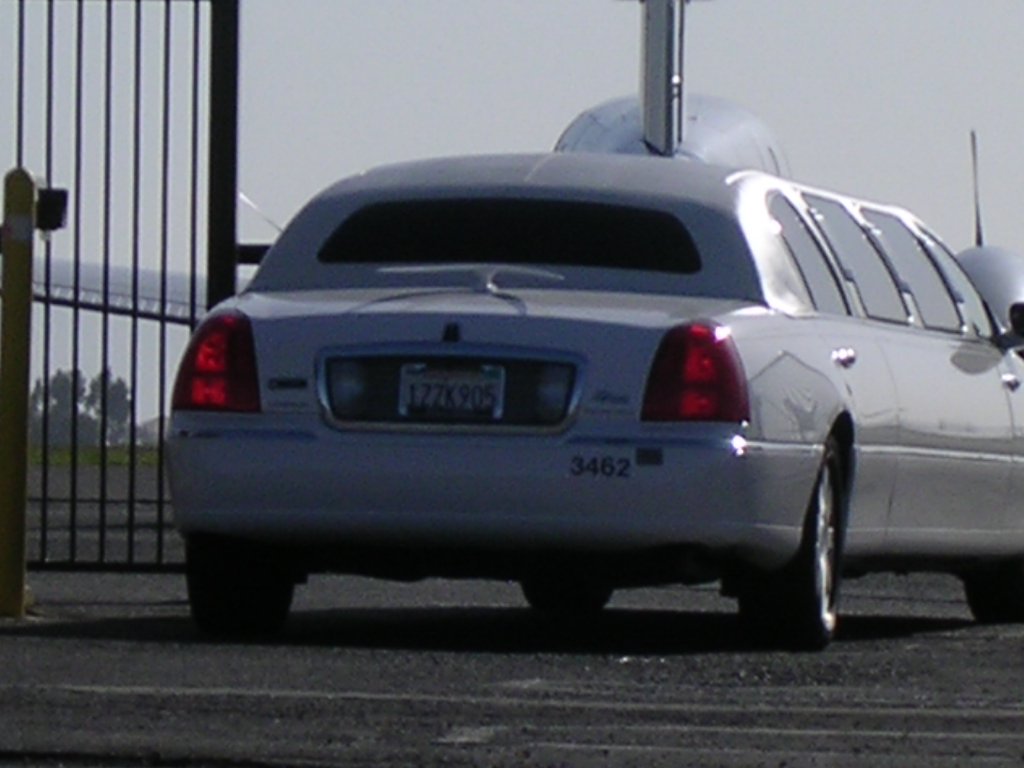
Limousine under surveillance Posted by Picasa

Celebrity Stalking


I got a call Sunday afternoon from a glossy celebrity magazine, asking if I could go to Napa to track down some movie stars. The celebrities, whom I will not name, are involved in a messy headline-making divorce.

The assignment was to hang out at some exclusive spots in Napa, eat dinner, and see if I could spot the couple, preferably kissing one another in a loud and public way.

I am not very experienced at celebrity chasing, but I know it’s a growth market, so I accepted the assignment. What made the event a real experience was that I brought my 13-year old daughter.

Let me tell you, a 13 year old who reads Teen People, Elle for Girls, Vogue for Girls, who actually knows how to download songs from I-tunes, and even knew more details about the canoodling couple than I did, is a perfect celebrity-stalking companion.

We got up to the Napa airport in the early evening. I had planned to hang around and ask anyone if they had spotted the celebrities. As soon as I had parked, and my daughter had gotten out of the car, I spotted a stretch white limousine in my rear view mirror. I signaled to Charlotte, who jumped back into the car. We raced to follow the limo.

It pulled up at an electric gate permitting access to the air field. As I slid my car into an illegal spot, Charlotte jumped out with a camera in hand, and ran and hid behind some parked cars. She darted back and forth to get a better view of the limo, always hiding herself from view.

I have to say, this did my heart good. My daughter is a natural celebrity stalker! She had no compunction about spying. In fact, she was even better than I.

I took over after that, wandering the airport and talking to the limo driver, who was there to pick up wealthy Japanese businessmen, and others hanging around the airport.

Once the airport didn’t pan out, we headed further north to our Napa hotspot. It was a grueling evening. First we were forced to have drinks on the deck, looking out on the beautiful Napa Valley. The temperature was 81 degrees. Then we had to have a four-course meal that lasted at least three hours. It was tough.

Of course that description doesn’t include all the furtive side trips to canvas the pool, the spa, the tennis courts and the bathrooms. I had a lovely visit with the valet. The waiter was also helpful. They all made it clear that the canoodling couple had not visited that Napa hotspot. My daughter took as many trips around the restaurant, peeking into intimate nooks and crannies.

As we drove back to Berkeley close to midnight, our investigative talents exhausted, I felt slightly disappointed. My celebrity sighting score was zero. But I was proud that I was training my replacement. Maybe the next time the glossy magazine calls, I will hand the phone to Charlotte.

Thursday, April 27, 2006

Michael Pollan


There’s one thing you can say about Michael Pollan: he knows how to make a room of 800 people laugh.

Pollan spoke to a sold-out audience at San Francisco’s City Arts and Lectures Wednesday night and he easily got everyone to see the bright side of the increasing industrialization in the food industry. His new book, The Omnivore’s Dilemma: A Natural History of Four Meals, looks at the different ways food is produced in the United States. Pollan uses various meals – a McDonald’s hamburger, a dinner cooked with food bought from Whole Foods, meat raised on a sustainable farm, and a dinner made up of foraged and hunted foods – to examine what we eat and why.

From the outset of the talk, Pollan acknowledged he has an obsession with corn – how the government subsidizes farmers to grow it, how cows now eat corn instead of grass, even though their systems are not built to digest it, and how cheap corn has produced the ubiquitous high fructose corn syrup that is making Americans fat. He suffers from “soft pore cornography.”

“If you have read anything about me and this book you know I have kind of an obsession with corn. It’s not a healthy thing and I’m trying to get over it,” he said.

That prompted a laugh – as did many of other Pollan’s comments. He talked about how visiting the Whole Foods near his home in Berkeley was “a rich literary experience.” The store puts up signs telling the provenance of many items, such as the story of how the blackberries came from Chile.

“There’s so much to read…. About salmon caught by villagers, chickens running free. I call it supermarket pastoral because it’s a whole new literary genre.”

Pollan has concluded that the healthiest way to eat is as locally as possible – consuming food from farmers’ markets or CSAs, and buying produce that is in season. The food is not only fresher, but it tastes better, and fewer fossil fuels are expended shipping the food around the country. But Pollan acknowledges that most of America cannot accomplish this – on the East Coast, for example, it is not possible to eat local vegetables in the winter. There is an elitism in the food movement, he said, that needs to be addressed.

While Pollan clearly appreciates a good meal, he recognizes that America sometimes elevates certain things to a level they do not deserve. Take the case of salad, he said.

“We have this completely unnatural, virtuous attachment to salad. But there’s no food there. Have you ever looked at the nutrient value of a salad? It’s all water.”

Wednesday, April 26, 2006

A Blue Day for Bay Area Journalism

Well, the Mercury News and the Contra Costa Times will soon belong to MediaNews, owned by the notorious cost-cutter Dean Singleton.

It’s a blue day for the Bay Area.

Knight-Ridder, which until recently owned the papers, was a newspaper firm that cared about quality journalism. For the most part, it poured resources (the amounts differed year to year) into making a good product. Its papers had a mix of investigative pieces, local news, lively columnists, and those extra sections that provide a peek into culture – food, books, and features.

Even during the last few years when once-amazing profits dropped, Knight-Ridder papers meant quality. That’s why it’s such a shame – and a disgrace – that a single shareholder looking to increase his own profits was able to force the sale of the chain.

Equally difficult to fathom is the fact that McClatchy bought Knight-Ridder and then decided to dump the Mercury News, the Contra Costa Times, the Monterey County Herald and the St. Paul Pioneer Press. They weren’t profitable enough, even though they circulated in areas where the average home costs more than $500,000.

So Singleton has bought the four cast-off papers for $1 billion, essentially cutting McClatchy’s debt in half.

There are some weird permutations where Hearst Corp. will actually buy the Monterey and St. Paul Papers to increase the percentage of their ownership in the Bay Area papers, but I am too mad to explain it. Read about it here.

This means that the Bay Area, with one of the most literate, knowledgeable populations in the United States, will be reading papers put out by a company devoted to profits over good journalism. The only paper of any size in the Bay Area not to be owned by MediaNews will be the San Francisco Chronicle, which hemorrhaged more readers and money last year than any other paper in the country.

The winner in this may be the New York Times, which already distributes something like 50,000 papers to homes in the Bay Area. With shorter stories, less analysis, and less news in Bay Area publications, readers may turn there to keep up.

Dan Gillmor, a former Mercury News journalist turned blogger, says the deal smells funny. He even uses the word collusion.

The only good feeling I have sits with my former colleagues, the reporters of the Mercury News and the Contra Costa Times. For the most part they are smart, quick, and determined to produce an excellent product. Perhaps their determination may carry the day; I know they will want to continue to do in-depth reporting as long as they can. I wish them luck.

Tuesday, April 25, 2006

Late April Tidbits


The Online Journalism Review asked a group of bloggers whether newspapers will ever get their blogs right. (via LA Observed)

Jane Jacobs died this morning at age 89. I saw her talk last year at San Francisco’s City Arts and Lectures and was struck how her outside-the-box attitude let her see cities in such a revealing way.

The board of directors of the National Book Critics Circle started a blog this week. It’s called Critical Mass.

More reports of plagiarism. This author got $500,000 for her novel, which now turns out to be based on someone else’s. I get tired just reading this.

Monday, April 24, 2006

Michael Pollan's Book Shoots to #1

I just got back from New York on Sunday night, so I am a little late reading the San Francisco Chronicle. I just needed to note that Michael Pollan’s The Omnivore's Dilemma, which was just released last week, is already the #1 non-fiction book on the Chronicle bestseller list.

He’ll be speaking at City Arts and Lectures on April 26.

An Enterprising New Media Reporter

Here’s an example of how journalists are getting around the demise of the news business. Michael Totten wanted to report from Iraq. Instead of lining up assignments from traditional news organizations, he asked his readers to contribute. They sent him enough money to pay his expenses while in Iraq. (please note he is a member of the pajamasmedia, a conservative group of bloggers, but still …)

Columbia Graduate School of Journalism -- or How Old Hacks Change Their Spots

Columbia University Graduate School of Journalism apparently is regarded in the blogosphere as the Temple of Mainstream Journalism, the sacred pool from where the secrets of the old guard flow.

The pride of old-fashioned, pound-the-pavement journalism was everywhere April 21 and 22, when the school hosted its annual Alumni Weekend. But there was a surprising emphasis on new forms of media – proof, in my mind, that journalists around the country are adapting to shrinking newspapers, readership, and budgets with imagination and determination.

It’s been 20 years since I graduated from the J-School and I haven’t really kept up with my classmates, except by noticing their bylines and newscasts. I wasn’t planning on going to the reunion until I read the flurry of e-mails that described what everyone was doing. It ranged from working on budgets at the New York Times to covering the Middle East to running a music club in the south. I was curious to learn more about how people were navigating this transitional time in journalism.

The centerpiece of the alumni weekend was the lunch, held Saturday under the classic dome of Low Library. With Corinthian columns behind him and a row of marble statues above, Time Managing editor Jim Kelly talked about the fallout from the government’s pursuit of their reporter Matthew Cooper. Karl Rove leaked to Cooper that Valerie Plame was a CIA agent.

Kelly talked about how Time was compelled by the courts to turn over Cooper’s e-mail. The entire case has prompted Time to create a two-tier system of confidentiality. A reporter can offer anonymity to a source but must then check with his or her editor, who will then determine just how far Time will go to protect that source’s identity. The reporter will then go back to the source and say whether the magazine is willing to fight all the way to the Supreme Court to protect the source, or not. Clearly there are some anonymous sources who are so valuable that the fight is warranted, said Kelly. Others are not worth the effort. In the past, the assumption was that all anonymous sources were created equal and that all were worth defending in court. That will no longer be the case.

That was the traditional Mainstream Media part of the weekend. Much of the rest was devoted to showing alumni tricks of the web and how to use blogs as reporting tools. Nick Lemann, Columbia’s dean, talked about how blogs can work as great tip sheets. Some students are working on a huge exercise on Hurricane Katrina, and have to develop new stories by reading through blogs and government reports. The blogs act as tip sheets, a view of the thoughts of the common man, a place to get a pulse of a locale without doing man-in-the-street interviews.

New media professor Sreenath Sreenivasan gave two lively lectures on web tools. I thought I knew my way around the web, but I learned many new methods of collecting information and using maps in reporting. Sree has a web site that contains these tips and it is worth spending time clicking through.

There was also a fair bit of discussion about the plight of older reporters. Many newspapers or television outfits value these reporters’ experience, but only want to hire younger journalists and pay them smaller salaries. There were no clear answers on how to keep working in this fluid time, but there was a consensus that older reporters should learn new platforms, like blogging, podcasting, and HTML code.

Some aspects of journalism never change, despite the new technological revolution. Suffice it to say, we spent a lot of time drinking.

Tuesday, April 18, 2006

Celebrating a Disaster


Well, when the alarm clock went off at 3:30 a.m. I started to second guess my decision to go to the 100 year commemoration of the 1906 San Francisco earthquake and fire. I really questioned my judgment when I found my husband doubled over, his stomach a knot of cramps. (A bad pina colada the night before, perhaps)

So instead of immediately getting into my costume, I ran out of the Hyatt Regency and across the street to a 7-11, where I bought him some Alka-Seltzer. The street in downtown San Francisco was empty save for a homeless man in a ragged raincoat who was pacing back and forth. His shoulders were hunched forward and he reminded me of one of the zombies in George Romero’s Day of the Dead.

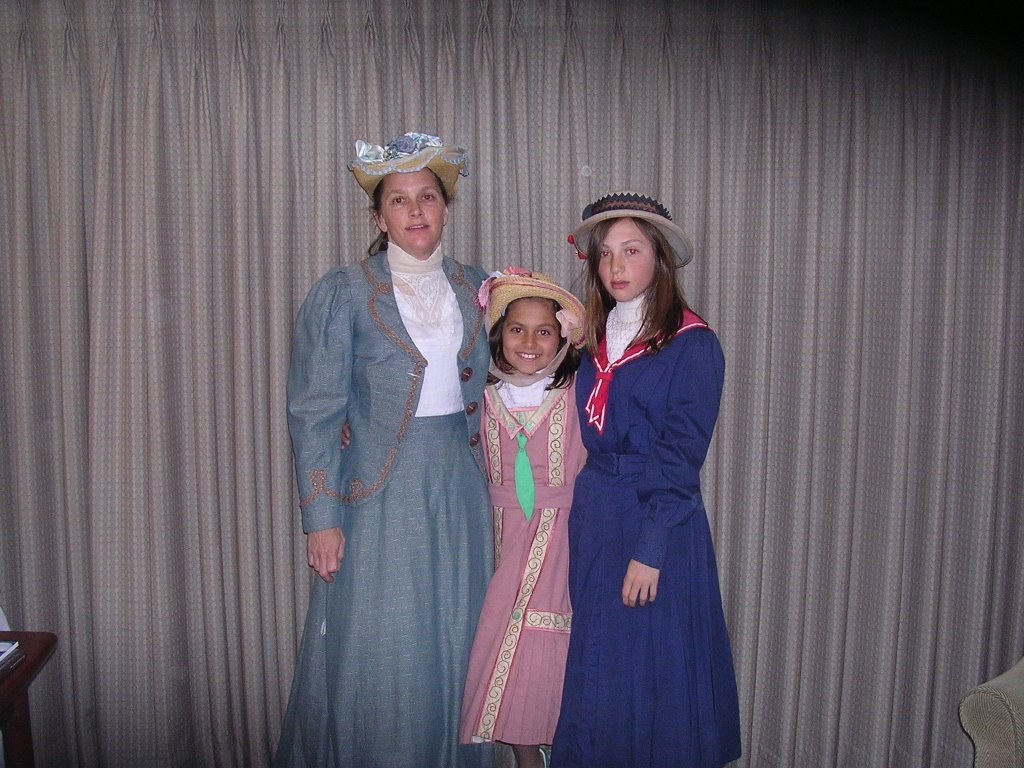
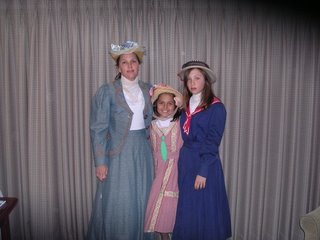
After that, events went smoothly. I roused my two daughters out of bed and we put on our early 20th century outfits. My oldest daughter, Charlotte, had a blue sailor suit, and Juliet had a pink sailor dress. I had a blue coat, white shirtwaist, long blue skirt and a hat. The hardest part of getting dressed was putting on the corset, which had to be tightened and tied by someone else. (I won’t even go into details here on how I got it off). (See more pictures here.)

We set off for Lotta’s Fountain around 4 a.m. and soon came upon hawkers for the San Francisco Chronicle. The newspaper had printed a replica of the paper published the day after the earthquake with the headline “Earthquake and Fire: San Francisco in Ruins.” The reproduction was wrapped around the day’s newspaper and it added a nice historic note to the day.

The ceremony at Lotta’s Fountain went on so long that even the 100-year and more survivors complained about the cold. There were lots of speeches – perhaps four too many – but a precisely 5:12 a.m. Mayor Gavin Newsom called for a moment of silence in honor of those who lost their lives in the earthquake. A lone fireman clanged a silver bell and he was soon joined by the sound of sirens and church bells ringing around the city. That was the most somber moment of the morning.

Newsom then interviewed the dozen earthquake survivors. Ed didn’t like his act, complaining it became more about Newsom than about the survivors, but I enjoyed it. I hadn’t heard Newsom speak at any length before and found him personable and funny. Some of the survivors were downright hilarious, particularly the woman who was raised by prostitutes after the disaster. Her family’s apartment was above a brothel and her mother told her she could always count on an adult being available downstairs because they were always home.

The ceremony ended and we left to get breakfast. My kids and their sick father left for school and work and I stayed behind in the city. Somehow, walking up Market Street in my costume seemed much more peculiar in broad daylight. But when I got back to Lotta’s Fountain, complete strangers asked if they could have their photos taken with me! At that point the day became truly fun, as the parade of antique fire trucks and old cars passed by. Complete strangers started swapping earthquake stories about their ancestors. One protestor held a sign: “The 1906 Earthquake: Blame Bush!” I guess he summed up the feelings of the Bay Area.

After the parade, I went to the Mechanics’ Institute Library, the 150-yearold private library on Post Street, for a Ham and Egg Brunch and a lecture by former firefighter Dennis Smith. It was one of many literary touches to the day. Simon Winchester was scheduled to speak there at night, and Philip Fradkin, whose book The Great Earthquake and Firestorms of 1906 is up for a Los Angeles Book Award this weekend, also had numerous speaking engagements. Mark Klett and Rebecca Solnit spoke at Cody’s new San Francisco store at 7 a.m.

Smith’s book, San Francisco is Burning: The Untold Story of the 1906 Earthquake and Fire, focuses on the Fire Department and what they did to put out the blaze. Smith thinks the city had two pieces of bad luck that made the fire worse than it had to be: The Fire Chief, Dennis Sullivan, was severely injured in the quake itself, and his absence led to a power vacuum that was not successfully filled. The other problem was that General Frederick Funston was in charge of the Army because his superior was in Chicago. Funston went overboard with dynamiting the city’s building, actually contributing to the conflagration, according to Smith.

I had a chance to talk to Smith before his presentation. His book is part descriptive narrative, part explanatory narrative. I am trying to combine the two in my own book and he expounded to me about the power of the transitional paragraph. I listened; he has written 14 books, many of them bestsellers.

By 1:30 p.m. I could hardly breathe. A corset is best tolerated standing up. I left the celebration for home.

I’m off to New York for a week, so I won’t be posting for awhile.

Monday, April 17, 2006

The 2006 Pulitzer Prizes

Lots of surprises in the 2006 Pulitzer Prizes. Geraldine Brooks won the prize in fiction for her novel, March, about the father of the girls portrayed in Little Women. The book had been acclaimed, but was not as popular as Brook’s fabulous book, The Year of Wonders. Brooks is a nimble writer who used to report for the Wall Street Journal. She has also written a number of books of non-fiction, including Nine Parts of Desire: The Hidden World of Islamic Women. She is Australian and is married to another marvelous writer, Tony Horowitz.

I don’t know Geraldine, but she is a friend of many of my friends. She provided a blurb for Neil MacFarquhar’s new novel, the Sand Café, which came out last week.

The Pulitzer judges awarded two prizes in Public Service for Hurricane Katrina coverage. They went to the Biloxi, Mississippi Sun-Herald and the New Orleans Times-Picayune. The staff of the Times-Picayune was also awarded a Pulitzer Prize for breaking news reporting. The staff of the Dallas Morning News won a breaking news photography prize for documenting the effects of Katrina.

Another one I am particularly happy about is the prize for National Reporting. It went to New York Times reporters James Risen and Eric Lichtblau for their stories on domestic eavesdropping. (When I was fresh out of journalism school, I moved to Ithaca, New York, where Lichtblau was a Cornell student. He was covering the region for the Syracuse Newspapers and when he left I took over his job. He went to the Los Angeles Times and then the New York Times.)

The Washington Post won four Pulitzers, one more than the Times, including one for commentary for Robin Givhan. She writes about fashion, but in a way no one else does.

Post reporters Susan Schmidt, James V. Grimaldi and R. Jeffrey Smith won an investigative reporting prize for their stories on lobbyist Jack Abramoff. David Finkel won the prize in Explanatory Journalism for his stories on how the U.S. tried to bring democracy to Yemen. Dana Priest won in the beat reporting category for her stories on CIA's use of secret prisons in Eastern Europe to interrogate terror suspects

The New York Times won a total of three Pulitzers, including one in commentary for Nicholas D. Kristof for his reporting on the genocide in Darfur.

Kai Bird and Martin J. Sherwin won the biography prize for American Prometheus: The Triumph and Tragedy of J. Robert Oppenheimer. Joan Didion’s The Year of Magical Thinking was a finalist in this category.

What's the Point of Reliving the Past?

This is going to be a busy day. The Pulitzer Prizes will be announced around 3 pm Pacific Time, and I will be eagerly hovering near my computer to find out who wins. These are the truly big awards in journalism and they always inspire me. Look for some Katrina-related coverage to prevail.

Tomorrow is the 100th anniversary of the San Francisco earthquake and I’ve decided to go all out. We’ve rented a hotel room in San Francisco and costumes from the local acting company and we will be at Lotta’s Fountain – along with 25,000 others – at 5:12 a.m., the time the quake struck.

I couldn’t decide whether to rent nightclothes or normal clothes. I am going with a cousin, and he chose nightclothes, arguing that the people would have rushed outdoors straight from their beds. But in all the pictures I’ve seen, everyone is wearing street clothes.

And I can tell you they didn’t put those clothes on in a hurry, either. I am going to be authentic, which means wearing a corset, and that underwear contraption requires at least five minutes to put on and lace up. Then there is the shirt waist and long skirt and jacket and …. Hat!

There has been a lot of talk in San Francisco about the appropriate way to acknowledge the disaster that destroyed one-quarter of the city. Gladys Hansen, the San Francisco archivist who spent years tallying an accurate death toll, will drop a wreath in the bay to commemorate the more than 3,000 who died. She has criticized all the spectacle as inappropriate.

I see her point. The disaster is in danger of becoming Disney-fied. But what appeals to me is the history of the event, the way it thrust the citizens of the city together. I recently met Bruce Quan, Jr. an associate professor at Peking University Law School, who told me that his great grandfather, a Chinese merchant, opened up his factory in Oakland as emergency housing for hundreds of displaced Chinese. City authorities had used the earthquake as a pretext to expel the Chinese. Continued prejudice made it hard for them to find places to stay, and this man’s relative helped out tremendously.

That one act mirrors so many social forces – benevolence, prejudice, desperation, kindness – and I find it interesting to ponder what it must have been like to be the subject of all those forces.

Of course, we are all subject of forces today, even though we may not be aware of it. Who knows, this era may be regarded as the lead-up to an American style tyranny, or the waning days of regular weather. We don’t know. It will be future generations who interpret our lives; they will be the ones who determine its significance.

I am not the only blogger who enjoys the grey area between today and yesterday. Susan Kitchens, who has a wonderful science-oriented blog (with some writing thoughts thrown in) 2020 Hindsight, tried to “real-time” blog the dropping of the atomic bomb on Hiroshima and Nagasaki for the 50th anniversary.

Friday, April 14, 2006

Friday Stuff

The James Frey debacle didn’t do anything to stem the flow of memoirs – in fact, it may have made them even more popular, says the Wall Street Journal.

“Everyone has a story, whether it's a family of Dumpster-divers, a nun who had an affair with a priest, or a self-mutilating teenager. Now, however, there are more publishers willing to put out these personal histories as memoirs. In fact, all three of the aforementioned stories are in print, under the titles "Perishable: A Memoir," "The Scent of God: A Memoir," and "Bloodletting: A Memoir of Secrets, Self-Harm, & Survival."

"Memoirs have been strong sellers throughout this decade. But this year, publishers plan to put out twice as many as last year – there are likely to be as many as 40, according to Simba Information, a book-tracking company.”

Caitlin Flanagan, the New Yorker writer who seems to anger everyone with her pieces on domestic life, gets the star treatment this week. The Los Angeles Times ran as profile on her as did the LA Weekly. Flanagan’s book To Hell with All That: Loving and Loathing Our Inner Housewife, has just been released. She was a guest blogger at Powell’s recently, as well.

By the way, Flanagan grew up in Berkeley. That explains a lot. Out of disorder comes the search for order.

The Tournament of Books is over. Ali Smith won for The Accidental. Read all about it here.

Thursday, April 13, 2006

Neil MacFarquhar

 Posted by Picasa

A Foreign Correspondent's View

I first noticed Neil MacFarquhar in the mid-1980s when he walked into a party in San Francisco. He came into the room, all 6’3” of him, dressed in jeans and a white dinner jacket. With his wavy blond hair and jutting Scottish chin, he was instantly alluring. But that’s not what made him memorable. It was his wicked sense of humor. He made me laugh at almost everything.

My next most vivid memory of Neil is coming upon him one balmy day when we were both juniors at Stanford University. The top to his vintage yellow Mustang convertible was down and he was sprawled in the front seat, his long legs resting on the dashboard. When he saw me – we were close friends by that point – he sat up and announced in a joyful voice that he had finally figured out what he was going to do with his life: he was going to be a foreign correspondent.

Neil has fulfilled those dreams. He spent years covering the Middle East for Associated Press, first living in Cyprus and then writing about Israel, Iran, Jordan, Syria and other countries. He was in Saudi Arabia and Kuwait during the first Gulf War and Iraq for parts of the second. For the past five years he has been the New York Time's bureau chief in Cairo. He is about to start a new assignment, covering American Islam.

Neil’s first book, the novel The Sand Café, has just been released and it is getting glowing reviews. It tells the story of three reporters ensconced in a hotel in Saudi Arabia during the first Gulf War. The U.S. and Saudi governments are micromanaging the reporters, making it impossible to report any real news. Against this restrictive backdrop, the reporters form their own intimate liaisons of love, competition, and sabotage.

Jay Matthews reviewed the book in the Washington Post and said “few novels so honestly portray what reporting abroad is like in the era of the American colossus.”

"The Sand Cafe" presents a world no different from what any reporter has ever faced covering a story big enough to draw a horde of competitors who skirmish over scraps of gossip, form temporary liaisons, plot career moves, eat poorly and stretch the truth (but not so much that the blogs might pound them into library paste). It is an interesting and revealing world, which shows that American-style journalism is driven more by competition between newspapers and networks than any desire to please the left or skewer the administration.”

Neil is scheduled to be interviewed by Terry Gross on “Fresh Air,” on Thursday April 13.

Saturday, April 08, 2006

Columbia Graduate School of Journalism


The Columbia University Graduate School of Journalism road show rolled into San Francisco Friday night and once again hosted a soiree at the Carnelian Room on top of the Bank of America Building.

It was raining outside (what else is new) but the view through the floor to ceiling windows was still spectacular. As dusk fell, the lights came on and the Transamerica Pyramid stood out against the dark.

The annual get together is part alumni reunion/part recruitment for new students. And the tone of the evening definitely had an “I’ll Tell You Why It’s Still Important to be a Journalist,” ring.

James Stewart, the author of many best-selling business books, including last year’s Disney War, talked about how the role of journalists is to tell good stories. Listening to stories is a basic human instinct, one that will never lose its appeal. The journalism world may be changing, as newspaper readership drops and web reading grows, but that ultimately doesn’t matter, said Stewart. Today’s journalists must still know how to get good stories, but be prepared to deliver them on many different platforms – print, TV, blogs, website, and podcasts.

We live in a world where everyone talks and no one listens – and that is a journalist’s greatest weapon, said Stewart. Keep your mouth shut and allow others to tell their tales and you will find good narratives. Stewart then described the two years he spent talking and shadowing Michael Eisner, now the former chairman of Disney. (In part, because of how he came out in Stewart’s book)

Aspiring journalists apparently feel the lure of the narrative. When I went to Columbia in the mid 1980s, most students studied in the newspaper concentration. This year’s applicants (and there more than 1,000 for 200-odd spaces) were more interested in magazine journalism.

People in the journalism business are adaptable and many trained in old media have morphed into using new media. I spoke with a former classmate who told me he had had 20 bosses in 20 years. But he couldn’t be happier. He is now involved in a video-on-the-web start up and believes there is a huge future for watching film via the Internet.

Virtually every journalist I spoke to at the reception recognized that the media structure they grew up with was imploding, and they were picking their way through the land mines. One now teaches journalism, one just stopped working for a foundation and one was blogging. Those might not have been the careers they envisioned when they arrived at the Columbia School of Journalism, but they were fine careers nonetheless.

Thursday, April 06, 2006

Book Awards

Adam Hochschild won a Northern California Book Award Wednesday night for his non-fiction book, Bury the Chains: Prophets and Rebels in the Fight To Free an Empire’s Slaves. A night earlier in Toronto, he won his SECOND Lionel Gelber Prize, which pays $135,000. No wonder Hochschild wasn’t in San Francisco to collect the award)

William T. Vollman won the fiction award for Europe Central.

Brian Turner won in poetry for Here, Bullet.

John Balcom won in the translation category for Indigenous Writers of Taiwan

Denys Cazet won in for children’s literature for The Perfect Pumpkin Pie.

Blogger and author Mark Pritchard went to the ceremony at the San Francisco Public Library and wonders why it was such a drag. Where were all the young people who cram into Litquake and Writers with Drinks, he asks.

Wednesday, April 05, 2006

Rain, Rain, Go Away


I know I should muster up my enthusiasm and delve right in to the world of books. But I can’t. It’s too dreary.

The Bay Area is feeling the effects of global warming. It has rained nearly every day for the past month. Not a light, sweet drizzle but a pounding relentless rain, punctuated by fierce downpours. 100-year old records have been broken in San Francisco, Oakland, and elsewhere.

The hills are so saturated they are beginning to slide. I live high up in the hills and every day I have to navigate my car through mud and running water. There are boulders in the street and I am afraid one will soon come crashing through my windshield. My car is so covered in mud it looks like one of those ads for an all-terrain vehicle.

It’s so yucky out that I try not to leave home. I have four books on reserve at the library, books I have been waiting months for, yet I haven’t retrieved them yet.

It’s supposed to dry up Thursday before a new set of storms move in Friday. Rain is forecast through the weekend and even beyond that.

The Chronicle had a bit of good news today. The new owners of the San Francisco Examiner are donating the paper’s archives to the Bancroft Library. The Examiner was William Randolph Hearst’s flagship paper, and the archives include articles and photographs from the late 19th century to the present. There are 5 million pieces, which means it will take years to catalogue the collection and make it available to scholars, but the collection will be a real boon to those studying California history.

Monday, April 03, 2006

Authors Get Politically Active

San Francisco author Stephen Elliot announced Monday the creation of LitPac, a political action committee that aims to involve authors more in the political process. Modeled on his Progressive Reading series, LitPac will host author readings around the country in New York, Portland, Los Angeles, Seattle, Chicago, Houston and Washington D.C. The money raised will be donated to progressive candidates around the country.

Elliott is the director of the group and the board of advisors includes Tobias Wolff, Daniel Handler, Aimee Bender, Rick Moody, and David Poindexter, the founder and publisher of MacAdam/Cage (via Maud Newton)

The San Francisco 1906 Earthquake ... Again

The countdown has begun on the many celebrations that will commemorate the 100th anniversary of the 1906 San Francisco earthquake and fire.

But as the Bay Area gears up with numerous photography exhibits, museum shows, lectures, walking tours, and a newly-commissioned dance piece, a piercing question is making its way to the forefront: Do you celebrate the feel-good aspect of the disaster – the part where San Francisco rose from the ashes – or the horrific part, where thousands died and official incompetence may have made the fire and destruction worse than it needed to be?

On top of that, do you examine how the city’s business leaders tried to downplay the disaster?

The Los Angeles Time’s new – and excellent – magazine, West, ran a series of articles on the earthquake on April 2. In one article, staff writers Lee Romney and John M. Glionna examine the difficulties in “celebrating” the 100th anniversary of the earthquake.

“(Mayor Gavin) Newsom acknowledged that the 1906 earthquake was an "awkward" event to mark.

"Do you sit there with a candlelight vigil and say, 'My God, how dare the city do what it did back then, with the corruption of city officials or the mistreatment of its Chinese American residents?' " he said.

"Do you sit there and tell people, 'Why are we all here? The next earthquake is going to come, and most of us are not going to make it.' Or do you focus on the city's comeback and rebuilding?"

In another article, Rebecca Solnit looks at how the earthquake was just one more event in a long string of events that erased San Francisco’s natural topography.

“The earthquake that hit before dawn on April 18, 1906, was the good news. It affected everyone, rich and poor, white and nonwhite, more or less equally. The fires that came after were the beginning of the bad news—the three-day blaze fanned by inept attempts to blast fire lines in the densely built city. Grim too was the reign of terror by vigilantes and soldiers who, as obsessed with looters as the authorities and the media were during the early days of Hurricane Katrina, shot and terrorized survivors and didn't give a damn about civil rights. Aid was distributed unevenly, as was shelter, and the poor had it hard. The earthquake is remembered as a sudden shaking or as three days of devastation, but like all such disasters it was also months of aftermath, years of rebuilding. The heroism came instantly, the greed and sleaze later, in phases that no one will celebrate and few may remember—as when, for example, the city's business leaders tried (unsuccessfully) to drive the Chinese community out of its longtime home on the eastern slope of Nob Hill.”

I am really excited by all the history surrounding the earthquake. I can’t really say I want to celebrate the date, but I am fascinated by how people reacted and made sense of their lives after the disaster.

Here are some new and worthy earthquake events and a calendar to all the rest. Don't forget to check out Wells Fargo Bank's excellent blog on the quake.

A restored earthquake shack (one of the thousands that were hastily built for homeless survivors) is now on display near Yerba Buena Gardens at Yerba Buena Lane on Market near 4th street.

In the Presidio, people can “relive” what it felt like to be homeless. (Thousands fled to the Presidio to avoid the fire) The Presidio is recreating a refugee camp, complete with tents and cottages and outdoor cooking stations. At the Main Post at the corner of Lincoln Boulevard and Halleck Street.

On Saturday, April 8, the Pacific Film Archive in Berkeley features a lecture by historian Gray Brechin, aided by archival footage of the '06 earthquake loaned by the Library of Congress, a rare screening of FLAME OF BARBARY COAST starring John Wayne, experimental mediaworks by artists dealing with natural disasters, the 1957 B-movie THE NIGHT THE WORLD EXPLODED, and a special, enhanced presentation of the 1974 epic disaster film, EARTHQUAKE.

Sunday, April 02, 2006

I Guarantee At Least Two Chuckles

Click over as fast as you can to Ed Champion's April Fool's Day spoof of all the famous and annoying literary figures you can think of. (I know I'm a day late, but so what?)