Pages

Friday, June 20, 2008

This Time for Good: Cody's Books Shuts Its Doors

http://www.babyccinoblog.com/london/wp-content/uploads/2008/04/daunt-books.jpg I have spent parts of the last few days happily checking out some of London’s bookstores. Daunt Books on Marylebone High Street has an amazing library-like feeling with dark wood, numerous skylights and racks and racks of books stacked on oak bookshelves. (see photo) It’s located on one of London’s snazziest shopping streets, an avenue where hip women are so loaded up with shopping bags from Selfridges and other stores that they have to dodge other pedestrians.

Foyer Books, on the other hand, is on busy Charing Cross Road in an area dotted with other bookstores and music shops. There was street construction everywhere and a hurried, urban feel. When I walked in to Foyer, it had a modern in feel with light maple shelves and bold colors. At first, I didn’t think it was that big. I was deceived. It has small rooms but many of them. It also has the largest fiction collection I have ever seen.

All my excitement finding new stores was completely crushed this morning when I woke up to find an e-mail from Meg Waite Clayton (her new novel, The Wednesday Sisters has just been released) that Cody’s Books in Berkeley has closed. Permanently.

I am surprised. And devastated. I went to my first reading there one week ago today and the place was packed. It was for Dirty Words: A Literary Encyclopedia of Sex, edited by Ellen Sussman. The book is a collection of essays that explore different words relating to sex, most of which I shall not name here. Some of the contributors read their pieces, including Meredith Maran, Thaisa Frank, and Cornelia Read. They were at turns heartbreaking and hilarious.

The store was packed for the reading. There were about 35 people there and many bought books. I asked a clerk how the place was doing and she said the foot traffic was good. (It is just a block from the UC campus)

I did my bit. I must have purchased more than $100 in books from Cody’s on Shattuck since it opened in March.

Cody’s has tried so many different ways and locations to stay afloat. I naively assumed that this latest, smaller store would be the magic bullet.

Hiroshi Kagawa, who owns bookstores in Japan, bought Cody’s about a year ago. Here is what he said in a press release:

"The Board of Directors of Cody's Books made this difficult decision after years of financial distress and declining sales.

"According to Cody's president, Hiroshi Kagawa, '[It] is a heartbreaking moment…in the spring of 2005 when I learned about the financial crisis facing Cody's, I was excited to save the store from bankruptcy. Unfortunately, my current business is not strong enough or rich enough to support Cody's. Of course, the store has been suffering from low sales and the deficit exceeds our ability to service it.'

"'When I met Cody's 25 years ago, I was a freelance journalist, enraptured by its books and atmosphere. It means so much to me and I apologize to the people who have supported Cody's for not being able to keep this landmark independent bookstore open. Cody's is my treasure and more than that, Cody's is a real friend of Berkeley community and will be missed.'

"Cody's would like to thank all of our loyal customers for their years of patronage."

This is the store that has hosted many of the world's most beloved authors, who continued to sell the Satanic Verses even after it had been firebombed, who patched up protesters who had been beaten by police in the protests at UC Berkeley in the 1960s, and much more.

Sitting in London, 5,000 miles away from Cody’s, I will observe my own minute of silence for this bookstore that has played such an important role in the literary world.

Wednesday, June 18, 2008

The London Literary Scene

http://z.about.com/d/cruises/1/0/B/z/1/london007.jpg OK. I’ve been in London less than 72 hours and I can already see how much more literate this country is than the United States.

I don’t mean literate in the sense that every person on the street is carrying around a copy of Salman Rushdie's new book.

I mean literate in the sense that book news is everywhere, on a par with the amount of movie news in the United States.

The Sunday Times culture section is a mini-magazine. This week it had a two-page spread on the “Richard and Judy” Summer Picks, which number 8 books. (more on them later)

The section also had 12 major reviews of hardbacks, 12 mini reviews of paperbacks or audio books, and one feature on what it was like to be selected as one of Richard and Judy’s picks. Gosh, on a good day the Sunday Chronicle Book Section has review of 5 books.

This must mean that people are reading. And consider books to be worthy cocktail party conversation. Otherwise, why would London papers waste the ink`?

Speaking of newspapers, the scene here reminds me of the good old days of American journalism. When you go to a newsstand, there are five or six daily papers to choose from. Granted, London has a population of 7 million, so a lot of views are needed, but still, there’s no monopoly here.

I have been reading about Richard and Judy in literary blogs for years but I never had any idea who they were or why they were so influential.

They have a daily talk show, sort of like Regis and Kelley Ripa. One incredible difference is that the Brits don’t seem to emphasize looks over talent. Judy must be in her 50s with plenty of laugh lines and flesh, yet she is incredibly popular. She would never make an appearance on American television.

Richard and Judy are like Oprah’s Book Club, only on a larger scale. They have selected a bevy of books for this summer, but there is no secrecy. They announced the selection a few days ago and will discuss the books on the air in the next 8 weeks.

I have never heard of any of the books. Rebecca Miller, the director and the daughter of Arthur Miller and the wife of Daniel Day-Lewis and the author of Personal Velocity, has a book on the list called The Secret Life of Pippa Lee. The others are all British authors I have never heard of. Oh, goody. Isn’t that the fun of traveling?

Tuesday, June 10, 2008

What Happens When the Trees Die?

http://www.gatacf.org/images/chestnut%20tree%20drawing.jpg Susan Freinkel wrote an amazing book on the “death” of the American chestnut tree. Since chestnuts populate the Eastern seaboard, Susan’s book didn’t get a lot of press in San Francisco. That’s a shame since the book is written like a thriller, with teams of scientists and iconoclastic chestnut lovers looking for a cure for the blight that has killed millions of trees. They are in a race against time as the tree, which once flourished from Georgia to Maine, is now almost extinct.

Well, West Coast tree lovers, environmentalists, and narrative nonfiction lovers can hear Susan on June 11 at the Green Ink series at Fort Mason. She will be talking at 6:30 at Building C, room 165. Her book is called America Chestnut: The Life, Death and Rebirth of a Perfect Tree.

The Green Ink series is pretty interesting, too. It is organized by the Friends of the San Francisco Public Library Bay Bookstore. The series has brought in some remarkable authors, including Wendy Johnson, the gardener extraordinaire from Green Gulch.

The series describes itself as: “From recycled books to innovative ideas, Green Ink is a reading and discussion series highlighting the principles of green living, conservation and sustainable living with an emphasis on sharing solutions for everyday life.”

I also want to point out the BookTour.com, the fabulous on-line/email notification of author readings, has a redesigned website. It now has an interactive map. You can browse by author, by category, or by area.

Monday, June 02, 2008

Paperback Dreams and Local Bookstores


Left to Right: Alex Beckstead, the director of Paperback Dreams, Leslie Berkler of Cody's Books, Clark Kepler of Kepler's Books, and Andy Ross of Cody's Books.

BEA is one big blur of conversation, interspersed with long walks carrying extremely heavy bags bulging with books.

Of course there are lots of wonderful moments. I enjoyed meeting the book bloggers Ron Hogan from Galley Cat and Carolyn Kellog from Pinky’s Paperhaus and hearing The Elegant Variation’s Mark Sarvas talk. I hung out with Kemble Scott, the author of the best-selling novel Soma and the editor of one of my

I was also delighted to finally meet Daniel Olivas, who is both Jewish and Latino. Although he is an attorney, he is a prolific fiction writer and book reviewer and just edited a wonderful collection of southern California stories called Latinos in Lotusland. His booth was next to the booth of Angel City Press, which publishes delightful local histories of Los Angeles. I have used their books in my research, particularly Kevin Roderick’s Wilshire Boulevard, a book chock full of pictures and musings about the famous boulevard. I was intrigued to hear about a biography of the Los Angeles pioneer Benjamin Wilson by Nat B. Read.

Of course, I was elated to discover the true identity of Miss Snark, who pines for her blog a year after it folded (mums the word.) The gin hadn't made her love George Clooney any less.

But there was only one moment I cried at BEA. (and it wasn’t when I rubbed my aching feet.)

I attended a screening of Paperback Dreams, a documentary by Alex Beckstead, on the recent struggles of Cody’s Books in Berkeley and Kepler’s Books in Menlo Park. Andy Ross and Lesley Berkler, the former owners of Cody’s were there, as was Clark Kepler, the owner of Kepler's.

The screening turned into a time for those who own independent bookstores and those who love them to talk about their strengths and challenges. The film will be shown on public television stations in November and Beckstead is hoping store owners will show it to their customers and use it as a way to strike up dialogue about the future of independents.

The film is quite good as it traces the history of these two iconic West Coast bookstores. It also establishes the importance of independents in the struggle for free speech. I had forgotten that the chain bookstores pulled Salman Rushdie’s Satanic Verses after Iran declared a fatwah against the writer. Andy Ross of Cody’s kept the book on the store’s shelves even after someone threw a Molotov cocktail inside the store. The Grateful Dead often played at Kepler's in the 1960s, where they stole ashtrays and played the same songs over and over.

The film also shows Kepler’s engaging in a direct dialogue with its customers to make the store more appealing. In response to customer requests to make the story more light and airy, Clark Kepler lowered the height of many of the bookshelves. He also reorganized the various sections and started to carry more non-book items. Kepler’s now is also a major sponsor of events in the community.

Both stores are still around, but the struggles continue. Ross and Berkler sold their store to Hiroshi Kagawa, a Japanese bookstore owner and distributor; Ross now operates a literary agency. Kepler is still involved with his store, but sees very slim profit margins.

The new owner of the Booksmith on Haight Street in San Francisco, Praveen Madan, attended the screening and talked optimistically about the future of independents, Madan has seen sales go up by double digits in the past year. Before he acquired the store, sales had dropped the previous five years.

Madan believes that a bookstore has to work extra hard to build a relationship with its customers and that survival depends on that special relationship. In the last few months he has taped all the author events at his store and put them on You Tube. He hopes that his videos build brand awareness and make people think Booksmith is a cool place to hang out. The push to put things on the Internet is also an acknowledgement that customers don’t always have the time to come in for a store reading, even though they want to hear what authors have to say, said Madan.

Paperback Dreams ends on a melancholy note, although Beckstead, the director, said he tried to make the ending upbeat. While many communities say they want their independent bookstores to remain viable, many people still look for the bargain, buying books at Costco and Barnes and Noble.

(One thing that makes BEA so interesting is the juxtaposition of different parts of the publishing industry. After seeing this film and telling myself I should never buy a book at Costco, I met the women from the company BTMS, or Baker & Taylor Marketing Services, which holds the contract to do all the book buying for Costco and Sam’s Clubs. They were great, and I really enjoyed talking to them at the Harlequin Party.)

Sunday, June 01, 2008

BEA

This is the cavernous hallway of the LA Convention Center where more tha 25,000 publishers, editors, sales reps, publicity people, authors, publicists and aspiring writers gathered.
Posted by Picasa

Glimpses of BEA


James Patterson signs books


Alec Baldwin greets fans


Arianna Huffington talks to her fans
Ethan Canin signing at BEA

Posted by Picasa

Saturday, May 31, 2008

BEA Seen Through the Experience of Ethan Canin

BEA is such a cacophony of sounds, sights, and books that I thought I would show it through the lens of one author, Ethan Canin, who grew up in San Francisco but who now teaches at the University of Iowa's writing program.

Canin's new book, America, America, which is set against the broad landscape of American politics in the Nixon era, will be released in late June, It's a big book for Random House, and one the publisher is pushing hard at BEA. Canin's last two books, The Palace Thief and Carry Me Across the Water, were highly acclaimed and did well, and there is a lot of buzz that America, America will sell even better. Random House is planning a big tour for Canin.

Thursday: Canin and his wife Barbara fly into Los Angeles from Iowa City. Random House puts them up at the Biltmore Hotel.

Friday 7:30 a.m. Canin appears at a Library Journal breakfast where he meets and greets hundreds of librarians from around the country.

10 a.m. Scheduled signing at the Random House booth on the floor of BEA. The publisher has about 250 copies of America America to give away. The line forms early and is soon zigzagging around adjoining booths. Canin takes a few seconds to talk to each of those who want a book signed, inquiring about their bookstore or the town they come from. Lots of people compliment Canin's writing and he seems genuinely pleased to hear that his books resonate with readers. As 11 a.m, approaches, the designated end time for the signing, the Random House publicist standing next to Canin starts telling people they can't talk so much.

11 a.m. The formal signing ends and Canin moves to a side table in the Random House booth. He continues to sign books for another half and hour, making him late for a meeting. A number of his former students from Iowa stop by and say hello.

Noon: Canin and his wife Barbara go to talk to a film agent from William Morris. For years, Canin had been represented by the agent Maxine Groffsky, but she is retiring. After interviewing a slew of agents, Canin selected Jennifer Rudolph Walsh of William Morris as his new agent. Rudolph Walsh also represents authors Anita Shreve and Sue Monk Kidd and was the first woman appointed to the board of William Morris.

Afternoon: Time to visit with friends and family.

4 p.m. Random House sends a Town Car to the Biltmore pick up Canin and Barbara for an evening party. Traffic is terrible on LA highways at that time, and it takes the Canins almost an hour to travel the 20 miles to La Cienega Boulevard.

5 pm. The Canins arrive at Sona, a trendy restaurant that was named the top restaurant by LA Magazine in 2005. Canin is one of the featured authors at the event. The others include Salman Rushdie, Katherine Neville, David Ebershoff, and Curtis Sittenfeld. There are a lot of booksellers at the event, and Canin spends time talking to Andy and Lilla Weinberger, the owners of Reader's Books in Sonoma, CA. The Bay Area is well represented at the Random House party. Andy Bellows of City Lights Booksellers is there, as is John Evans of Diesel Books. Evans reveals that Diesel is planning to open a bookstore in the Brentwood Country Mart in Los Angeles early September. Now that Duttons Books has closed, there is room for a new independent book store.

6 p.m. Canin chats with Curtis Sittenfeld, who once was Canin's student at Iowa. Sittenfeld married Matt Carlson, an assistant professor in the Department of Communication at Saint Louis University, two months ago. She said she channels Canin's advice every time she teaches a writing class. Sittenfeld's new book American Wife is based on Laura Bush. Canin's new book America America is based on Ted Kennedy's life. I suggest they go out on tour together.

6:30 p.m. The room buzzes as Markus Dohle, the newly-appointed CEO of Random House, enters the party. He has just arrived from Germany, where he headed Bertelsmann's printing unit. Since he has no direct experience as a publisher, people at Random House are somewhat wary of where he will take the company and how he will differ from Peter Olson, who has lead Random House for a decade.

7 p.m. Canin talks to Dohle, who at 39, is undeniably handsome and charming. Dohle is over 6 feet tall with auburn hair that keeps falling around his eyes. Dohl tells Canin that he has two young children under 10 and moving from a small city in Germany to New York will be a big change. Canin has three daughters under 11 and the two talk briefly about children. Dohle says he will be out on the BEA floor on Saturday, the first official day of his tenure as Random House's CEO.

7:30: Canin and his wife head off to dinner with a Random House editor. They have invitations to the New Yorker party and one given by Creative Artists, but aren't sure they will have the energy to attend.

Tuesday, May 27, 2008

Book Expo America

http://www.earlyword.com/wp-content/uploads/2008/04/bea08_librarian_header.jpg

Like thousands of others, I will be heading to Los Angeles this week to attend Book Expo America.

The convention brings together publishers large and small, booksellers, librarians, famous authors, aspiring writers, and thousands of reporters and bloggers.

In other words, it’s a place to go to feel small.

Since I have never been to a convention with 37,000 other people, I sought out advice. Too bad it’s so contradictory I don’t know what to think:

“Every writer should go to BEA at least once, if only to see how the publishing industry works,” I heard numerous times.

“It’s depressing to go and realize that your book has to compete for attention with all the thousands of other books out there,” is another familiar refrain.

“I don’t go to do business; I just go to see my friends,” one book store owner told me.

“Don’t expect anything out of it,” a veteran attendee told me.

“Everyone is so busy that you have to make appointments or you won’t get to talk to anybody.”

“The best meetings are the ones that happen serendipitously,” is another observation.

“If you don’t have galleys, take your business card and an excerpt from your book and give it to anyone who may be interested,” was one piece of advice.

“I go back to my hotel room every night and throw away all the paper and half the galleys I have gotten during the day,” someone else told me.

“As an author, don’t expect to get any attention. Don’t give away postcards with the cover of your book because no one cares.”

“Follow up with an email after the event.”

“Just go and have fun.”

I’m not sure what my plan of attack will be. Am I going there as a blogger, an author, or a voyeur? Will I be invited to any of the parties that count? Or will I be relegated to the sidewalk to massage my aching feet?

Stay tuned.

Sunday, May 25, 2008

Pedantic? What Else Could I Be with my Arcane Knowledge of Early Los Angeles History?

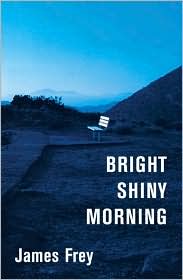
http://images.barnesandnoble.com/images/25830000/25830801.JPG The London Independent calls me pedantic for pointing out the historical errors in James Frey’s debut novel Bright Shiny Morning.

That’s a criticism I can live with.

Besides, Frey could care less. His book is a best-seller.

But I was pleased by the vignette Leah Garchik ran in the San Francisco Chronicle about a bottle of Isaias Hellman’s 1875 port that sold at a benefit for the Magnes Museum.

"Frances Dinkelspiel, whose "Towers of Gold: How One Jewish Immigrant Named Isaias Hellman Created California" will be published in November, was keynote speaker at a fundraising event for the Judah L. Magnes Museum in Berkeley last week. Hellman is Dinkelspiel's great-great-grandfather, and he ran Wells Fargo Bank from 1905 to 1920.

A silent auction at the event included a bottle of 1875 Port from Cucamonga Vineyard. Hellman bought the vineyard in 1871, and the wine is from among the oldest grapes in California. Dinkelspiel says the family used to have many cases of it, but a few years ago, it was sent to a warehouse in Vallejo for storage. And that's the warehouse where 6 million bottles of wine were destroyed by arson in 2005. The single bottle fetched $850 at auction."

Tuesday, May 20, 2008

Madapple Book Release Party

Posted by Picasa

Madapple Book Launch Party

The launch party for Christina Meldrum's debut novel, Madapple, was one of the most gracious affairs I have ever attended. Imagine a large estate nestled among the oaks in Ross, Ca. Stone steps led down to a pool and terrace, where everyone gathered to hear Christina read from her book.

It was the end of a three-day heat wave in the Bay Area. In honor of the book, the hostess served Madapple martinis and white sangria loaded with fruit.

There were lots of Bay Area writers on hand to celebrate including Ellen Sussman, Katia Noyes, Meg Waite Clayton, Bridget Kinsella, Allison Hoover Bartlett, and Julia Flynn Siler, among other. Pam Feinsilber, senior editor of San Francisco Magazine, was also there.


Posted by Picasa

Monday, May 19, 2008

Surprise! James Frey’s Sense of Accuracy is Skewed

http://www.faculty.fairfield.edu/faculty/hodgson/courses/city/LosAngeles/Early_images/oldtmes.gif

James Frey’s debut novel Bright Shiny Morning has been both lauded and vilified. While the book tells the story of modern day Los Angeles through fictional characters, Frey interweaves the narrative with bits of Los Angeles history.

Problem is, he gets many of these wrong.

You would have thought after his public humiliation on Oprah he would have learned to double-check what he wrote.

Here are a few examples:

Frey says "in 1873, the city's first newspaper, the Los Angeles Daily Herald, opens."

What Frey Gets Wrong: He’s off by many years. The Herald was hardly the first newspaper. The Los Angeles Star and the El Clamor Publico started publishing in the 1850s.

Frey says that in 1895 all of the 23 incorporated banks in Los Angeles County are robbed at least once and one bank was robbed fourteen times.

What Frey Gets Wrong: My book, Towers of Gold: How One Jewish Immigrant Named Isaias Hellman Created California, focused on one of those banks, the Farmers and Merchants Bank, and I found no evidence it was robbed in 1895. A search of the Los Angeles Times Historical Newspaper Index does not support Frey’s claim either.

Frey says that by 1895 there are 135,000 people living in Los Angeles. (Not! See below) He goes on to say that “in an effort to sustain the Los Angeles River as the city’s primary source of water, William Mulholland, the commissioner of the Los Angeles Water Department, institutes a metering system to regulate overall water use."

What Frey Gets Wrong: In 1895, Los Angeles did not own its own municipal water supply. Drinking water was provided by a private company, the City Water Company, owned by Isaias Hellman and run by William H. Perry. Mulholland was an employee of the private water company, not the city. The metering was not started until 1904.

Frey goes on to say that in 1901 “Harrison Otis, the publisher of the Los Angeles Times newspaper, and his son-on-law Harry Chandler, purchase large chunks of land in the Owens Valley … City Water Commissioner William Mulholland hires J. B. Lippincott .. to survey the land… Otis then uses the newspaper to create hysteria in regard to the dwindling water supply, and to promote a bond initiative.. ..When the bond passes, they sell the Owens Valley water rights to the city of Los Angeles at a huge profit.”

What Frey Gets Wrong: Frey conflates events here and gets his dates wrong. After years of wrangling with the private water company, the City of Los Angeles finally passed a bond initiative in 1901 to buy out the private water company. The city did not pass a bond initiative to start the Owens Valley Aqueduct project in 1901. At that point, and only at that point, did Mulholland become a city employee. He started warning about the inadequacy of the Los Angeles River in 1904, after another spike in population.

Also, Otis and Chandler made scads of money, not by buying up large tracts of land in the Owens Valley, but in the San Fernando Valley.

Frey says that “in 1874, Judge Robert Widney builds a two and a half mile horse-drawn railcar line leading from his Hill Street neighborhood to Downtown Los Angeles. Within two years there are similar lines in Santa Monica, Pasadena, and San Bernardino .. In 1898, the Southern Pacific Railroad buys the Los Angeles Consolidated Railway Corportion … it rapidly and greatly expands the LA rail system…. “

What Frey Gets Wrong: Widney did indeed build a horse-drawn trolley, not rail line, in 1874, but the rapid expansion happened in downtown Los Angeles, not outlying cities like Pasadena and San Bernardino, as Frey suggests.

In 1898, a syndicate made of up Henry Huntington, his son, his uncle, Collis Huntington, and the banker, Isaias Hellman, bought up five trolley lines and consolidated them into the Los Angeles Railway, known as LARY. The Southern Pacific Railroad had nothing to do with the acquisition. However, after Henry Huntington and Isaias Hellman had a disagreement about whether the rail line should pay dividends or reinvest profits back into the rail line, Hellman in 1904 sold his share of another rail line, the Pacific Electric, to Edward Harriman, who had acquired control of SP in 1901. Hellman sold Harriman his share of LARY a few years later.

Throughout his historical sections, Frey gets the population of Los Angeles wrong.

He says the population is 1865 was 14,000 people. In fact, by 1870 the city population was only 5,728 people.

Frey says that between 1880 and 1890, the population grew from 30,000 residents to 100,000 residents. The population was actually 11,000 people in 1880, shot up to about 100,000 in 1887 during the height of the Los Angeles boom, and fell to 50,000 in 1890.

He then writes that the population grew from 175,000 people in 1900 to 1,750,000 in 1925. The population was 104,000 in 1900 and it grew to 577,000 in 1920 and reached 1.2 million in 1930,

What Frey Gets Right: I am glad to report Frey got one historical fact correct. He writes that in 1871 John G. Downey and Isaias Hellman formed the city’s first incorporated bank, the Farmers and Merchants Bank. That’s right!

Thursday, May 15, 2008

Isaias Hellman in Technicolor


I am giving a talk tonight (May 15) on Isaias Hellman. It's a benefit for the Judah L. Magnes Museum in Berkeley, a gem of an institution. More than 170 people have paid to hear me speak -- and only half are relatives! I am going to provide a snapshot of Hellman's life and talk about why I consider him important.

When you have been researching someone for 8 years and have written 460 pages about his life, it is really tough to condense everything into a 20 minute talk. I plan to focus on three reasons why I think Hellman is important:

1)Hellman's life reflects a bigger story, that of the Jewish contribution to the development of the West. When gold was discovered in 1848, California was sparsely settled. Thousands of people from around the world came to the state, including about 5,000 Jews. They found a wide open society and were quickly accepted. They flourished and soon became merchants and political leaders.

2)When we think about the wild west we think of the clashes between cowboys and Indians or the image of John Wayne cleaning up a frontier town. But there was another wild part of the west -- its financial system. As one of the Pacific Coast's leading bankers, Hellman stpped bank runs, offered affordable credit, and encouraged business development. He tamed the financial system

3) He was a brilliant businessman and had great instincts about which businesses would flourish in California. When he believed in a person, he would lend him money, even if the investment didn't look good on paper. That led him to make loans that permitted Harrison Gray Otis to buy the Los Angeles Times. In 1887, he also gave $10,000 to oilmen Lyman Stewart and Wallace Hardison at a time when they were 183,000 in debt. The men went on to find oil. Their company is known today as Unocal. as a result Hellman played a major role in the development of 8 major industries in California -- banking, transportation, water, gas, electricity, wine, oil, and education.

My book doesn't come out until November, but this talk is really its launch.

I am particularly delighted by the fabulous invitation designed by Polly Lockman. It makes Hellman look almost modern!

Wednesday, May 14, 2008

Oakley Hall, a man who inspired hundreds of writers

http://www.signonsandiego.com/uniontrib/20070415/images/curr-hall2.jpg I was saddened to read of the death of Oakley Hall, a novelist who has done so much to encourage and nurture emerging writers.

Oakley was the author of 20 books, many of which took place in the west. He did a lot to transform the image of the Wild Wild West into something more complex than a war between settlers and Native Americans.

I first met Oakley when I attended the Squaw Valley Community of Writers, a writers’ conference he started almost 40 years ago. I went to the conference without knowing a lot about it and was amazed at the number of writers who have come from its ranks. There is Michael Chabon, Amy Tan, Jennifer Egan, Joshua Ferris, Glen David Gould and Alice Sebold. Once aspiring writers at Squaw, they have ascended into the highest literary circles in the country.

There are scores of others, including Julia Flynn Siler, Christina Meldrum (whose book Madapple is being released just this week) Meg Waite Clayton, Regina Louise, Anita Ammirezvani, Lindsey Crittenden, Janice Cooke Newman, and so many more. And that is just from the writing workshop. There are other workshops in poetry and screenwriting. (Read about the past participants here.)

I believe Oakley set the tone for Squaw Valley, as well as the tone for UC Irvine writing program which he led for 20 years. There was a sense at Squaw that even if you were unpublished, your writing was worthy of being treated with respect. Everyone at the conference was on a continuum. Some were just starting out, some were world-famous, but everyone was part of the same universe.

Oakley was 87 when he died, so he lived a productive life. His novel Warlock was a finalist in 1958 for the Pulitzer Prize and the book, The Downhill Racers, was made into a movie staring Robert Redford. Few could have asked for a fuller life. Still, it’s sad when someone who has done so much for literary culture is gone.

Heidi Benson of the San Francisco Chronicle has a nice obituary.

Monday, May 12, 2008

Graphic Novels and other Monday Musings

http://www.artinliverpool.com/blogarch/benkatchor.jpg

The Bay Area is in the midst of a love affair with graphic novels. The Jewish Community Center of San Francisco is hosting a series of talks by authors called Serial Boxes. Ben Katchor will appear May 12 in conversation with monologist Jesse Kornbluth. Marjanne Satrapi, the author of the Persepolis series, has already appeared, as well as Art Spiegelman, Chris Ware, and Peter Kuper. On May 20 there will be a panel discussion with “up and coming” graphic artists Miriam Libicki, Jaime Cortez, Keith Knight, and Ariel Schrag.

Even Stanford students are getting into the act. Students in a class taught by Tom Kealy and Adam Johnson wrote and drew Shake Girl, which the Chronicle describes as "based on the true story of a Cambodian karaoke performer named Tat Marina who was the target of an "acid attack" after she had an affair with a married man.”

Michael Lewis, the author of Moneyball, has sold a book on fatherhood, an outgrowth of his columns on Slate. This Berkeley-based author (living for a few months in New Orleans) has sold a “humorous and poignant memoir on the tribulations of fatherhood, again to Star Lawrence at Norton, in a major deal, by Al Zuckerman at Writers House ” according to Publishers Marketplace.


I’ve become enamored of a new web site called ALLTOP, which aggregates news stories and magazine articles and web sites into different topic areas like journalism, movies, wine, politics, the environment, celebrity gossip, etc. I love the site that focuses on books.

It’s a site new web site backed by Guy Kawasaki, the Silicon Valley guru.

California Authors is a website that trumpets literary news and achievements by, you guessed it, California authors. The creators have revamped the website including a page that lists what they consider California authors. It’s a great read and an easy way to find out about books and writers you may not know. Sine the website is run from Los Angeles, there are more southern than northern California authors.

Here are a few gems I found, people I have never heard of but who are quite accomplished:

Joel Drucker This Oakland-based writer is one of the world’s leading tennis journalists. First book, Jimmy Connors Saved My Life (2004), set largely in LA. Wrote five major cover stories for San Diego Reader, including “A Jew & The California Dream” and “San Diego’s Tennis Curse.” Work cited in Best American Sports Writing.

Elaine Flinn A California native, and former San Francisco antiques dealer, Elaine Flinn’s debut novel, Dealing in Murder, A Molly Doyle Mystery (Avon) was published in 2003.
The antiques game is a killer, and it takes an antiques dealer to tell the tale.

Jessica Barksdale Inclan is the author of five novels — Her Daughter’s Eyes, The Matter of Grace, When You Go Away, One Small Thing and Walking With Her Daughter — and co-editor of the textbook Diverse Voices of Women. She lives in Orinda and teaches at Diablo Valley College in Pleasant Hill.
“Inclan never condescends and never judges, preferring to let her subtly drawn people speak for themselves” — Kirkus Reviews

Saturday, May 10, 2008

Paperback Dreams -- a film about Cody's and Kepler's


Paperback Dreams Trailer from abeckstead on Vimeo.


This one looks interesting: a documentary about the struggles of Cody's and Kepler's, two of the Bay Area's leading independent bookstores.

San Francisco-based filmmaker Alex Bedstead is making the documentary in conjuction with KQED. It's set to air on PBS stations in the fall of 2008, but there will be a preview of the film at this year's Book Expo America in Los Angeles in late May.

Thursday, May 08, 2008

Tony Horwitz and his Long Strange Trip

http://blog.turnhere.com/photos/uncategorized/2008/03/26/hh_tohorwitz_002_j.jpg This is something I haven’t seen before. An author’s blog hosted on a newspaper site.

Tony Horwitz, the author of the fabulous Confederates in the Attic, is promoting his new book, A Trip Long and Strange. It’s an exploration of America before the pilgrims sailed over on the Mayflower, the missing century as he puts it. Tony, like many authors, is blogging about his book tour. You can access the blog from his website, but you can also find it on the USA Today website.

Now Amazon has been hosting blogs of the authors it sells and many bookstores ask authors to guest blog. But I have never seen this marriage of author, publishing, and newspaper. It’s actually a great idea, as it brings an author to a broader audience. (via Julia Flynn Siler)

Monday, May 05, 2008

Mad about Madapple

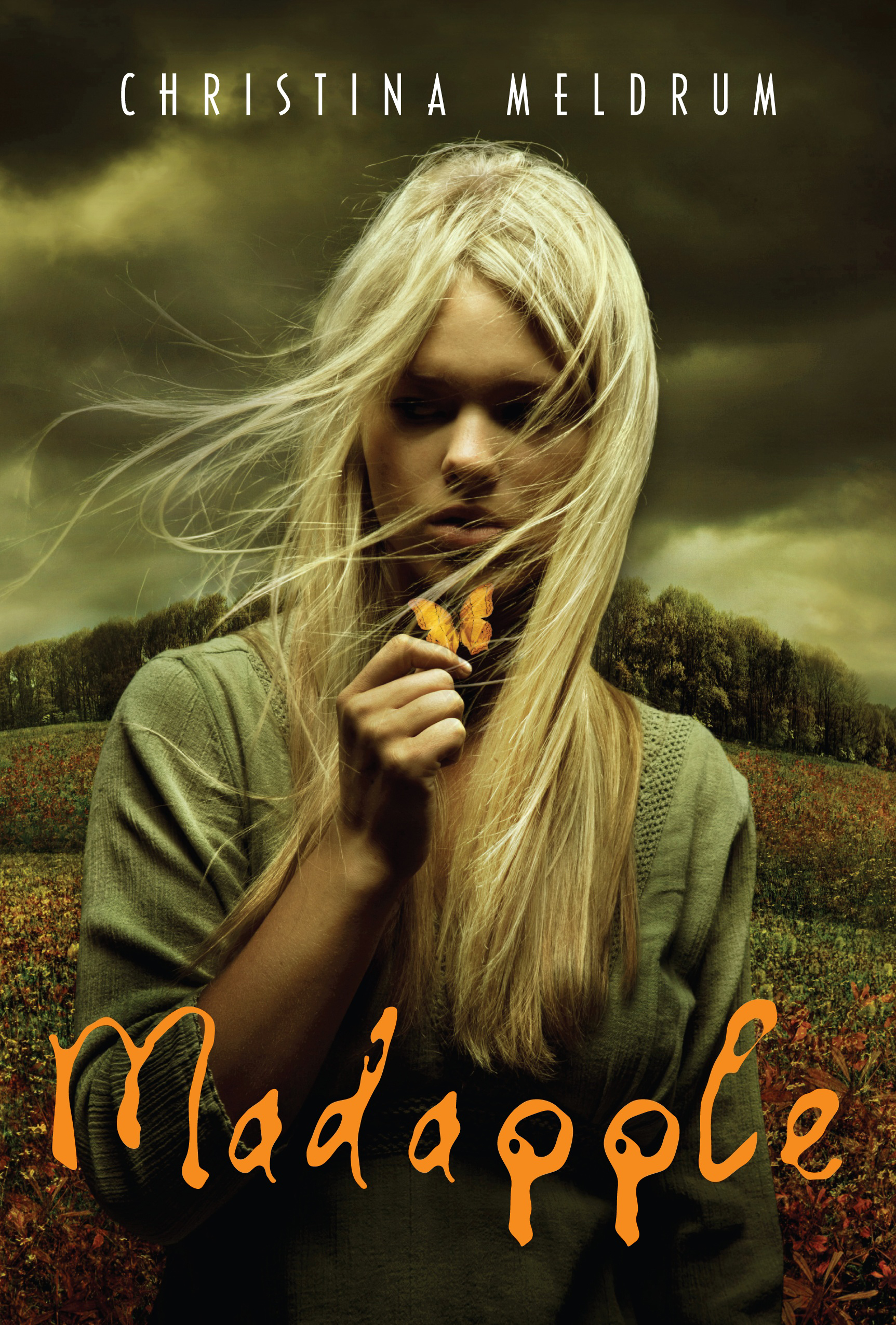
http://www.christinameldrum.com/images/madapple_press.jpg

I have been to a lot of nice book parties. The one with the best food was thrown by Nancy Oakes and Pamela Mazzola for the release of their cookbook, Boulevard, named after the well-regarded restaurant. That’s the only book release party I have attended where I was served tuna tartare in ceramic spoons, prawns in saffron rice, and buttermilk fried chicken. More than 600 people showed up to sample the food and ogle over the glossy cookbook.

Julie Flynn Siler had a great party, too, at a beautiful estate in Ross, the wealthy enclave in Marin County that is home to Sean Penn and Robin Wright. The caterer set up food in a rustic barn and the guests spilled out onto a lawn facing the house and pool. There were shade trees everywhere, creating a cool green canopy. And since the book, The House of Mondavi, was about wine, there was plenty to drink.

My writing group, North 24th, threw a really fun party in November for the release of Susan Freinkel’s book American Chestnut: The Life, Death, and Rebirth of a Perfect Tree. We all brought dishes to share and hung out in a beautiful house in Sea Cliff. I knew a lot of the people there, so it was a really intimate and fun affair.

But I have a feeling I am about to see the best party yet.

Last week, I went to my mailbox and pulled out a large format envelope. It was so big and fancy I thought it was a wedding invitation. I opened it to find an invitation on thick green cardstock mounted on black velvet. It was a request to attend a May 17 party for the release of Christina Meldrum’s book, Madapple.

Underneath the invitation was a 5 x 6 replica of the book. It had Madapple’s glossy cover and a few chapters of the book. The invitation screamed “important” and “noteworthy” and “fun” from every page.

Now Christina is a class act and one of the most beautiful women I know. But this small sampler is not just her creation. Her publisher, Knopf, helped pay for the invitation and reprint, which is highly unusual in this day of penny pinching and declining profits. It’s all part of the publisher's concerted push behind Madapple. A few weeks ago, Knopf hosted a party in San Francisco to introduce Northern California booksellers to Christina. The company wined and dined the store owners and made sure they knew that Madapple was going to be big.

There is already great buzz about the book, which will be released May 13. It’s a book about a teenager girl that is part thriller and courtroom drama, sprinkled with lessons on botany and spirituality. Madapple is being marketed to the young adult market, but is really a cross over that appeals to adults as well. It got starred reviews in Kirkus and Booklist.

It's going to be great fun to watch this ride.

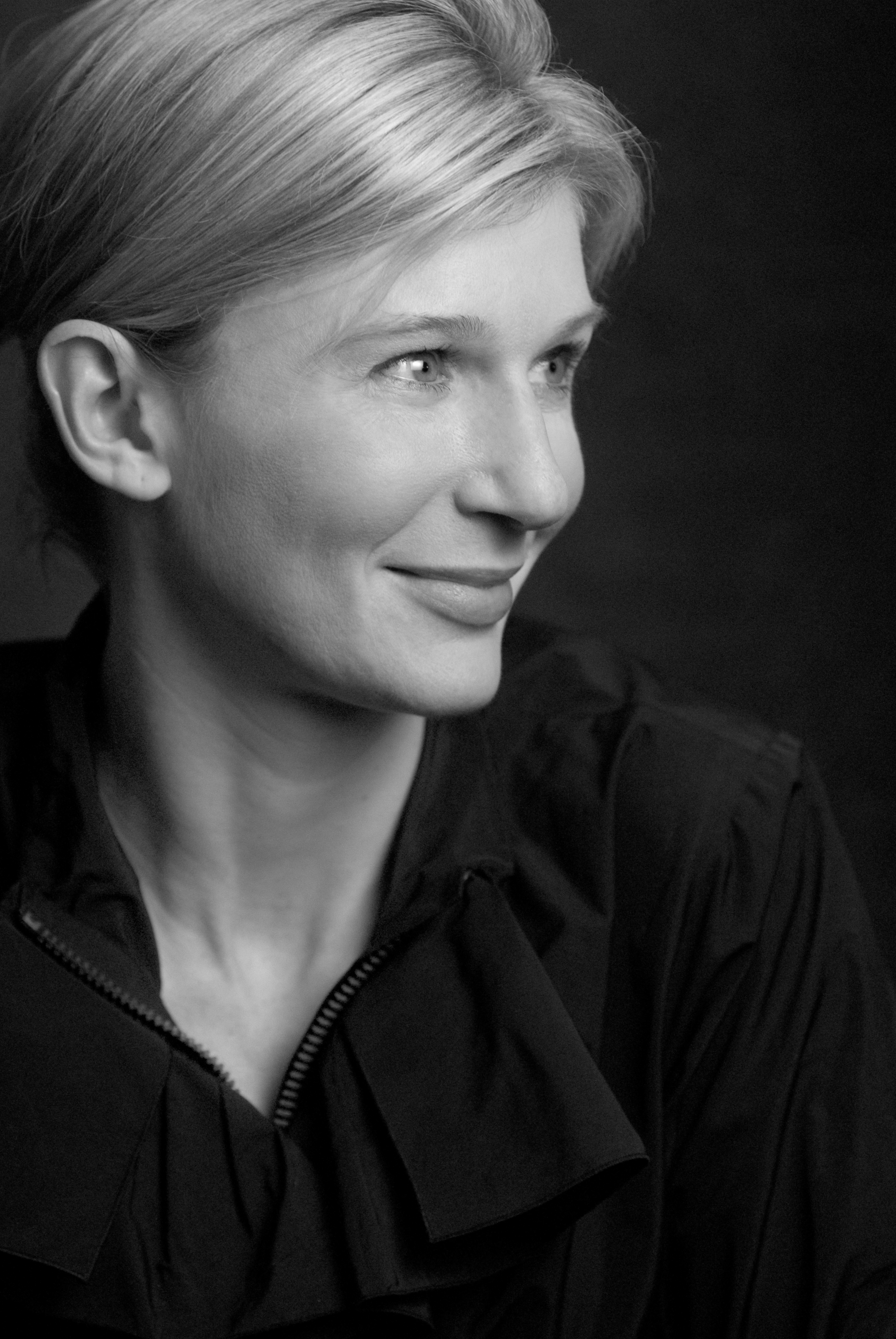
http://www.christinameldrum.com/images/christina_bw_press.jpg

Christina Meldrum

Monday, April 28, 2008

Copy Edit Purgatory


For the last few weeks I have been ensconced in my office, furiously making corrections to my manuscript. I have been in copy editing purgatory, that never-never land between a mess and a finished book.

I now appreciate the merits of a copy editor. I thought I had turned in a fairly clean manuscript, but my copy editor caught dozens of mistakes. I would spell a company's name one way on one page and another way fifty pages later. And he caught those discrepancies.

Those errors were easy to correct. What was excruciating was fixing my footnotes. I have been researching the life of Isaias Hellman for eight years now and have gotten information from a half dozen libraries, dozens of newspapers and books, and visits to places around the world. I thought I had documented the sources of all my information, but I soon discovered that I was missing a page number here, a folder number there, or a title or publisher. It took hours and hours and more hours to track everything down.

The photo is a picture of my office after I had finished. Papers everywhere.


Here is a close up of a page of my footnotes. The copy editor's comments are in red and my corrections are in blue and green. The picture below is my manuscript, finally completed! It's close to 470 pages, which will be about 380 in book form. Now I am just waiting for the finished cover.