
Pages

Friday, July 28, 2006

Pine Lodge at Sugar Pine Point State Park

 Posted by Picasa

Summering at Lake Tahoe in the Gilded Age


This is where I’ll be the next few days. This is the house Isaias built, Isaias being the subject of the biography I am writing. Isaias Hellman was the president of the Nevada National Bank when he bought 2000 acres and two miles of shoreline on Lake Tahoe in 1897.

Lake Tahoe was not yet a popular tourist destination for people living in the Bay Area. It took about nine hours by overnight train to reach Truckee, and then travelers took a stage coach over a rocky road to reach Tahoe City. After 1900, they could take a narrow gauge rail line to the Lake, where they then had to board a steamer to get to a hotel or home. The roads weren’t very good then.

Isaias Hellman moved into this shingle style house in 1903. He was the first millionaire to construct a mansion on the lake. The tourist trade had only taken off in the 1880s and most wealthy people summered at one of the lake’s fancy hotels. Hellman and his family spent a few summers at Hotel Tallac on the southern part of Lake Tahoe. It was owned by Lucky Baldwin, who had made a fortune in the Comstock Lode, and it catered to the upper crust. Women changed their clothes four to five times a day, took strolls around the grounds and sat down to five course meals. There was great fishing – it was not uncommon to catch hundreds of pounds of trout in a few hours – and great boating.

Hellman fell in love with Lake Tahoe and quietly bought up land around Sugar Pine Point. He didn’t want to tip off speculators that he was in the market for a home. He built his house, using granite from nearby Meeks Bay and other local materials, from 1900-1903. It remained in his family until 1965 when it became part of the California State Parks System.

For the last few years a group of volunteers has put on a Living History Day at Sugar Pine Point. I am going up there to give some talks about Hellman and to revel in the sight of people dressed up in ‘30s period costume. It should be fun.
Saturday, July 22, 2006

Alison Bechdel


I’ve only read a couple graphic novels in my life. Maybe I’m choosing well, but I’ve found them to be much like any good novel, intriguing, engrossing, and imbued with emotions.

I loved Marjane Satrapi’s “Persepolis” series about Iran and life as an exile in France. Somehow the comics enhanced the story of her adolescent confusion and burgeoning sexuality. They also made the scenes of oppression in Iran easier to take.

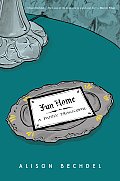
I’ve just read Alison Bechdel’s new graphic memoir, Fun Home: A Family Tragicomic, and think it works even better than Persepolis. Bechdel tells intertwining stories of her father, her mother and herself living in a rural town in Pennsylvania, and how they lived parallel, yet separate, lives.

The focus is on her father, who is a closeted homosexual. He finds joy in turning the family’s run-down Federal style farm house into a Victorian showcase, a place almost too ornate to be comfortable. He teaches English and runs the family’s undertaker business. Alison calls the funeral home the “Fun House.”

Alison, who is a lesbian, is “Spartan to my father’s Athenian, modern to his Victorian, Butch to his Nelly, utilitarian to his aesthete.” She spends much of her life defining herself in opposition to her father, until, ironically, he conveys his homosexuality to her a few weeks before he dies. (It’s officially an accident – he is hit by a truck – but Alison suspects he committed suicide.)

Blechdel is trying to understand her father’s life. Was it wasted because he could not publicly acknowledge who he was? Was he gay or bisexual? Did he ruin his wife’s life? Why did he keep so many secrets? Throughout the graphic novel, Bechdel tries to uncover her father’s motives, and the book is as much about her search for understanding as it is about his story.

The book is also built around themes in literature, as Bechdel and her father are avid readers. Blechdel uses Ulysses, by James Joyce, and The Odyssey, by Homer, to explore themes of connection, loss, and journey.

I gave this book to my 14-year old daughter before I read it, naively thinking that a graphic novel would be appropriate for a young reader. It’s not. There are explicit scenes of coupling and the literary illusions were too sophisticated for her to grasp completely. But I would highly recommend it to others.

Bechdel explains her book to the Village Voice and to the Powell's blog.

Wednesday, July 19, 2006

Different Kinds of Lost Boys

Samuel Garang Akau, one of the “Lost Boys of Sudan” read his first novel, Animal Farm, while a teenager in a refugee camp in Kenya. He had to share the book with 30 others. With two parents and a brother killed in sectarian violence, Akau found his way to Stanford’s English Department, where one of his short stories won a prize. He plans to write "at least four or five novels. And a memoir," he said. It will be "not my story alone, but the story of a lot of people."

The New York Times gives Toby Young’s new memoir, The Sound of No Hands Clapping, a thumbs up. Young may be one of the most conceited, self-centered, celebrity-gawking losers on the planet, but he sure writes funny.

Silence of the City is a new website devoted to printing rejected “Talk of the Town,” pieces from the New Yorker. Great name. I can see why some of the pieces never made it into the magazine.

Monday, July 17, 2006

The Making of a Biography

I was interested to read Michael Kazin’s review of The Most Famous Man in America, not only because Debby Applegate’s biography of Rev. Henry Ward Beecher seems so interesting. I have been waiting for this book to come out for more than four years, because of the hype it received in Susan Rabiner and Alfred Fortunato’s excellent book: Thinking Like Your Editor: How to Write Great Serious Nonfiction – and Get It Published.

The Rabiner and Fortunato book is the single best book I found on how to think about a book of serious non-fiction – the questions a book must pose and the narrative a book must follow. Most of the tomes on writing book proposals focus on “How-To” books, which wasn’t very helpful to me when I was thinking about writing a biography. I must have read Thinking Like Your Editor a half-dozen times while getting my own proposal together.

Rabiner is Applegate’s agent, and uses Applegate’s book proposal and a sample chapter as a central focus of the book. And from the early reviews the book has lived up to its hype. (By the way, the title original suggested for the book was Breach of Faith. I like that better than .)

JON CARROLL of the San Francisco Chronicle has a good column on book reading, collecting and reviewing.

The LitBlog Coop has recommended a new summer read: Michael Martone’s “Michael Martone.” (I kid you not.)

Tin House, one of the hippest literary journals around, hosts an annual fiction conference each summer in Oregon. Here's a report on the goings on. (Via Elegant Varietion)

Thursday, July 13, 2006

William T. Vollmann canonized

The Bancroft Library at the University of California is a vast collection of rare books, manuscripts and ephemera that document the settling of the West. It also has substantial collections of illuminated manuscripts, Egyptian papyrus, early English and French manuscripts, Mark Twain letters, and writings from the Beatniks.

Now the Bancroft has decided that recent National Book Award winner William T. Vollmann deserves preservation in the pantheon. The library recently put out a call for donations of nearly all of Vollmann’s work. (I don’t think they extend this courtesy to most contemporary authors, so it’s an honor.) In particular, the library wants:

Whores for Gloria 1991

One of 20 copies handcrafted by William T. Vollmann and Ken Miller using the sheets from the Pantheon first edition.

From his Seven Dream series:

Argall, Viking 2000

The Rifles, Viking 1994

Fathers and Crows, Viking 1992

The Ice Shirt, Viking 1990

An Afghanistan Picture Show; or, How I Saved the World, Farrar Strauss & Giroux, 1992

The Atlas, Viking 1996

Butterfly Stories, Grove 1993

Expelled from Eden: a William T. Vollmann Reader

Rising Up and Rising Down San Francisco: McSweeneys, 2003 7 volumes

Thirteen Stories and Thirteen Epitaphs, Pantheon 1993

You Bright and Risen Angels, Atheneum, 1987 (Bancroft has British edition, which precedes the American)

Angelina Jolie to Play Role of Journalist


Angelina Jolie is going to play the role of Daniel Pearl’s widow in a movie.

Marianne Pearl penned A Mighty Heart after her husband was kidnapped, killed, and beheaded by Islamic militants in Pakistan in 2002. Pearl was a reporter for the Wall Street Journal and was attempting to interview a secretive terrorist.

I loved A Mighty Heart. Although Marianne’s heart was ripped apart by her husband’s murder, the book was free from rancor. I was moved by her openness, her willingness to forgive her husband’s captors. She is a freelance journalist of mixed nationality, part French, part Caribbean, and she clearly prizes understanding and cooperation among different countries.

The book reminded me of Nien Cheng’s incredible memoir, Life and Death in Shanghai, about her days during China’s Cultural Revolution. When I was a young reporter in Ithaca, New York, Chang came to speak at Cornell University. I interviewed her in a small campus classroom and I was struck by her calm and centeredness. I couldn’t believe she wasn’t angry after all Mao’s men had done to her – including tossing her daughter out of a fifth-story window. I truly felt I was in the presence of someone noble.

I spotted Marianne Pearl a few years ago. She had come to the UC Berkeley School of Journalism to deliver the commencement address. She was staying at the Claremont Hotel and I saw her at the swimming pool, playing with her young son. I really wanted to approach her and tell her how much I enjoyed her book. I could have, as we have friends in common, but I was too shy. I also didn’t want to invade her privacy and her precious vacation with her young son. So I spied on her from afar and tried to wonder what her life must be like.

I am not a huge fan of Angelina Jolie, but I think she will play an excellent Marianne Pearl. Most of all, I am happy the book, which talks about international journalism, violence, and love in a most remarkable way, will become a move.

Filming by Michael Winterbottom, who directed Welcome to Sarajevo, will begin in about five weeks.

Only in California


Take 27 talented authors. Ask them to write essays about California. Combine them into a book with great cover art by David Hockney and donate the profits to the California Art Council.

It’s a great idea, and the premise behind My California: Journeys by Great Writers. This anthology is a collection of travel narratives by a well-known group, including Michael Chabon, Dan Goia, Carolyn See, T. Jefferson Parker, and many more. Incredibly, the anthology has raised more than $60,000 for children’s writing programs around the state.

Three California cities –Santa Barbara, Sacramento and Whittier — have just picked the book to be their One City, One Book reading projects. The city of Long Beach read the book in the spring.

The editor of My California is Donna Wares, who also runs the fabulous website California Authors. I check this site every day because it has a mix of gossip – who is getting published, which bookstores are closing (or opening), who is reading where – as well as excerpts from books about California. There are author interviews and links to West Coast publishers and independent bookstores. It has a compendium of vital books about the history and culture of California

The premise is that the publishing world is way too New York-centric. Read their mission statement:

“Squinting westward, New York publishing seems to see us dimly. California. Somewhere. Out there at the end of the Pony Express line, indefinable on the dusty horizon. But from here, under the bright western sky, Pacific crashing at our feet, California shows up in crisp detail. It is generous, even lavish: rich in literary tradition, the nation's largest book market, home to the readers who create best-sellers, home to the eloquent voices who are defining the best in American publishing. It's all so clear to us. Here. And because being here counts, we are building CaliforniaAuthors.com — creating an online literary hub for the West Coast's finest writers and their readers.”

If you buy the book, you, too, can help children's literacy programs in the state/

Tuesday, July 11, 2006

Progressive Reading Series


While there was a lot of George W. Bush-bashing at Monday night’s Progressive Reading Series in San Francisco, the real focus was on the power of literature. Hundreds of people crowded into the Make-Out Room, a trendy bar in the Mission district, for another round of readings produced by writer Stephen Elliot.

The evening raised $3,000 for progressive campaign races. Elliot said much of the money will go to help Tony Trupiano in his campaign to unseat Republican Thaddeus McCotter in Michigan’s 11th Congressional District.

Lots of fun in the evening. Jack Bouleware read an appropriately outrageous and often disgusting essay about his poop-eating dog. (Appropriate because he wrote San Francisco Bizarro, a book about the weirdest aspects of San Francisco life.) Katherine Noel followed him with an excerpt from her much more sober novel, Halfway House.

The ever-amiable Jason Roberts read from A Sense of the World. The book flew to the San Francisco Chronicle bestseller list after a glowing review in the book review section. It got a lukewarm review this week in the New York Times, which is a bummer, but I hope Roberts doesn’t take that opinion too seriously; obviously many people think the book is a gem.

The poet W.S. Di Piero was up next. He’s won so many awards that I couldn’t keep up with their recitation, but his four poems were wonderfully poignant. Comedian and writer Nato Green softened up the crowd with his caustic and comic jokes.

Then it was star time. No one knows for sure who got to ride in the big black Lincoln Town car, avec chauffeur, that was waiting outside the bar on 22nd Street. Most people bet the ride was for Jane Smiley, who lives in Santa Cruz. But maybe it was for Jonathan Franzen, who seems to have a sister and brother-in-law in the Bay Area. Franzen announced to the crowd that he just discovered that he and Smiley grew up at the same time in the same small town in Missouri; they may have even swum in the same swimming pool.

Smiley got a lot of applause for just coming on stage, and more from reading from her book Thirteen Ways to Look at the Novel. Then Jonathan Franzen bounded softly to the stage to read from his new memoir, The Discomfort Zone: A Personal History, which has religious themes throughout. It will come out in the fall. Both were somewhat soft-spoken and reserved, but grateful to be reading in front of such a literate and politically-correct audience.

I’m not sure if there is a San Francisco literary scene, but one aspect of it was out in full force. Sighted: Grottoites Peter Orner, Po Bronson, Tom Barbash, Allison Hoover Bartlett, Katherine Neilan. Kevin Smokler, who is forging a new citizen journalist corps, attended, as did Pulitzer-Prize winning reporter and author of The Mommy Brain, Katherine Ellison. Wall Street Journal reporter Julie Flynn Siler was there, too, as was Susan Frienkel, who has a book coming out from UC Press on the decline of the American chestnut tree.

I STOPPED by Cody’s on Telegraph twice on Monday. It was its last day. Everything in the store was 20% and there were long lines both times I peeked in.

Monday, July 10, 2006

Lots of Explanations

Jerry Roberts, who quit his job at the Santa Barbara News-Press last week because of meddling from its billionaire owner, explains the tensions behind his resignation. (via Romenesko)

Nan A. Talese, the legendary editor who "edited" James Frey's A Million Little Pieces, explains herself. (via Pinky's Paperhaus)

Literary Doings in the Bay Area

Kids flocked to the San Francisco Symphony this weekend to hear the world premiere of a new symphony composed by the nefarious Lemony Snicket and Nathaniel Stookey. While the orchestra played, Snicket (aka Daniel Handler) narrated the 30-minute piece, called The Composer is Dead. It told the story of a dead composer and the search for his killer, with digressions into the lives of various famous musicians.

CODY"S BOOKS on Telegraph held a combined good-bye and 50th anniversary party on Sunday. Today is the store’s last day.

“How poignant and unbelievable," writer Maxine Hong Kingston told the Chronicle, noting that she first came to the store 48 years ago as a freshman at UC Berkeley.

"I walked in and found my haven and my home. It felt eternal. It felt like it would be here forever."

Dibs has a great -- if pointedly anti-leftist -- take on the celebration.


Friday, July 07, 2006

Editor Who Took Chronicle Buy-Out is Out of Work Again

Jerry Roberts, a former top editor for the San Francisco Chronicle, quit the Santa Barbara News-Press this week, along with four other editors and reporters. They left because Wendy McCaw, who is very rich because of her marriage – and divorce – from cellular king Craig McCaw, keeps meddling with the editorial content of the paper. Apparently, Roberts was forcibly removed from the newsroom.

Thursday, July 06, 2006

What has she been doing for 10 days?

Making the transition from holiday to work is rough. I’ve been back from Lake Tahoe for three days and yet I still can’t seem to light a fire under myself. Actually, I had a productive Wednesday revising a chapter of my book, but I still feel like I am in loopy land. Maybe it’s the effect of having Fourth of July on a Tuesday. I keep thinking it’s the weekend, but its not.

First up is a big congratulations to Ed Champion, whose Bat Segundo show was named a Yahoo pick. For those of you who don’t know about the Bat Segundo show, it’s a podcast featuring some of the country’s best authors. Ed has tracked down many friendly, as well as inscrutable, writers for chats, including TC Boyle, William Vollman, Harvey Pekar, Colson Whitehead, Erica Jong, Jay McInerny, and others. Each podcast represents hours and hours of work. He works tirelessly on his blog, too, often filing 12 posts a day. (Sometimes that many in an hour) It’s hard to believe Ed has a full time job (as a paralegal, I think) writes fiction, and catches readings and events around the Bay Area. Return of the Reluctant is a great site and Ed deserves kudos for making the blogosphere a much more interesting place.

Julia Glass is in the Bay Area the next few days, but I won’t get a chance to hear her. She’s chosen distant locales for her readings from The Whole World Over. On Friday, she will be in Danville at Rakestraw Books. On Saturday, she will be at the new bookstore, Bookstore West Portal, owned by Neal Sofman, one of the former co-owners of A Clean Well-Lighted Place for Books. (I was happy to hear that Books, Inc. will move into their former location on Van Ness). She’s also going to Capitola. I know those are all great bookstores but no Berkeley? No Marin County? Since so many major bookstores are about to close, it will be interesting to watch where the big authors choose to read.


I’m looking forward to going to a new incarnation of the Progressive Reading Series on Monday, July 10 at the Makeout Room on 22nd Street in San Francisco. These are the brainchild of author Stephen Elliot and they raise money for progressive political candidates. Jane Smiley, Jonathan Franzen, Jason Roberts, and others will read. It's usually hot, smoky, and smokin'.


Joshua Braff, a comic author if I ever saw one, will read from The Unspeakable Thoughts of Jacob Green at the Magnes Museum on Russell Street in Berkeley at 6:30 p.m. on July 13. I am planning on going. Somehow summer seems a wonderful time to listen to authors.

Check this out: Lisa Okhun, another comic writer (and a member of my writing group, North 24th) has just started a blog, “That’s Empress to You.” It’s about being a divorced mother in a technological age and it’s funny, funny, funny.

Monday, June 26, 2006

Monday Meanderings

I’m heading out on vacation for a week, but here are some ideas worth pondering:
Journalists are turning the tables on traditional media by raising gobs of money and creating their own muckraking blogs, according to the Wall Street Journal. (I guess I'm not doing something right here.)

Anthologies are hot, as are attempts to understand the intersection of American and Middle Eastern culture. This is a don’t miss event: Persis Karim, Beatrice Motamedi, Haleh Hatami and Esther Kamkar will read from their new anthology Let Me Tell You Where I’ve Been: New Writing by Women of the Iranian Disapora. Tonight, June 26, Cody’s Books on Fourth Street in Berkeley, 7:00 p.m.

Nobody does it better than Rebecca Solnit. I thoroughly enjoyed this piece, which ran in the San Francisco Chronicle. It looks at immigration and bloodshed using a pivotal moment in California history.

See ya after the Fourth.

Friday, June 23, 2006

Julia Glass' The Whole World is Watching


I was awake at 3 a.m. this morning, hungrily devouring Julia Glass’ new book, The Whole World Over. When I first picked up the book, it took me a while to get immersed. Thursday was another extremely warm day in the Bay Area (and the day we learned the earth is the hottest it has been in 2,000 years) and I spent the day at the pool, reading. By dinner time I was hooked. When the heat woke me in the middle of the night I happily turned on the lamp to read some more.

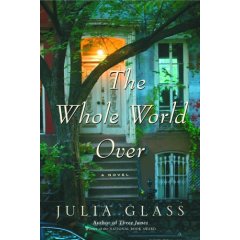
Most of the reviews compare The Whole World Over unfavorably to Glass’ National Book Award winner, Three Junes. I think it stands up well. It tells the story of Greenie Duquette, a Greenwich Village pastry chef who is vaguely dissatisfied with her life. Like Three Junes, Glass brings in all sorts of well-drawn characters who are going through their own domestic disturbances. Glass always has strong male gay characters, and she treats their quests for love and family as seriously as she treats those of her straight characters.

Her writing is peppered with metaphor and detailed descriptions of the food that Greenie cooks. She brings in 9/11, AIDS, parental loss, having babies, Western water wars, and whether little boys are better off living with their mothers and fathers. The characters have to balance their search for personal happiness with responsibility to others and community. I totally believed her characters and their tribulations, and was sorry to have the book end.

Thursday, June 22, 2006

Summer Reading

It’s too hot to blog. The Bay Area is in the grip of a heat wave. The U.S. is playing Ghana in the World Cup. So much book news is depressing:

More on Bay Area bookstore closures.

Slate has a gallery of photos of people reading in unusual places. (via Bookslut)

Oprah magazine has its “First Ever Summer Reading Issue.” It’s very yellow. Some of the tidbits I’ve gleaned:

30: Number of rejection letters John Grisham got before selling his first novel.

28: Percent by which literary reading has dropped among 18 to 24 year olds since 1982.

“Liebrary” is a cool looking new board game that is a “bookworm’s Balderdash.”

Harper Lee breaks her silence to write a letter about how she learned to read. She grew up in the Depression. "Books were scarce. There was nothing you could call a public library, we were a hundred miles away from a department store's books section, so we children began to circulate reading material among ourselves until each child had read another's entire stock."

If you buy a book from Oprah’s recommended reading list, you can get an additional 10% off at Amazon. (At checkout enter code oprahmag)
The blogger at So Many Books likes some of the issue, but chides Oprah for only recommending books put out by big publishers.


Tuesday, June 20, 2006

Tuesday Tidbits


Daniel Olivas has a profile of Reyna Grande, whose new novel about a young illegal immigrant, Across A Hundred Mountains, draws on her own flight from Mexico to the U.S.

“There is no question that Grande is living the American dream. She was born in Guerrero, Mexico, in 1975, and entered the United States at age 9. She earned her bachelor of arts degree in creative writing from the University of California at Santa Cruz. With that, she became the first person in her entire family to obtain a degree. In 2003, Grande became a PEN USA Emerging Voices Fellow, which led to her getting a literary agent who placed Grande's novel with Atria Books.”

Across A Hundred Mountains, which got a starred review in Publisher’s Weekly, will be released this week.

Edward Guthmann has a sympathetic and moving portrait of Berkeley writer Judith Moore in the San Francisco Chronicle. Moore, a senior editor at the San Diego Reader and the author of the acclaimed memoir, Fat Girl, died in May of colon cancer.

Speaking of the Chronicle, its Sunday book review section has gone from six to four pages – all without any comment from the editors. Bad news. But the paper seems to have increased the number of reviews it is running during the week.

A few new blogs from people in the East Bay:

Wendy Lesser, the editor of the ThreePenny Review, is starting a blog called TheLesser Review. It looks interesting, but it has already raised the hackles of the blogosphere with its slightly better-than-thou attitude. (Naturally Ed and Dan Green are already all over this.) She seems to suggest that most blogs are just a collection of random thoughts strung together without intending to make a point. This is from her introduction:

“Speaking of blog rules, this one is not going to follow most of them.

For one thing, it will be very organized, with listings of its contents (once it accumulates any contents, that is).

For another, I will not be making daily or even weekly postings, and the format will in no way resemble a diary or journal. Each posting will be a little (or not so little) self-contained essay, perhaps more chatty than my usual essays in the magazine, but nonetheless resembling a printed article more than most blog entries do."


And finally, I do not plan to include any photos of my cat or best friends or any other personal items that you would be required to take an interest in. This should come as something of a relief — a blessedly impersonal blog."

Other new blogs include Dibs, by a mystery man (or woman) with lots of access to Advanced Readers copies and Confessions of a Crazy Chick, by an unnamed 22-year old in publishing.

Friday, June 16, 2006

Another Independent Bites the Dust

Ed has the bad news: A Clean, Well-Lighted Place for Books in San Francisco is closing its doors.

This is a terrible blow to Bay Area book lovers. A CWLPB is one of the best bookstores in the region, and reading there is like grabbing the brass ring. It’s the store that shows up at community lectures, particularly those put on by City Arts and Lectures down the street, and sells books.

First Kepler’s, which got a second chance.

Then Cody’s on Telegraph

Now A Clean Well Lighted Place for Books.

Somehow, when some of the smaller bookstores closed, I comforted myself by thinking the owners probably didn’t have enough business savvy or they were in the wrong location, or something.

I was deceiving myself. The Bay Area is considered one of the most literate and book-loving areas in the country, yet we are losing major bookstores all over. The closures are in communities that regard themselves as book friendly: Menlo Park, right near Stanford University, Berkeley, right near UC Berkeley, and San Francisco, just a block from City Hall, the Opera House, the Symphony, and a few blocks from the Main Library and Asian Art Museum.

Which store is next?

On a bright note, one of the owners of A CWLPB has opened a new store in West Portal, My writing companion, Sharon Epel, apparently told Neal Sofman, the owner about a vacant space, and he pounced. Here is her report:

“When Neal's wife Anna learned that we lived near West Portal, she said, "I'm always telling Neal he should open a shop there." And I-who have always felt that the one thing missing from our neighborhood shopping district (good restaurants; an arty movie theater, Peets), is a real bookstore--told Anna that an amazing retail space--big, with floor to ceiling windows on two sides, across from the theater, next to an ice cream shop, was up for lease.

To make a long story short, they tried to get the place, almost lost it to some finance company(gasp), and then, one day this fall, they called to thank me---they got it and they were opening up. They've opened now, and it is beautiful. It seems like an amazing story in these times of fabled independents closing.”

Update: The New York Times weighs in on Cody's closure.

Thursday, June 15, 2006

James Joyce


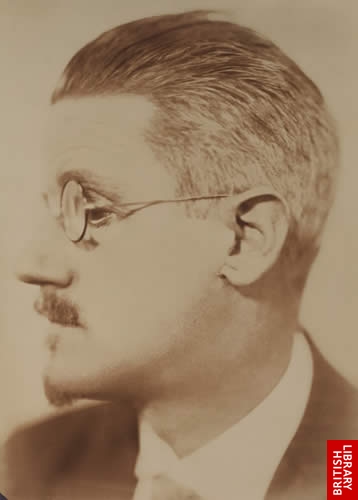
The June 16th issue of the New Yorker has a fascinating story on James Joyce’s grandson.

It turns out that Stephen James Joyce has complete control of the Joyce estate and is the one to dole out permission to quote liberally from his books and letters. But he is so protective of his family’s privacy that he says “no” to practically every request – and in the process has squelched the once-thriving academic field of Joyce studies.

The article, by D.T. Max, makes the case that the grandson is a bit unbalanced.

A Stanford professor who had to completely revise her book on Joyce’s daughter Lucia because of Stephen Joyce’s threats is suing the estate. Carol Shloss, working with Lawrence Lessig, filed a suit in court on Monday.

All of this is timely. The events in Ulysses take place on June 16, 1904. This Friday is Bloomsday.

Wednesday, June 14, 2006

Summer Reading


I haven’t been posting much because life has gotten busy. Summer is here, which means more kids running around. There was a graduation. Three performances of a play. Teachers’ gifts to buy, And of course all the time it took to get the house set up with a new TV for World Cup soccer.

When in a pinch, do a list. So here are the books on my summer reading list:

Sweet and Low: A Family Story by Rich Cohen – I am in the middle of this now. Cohen’s grandfather Ben invented those ubiquitous pink packets. Ben made millions, but cut Cohen’s side of the family out of the estate. He explores why. This is written in a colloquial style. It’s very breezy, but it works, even when he talks about the history of Brooklyn.

The Whole World Over by Julia Glass. I loved Three Junes, which won the National Book Award. Once again, Glass dwells on domestic disturbances in both gay and straight relationships. I have started this book and I am already drawn in by the lush language and plot.

Strange Piece of Paradise by Terri Jentz. I didn’t know anything about this book until I read a glowing review by Mary Roach in the New York Times. Jentz was attacked while on a camping trip and this the story of her long road to recovery.

Heat: An Amateur in the Kitchen by Bill Buford. The author, the former fiction editor of The New Yorker, works as an apprentice for celebrity chef Mario Batali. I love cooking memoirs ala Ruth Reichel’s Comfort Me With Apples. This one promises sweat, blood, lust, and many marvelous descriptions of food.

The Lemon Tree: An Arab, A Jew, and the Heart of the Middle East by Sandy Tolan. The author, who lives in Berkeley, tells the history of the Israeli-Palestinian conflict through one house. It was owned by Arabs before Israel became a nation, and then taken over by an Israeli family. He’s speaking at Mrs. Dalloway’s bookstore in Berkeley Thursday June 15 at 7:30 p.m. I can’t go, but I wish I could.

Water for Elephants: A Novel, by Sara Gruen. I have never read anything by this author but the buzz is incredible.

The Foreign Correspondent by Alan Furst. Ditto

A Field of Darkness by Cornelia Read. I had never heard of this Berkeley author until I saw she would be appearing this weekend at Book Expo San Jose. This is her first mystery and she is touring with Lee Child, so I figure it has to be good.

I read about Suite Francaise by Irene Nemirovsky in the New York Times Book Review. I was intrigued. Then Scott Esposito went crazy over the book, so now I really want to read it. For some reason I have this idea it will remind me of A Woman in Berlin: Eight Weeks in the Conquered City by Anonymous, one of the best books I read last year.