Pages

Tuesday, August 22, 2006

Osama Bin Laden and ..... Whitney Houston???

No one has ever suggested that Osama Bin Laden is kind or considerate. Now his former lover, the Sudanese writer Kola Boof, 37, has written a memoir, Diary of A Lost Girl, about her virtual imprisonment by the leader of Al Queda. Harpers Magazine is running an excerpt. Bin Laden was not only cruel to women, he apparently had a fixation on Whitney Houston.

“He would humiliate me by making me dance naked,” writes Boof. “It was such a strange thing, because for the most part he believed music was evil. If a guest at the estate played music, he would cover his ears until the “poison” was silenced. But other times he would become this devout party boy who wanted to hear Van Halen or some B-52's. To this day I hear the song “Rock Lobster” in my sleep. I would be jerking around like a white girl—“Dance like a Caucasoid girl!” he would say—and his eyes would track me from one side of the terrace to the other. “Your ass is too big, show me the front,” he said. Osama, you understand, did not know the difference between being vicious and being tender.”

And later on ….

“Osama kept coming back to Whitney Houston. He asked if I knew her personally when I lived in America. I told him I didn't. He said that he had a paramount desire for Whitney Houston, and although he claimed music was evil, he spoke of someday spending vast amounts of money to go to America and try to arrange a meeting with the superstar. It didn't seem impossible to me. He said he wanted to give Whitney Houston a mansion that he owned in a suburb of Khartoum. He explained to me that to possess Whitney he would be willing to break his color rule and make her one of his wives.”

Now this sounds like a strange and fascinating book. A look at Bin Laden's lechery.

Wednesday, August 09, 2006

Tidbits

This sale was just announced on Publisher’s Marketplace:

The mother of football player and soldier Pat Tillman, Mary Tillman and SF Chronicle deputy editor Narda Zacchino's untitled book about Mary's efforts to learn the truth surrounding the death of Pat, 27, while on patrol in Afghanistan -- which sparked six different Pentagon investigations -- also looking at his life, the meaning of patriotism, and the nature of sacrifice, to Ellen Archer and Will Schwalbe at Hyperion, with Leslie Wells editing, for publication in 2007, by Steve Wasserman at Kneerim & Williams.

The Chronicle has followed the Tillman story closely, doing a number of take-outs on his death, the role of friendly fire in combat, and the cover-up. Cynically I ask whether we need one more book on Bush’s deceits, but I think this will show just how far the Pentagon will go to sugar coat our wars.

SPEAKING of deceit. I saw the movie “Who Killed the Electric Car,” last night. It is an excellent documentary and I recommend that everyone see it. I had no idea. General Motors produced about 1,000 electric cars to comply with California’s strict emissions standards. They were zippy and problem free and those who drove them loved them.

California did away with its zero-emissions standards in 2003 under intense pressure from the car companies and George W. Bush’s government. Then GM rounded up all the cars (they were leased) and crushed them. It’s infuriating considering we are choking on our own smog, while people in the Middle East die because of oil.

Tuesday, August 08, 2006

Critical Mass, the blog of the National Book Critics Circle, has an interesting interview with Oscar Villalon, the editor of the San Francisco Chronicle's book review section.

Q: Are there any rules that guide how you sort through and pick the ones you'll review?

A: Self-published and vanity press stuff, of course, always gets tossed immediately. If a book is regional and its region has nothing to do with the Bay Area, that gets tossed. The first things I look at are: How pertinent is it to the region, and how pertinent would it be to our readers? We don't review romance novels. We do genres -- SciFi, mysteries and thrillers -- in monthly roundup columns, so those get set aside for that. Everything else I pretty much hang on to and flip through. Of course that's the other big chunk of my time -- going through those galleys and at least reading a little bit into them.

Choosing which books to review is completely subjective. You look at the catalogs and get a sense of what looks interesting, who you like. It's pretty much the same way you decide what you'll cover in a newspaper: You just go by your instincts. Clearly you pay attention to what's in the news and which books could be related to that, but for the most part, it's about picking books you would like to read. You have to trust your instincts and hope readers like to read what you're interested in. If your interests are too esoteric, you're going to alienate a lot of people, and if your interests are too broad, you're going to pique very few people. It's got to be somewhere in the middle.


Some summer books

It’s been a busy time for me this month. I am working hard on my book while I am free from other job and school-related distractions. One thing I have learned about writing a book: you can fiddle and rewrite endlessly. I have the sense that if I play around with my words enough, I can always make them better.

But I have been reading. Here are some thoughts:

Water for Elephants by Sara Gruen – This one sits atop the Chronicle’s best-seller list and was highly praised on its release. It’s an atmospheric book about a young man who joins a train circus in 1931. Gruen does an excellent job showing the bizarre and cruel world of the circus, where violence hides under the grin of the circus master. It’s a quick and enjoyable read. Nothing too deep or profound but fun.

The Dissident by Nell Freudenberger

Freudenberger is the author of the short-story collection Lucky Girls. She made one of those debuts people dream about – lots of praise in the New York Times and other august publications, long features with attractive photos. The Dissident is her debut novel and it is set in Los Angeles and Beijing. It’s really a novel about artiface and why we aren’t who we present ourselves as being. I think this theme – which actually took some guessing because of the cryptic nature of the plot – is stronger than the book. What? You ask. It means I didn’t love the plot or writing but when I thought about the book after I finished it I decided I enjoyed it.

Consuelo and Alva Vanderbilt: The Story of a Daughter and a Mother in the Gilded Age by Amanda MacKenzie Stuart.

This was a wonderful dual biography of the female Vanderbilts, but it goes way beyond descriptions of the decadent world of Newport society. Alva Vanderbilt was the woman who married her daughter Consuelo off to the Duke of Marlborough just to catapult her family into the social stratosphere. The book details that unhappy marriage and how Conseulo eventually overcame the stultifying British society to work for the downtrodden. Alva was a surprise, too, because she became an ardent suffragist and was critical in the fight for women to get the vote. There’s lots of great history and context, as well as glimpses into the world of the Gilded Age rich.

Archie and Amelie: Love and Madness in the Gilded Age by Donna M. Lucey

This is another dual biography of a Gilded Age couple, only these are Astors. Archie Chanler is the great great grandson of John Jacob Astor, but his life is anything but easy as his parents die at an early age. Archie meets and marries Amelie Rives of Virginia, who has written a racy bestseller about a taboo topic – the sexual yearnings of women. The marriage is a disaster from the beginning. Archie is eventually committed to an insane asylum by his siblings and the book does a good job exploring whether he really was crazy or his brothers and sisters were just spiteful. This is a good read but it has absolutely no historical context at all.

Thursday, August 03, 2006

Cody's Books is Still in Trouble

I thought Cody’s troubles would be over after they closed their famed store on Telegraph Avenue in Berkeley.

I am sorry to say they are not.

I went into their store on 4th Street today, in the tony shopping district in Berkeley, and was dismayed by what I saw.

The shelves looked bare.

Now Cody’s on Telegraph was the kind of place where you knew you could get almost any book, at any time. It was a place of surprises. You could walk in, browse any table in the store, and see something interesting. The shelves were crammed with books, the piles on the tables sometimes tottered over and the store had a feeling of abundance.

I didn’t get that feeling at the store on Fourth Street. There was an awful lot of maple showing, since most of the upper shelves were empty. The front table with the current releases had just had a few copies of some of the current bestsellers and the tables with the new fiction and non-fiction paperbacks had lots of space.

I had driven all away across town to go to this Cody’s. (The one on Telegraph was about 5 minutes from my house) I needed to look at some books for a journalism class I will be teaching this fall, but the store didn’t have the titles I wanted. (And these are recent non-fiction titles) Worst of all, the woman behind the information desk said she couldn’t order one of the books because Cody’s currently owes money to the distributor of that title!

“Didn’t you know we have money troubles?” she asked.

I did. I naively assumed that closing the Telegraph Store would take care of Cody’s problems. Apparently it hasn’t.

Did I help the store out by buying a book? Yes, I bought a paperback for $15. But I had been prepared to buy 4-5 books. They weren’t on the shelves.

Friday, July 28, 2006

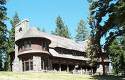
Pine Lodge at Sugar Pine Point State Park

 Posted by Picasa

Summering at Lake Tahoe in the Gilded Age


This is where I’ll be the next few days. This is the house Isaias built, Isaias being the subject of the biography I am writing. Isaias Hellman was the president of the Nevada National Bank when he bought 2000 acres and two miles of shoreline on Lake Tahoe in 1897.

Lake Tahoe was not yet a popular tourist destination for people living in the Bay Area. It took about nine hours by overnight train to reach Truckee, and then travelers took a stage coach over a rocky road to reach Tahoe City. After 1900, they could take a narrow gauge rail line to the Lake, where they then had to board a steamer to get to a hotel or home. The roads weren’t very good then.

Isaias Hellman moved into this shingle style house in 1903. He was the first millionaire to construct a mansion on the lake. The tourist trade had only taken off in the 1880s and most wealthy people summered at one of the lake’s fancy hotels. Hellman and his family spent a few summers at Hotel Tallac on the southern part of Lake Tahoe. It was owned by Lucky Baldwin, who had made a fortune in the Comstock Lode, and it catered to the upper crust. Women changed their clothes four to five times a day, took strolls around the grounds and sat down to five course meals. There was great fishing – it was not uncommon to catch hundreds of pounds of trout in a few hours – and great boating.

Hellman fell in love with Lake Tahoe and quietly bought up land around Sugar Pine Point. He didn’t want to tip off speculators that he was in the market for a home. He built his house, using granite from nearby Meeks Bay and other local materials, from 1900-1903. It remained in his family until 1965 when it became part of the California State Parks System.

For the last few years a group of volunteers has put on a Living History Day at Sugar Pine Point. I am going up there to give some talks about Hellman and to revel in the sight of people dressed up in ‘30s period costume. It should be fun.

Saturday, July 22, 2006

Alison Bechdel


I’ve only read a couple graphic novels in my life. Maybe I’m choosing well, but I’ve found them to be much like any good novel, intriguing, engrossing, and imbued with emotions.

I loved Marjane Satrapi’s “Persepolis” series about Iran and life as an exile in France. Somehow the comics enhanced the story of her adolescent confusion and burgeoning sexuality. They also made the scenes of oppression in Iran easier to take.

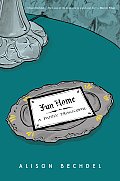
I’ve just read Alison Bechdel’s new graphic memoir, Fun Home: A Family Tragicomic, and think it works even better than Persepolis. Bechdel tells intertwining stories of her father, her mother and herself living in a rural town in Pennsylvania, and how they lived parallel, yet separate, lives.

The focus is on her father, who is a closeted homosexual. He finds joy in turning the family’s run-down Federal style farm house into a Victorian showcase, a place almost too ornate to be comfortable. He teaches English and runs the family’s undertaker business. Alison calls the funeral home the “Fun House.”

Alison, who is a lesbian, is “Spartan to my father’s Athenian, modern to his Victorian, Butch to his Nelly, utilitarian to his aesthete.” She spends much of her life defining herself in opposition to her father, until, ironically, he conveys his homosexuality to her a few weeks before he dies. (It’s officially an accident – he is hit by a truck – but Alison suspects he committed suicide.)

Blechdel is trying to understand her father’s life. Was it wasted because he could not publicly acknowledge who he was? Was he gay or bisexual? Did he ruin his wife’s life? Why did he keep so many secrets? Throughout the graphic novel, Bechdel tries to uncover her father’s motives, and the book is as much about her search for understanding as it is about his story.

The book is also built around themes in literature, as Bechdel and her father are avid readers. Blechdel uses Ulysses, by James Joyce, and The Odyssey, by Homer, to explore themes of connection, loss, and journey.

I gave this book to my 14-year old daughter before I read it, naively thinking that a graphic novel would be appropriate for a young reader. It’s not. There are explicit scenes of coupling and the literary illusions were too sophisticated for her to grasp completely. But I would highly recommend it to others.

Bechdel explains her book to the Village Voice and to the Powell's blog.

Wednesday, July 19, 2006

Different Kinds of Lost Boys

Samuel Garang Akau, one of the “Lost Boys of Sudan” read his first novel, Animal Farm, while a teenager in a refugee camp in Kenya. He had to share the book with 30 others. With two parents and a brother killed in sectarian violence, Akau found his way to Stanford’s English Department, where one of his short stories won a prize. He plans to write "at least four or five novels. And a memoir," he said. It will be "not my story alone, but the story of a lot of people."

The New York Times gives Toby Young’s new memoir, The Sound of No Hands Clapping, a thumbs up. Young may be one of the most conceited, self-centered, celebrity-gawking losers on the planet, but he sure writes funny.

Silence of the City is a new website devoted to printing rejected “Talk of the Town,” pieces from the New Yorker. Great name. I can see why some of the pieces never made it into the magazine.

Monday, July 17, 2006

The Making of a Biography

I was interested to read Michael Kazin’s review of The Most Famous Man in America, not only because Debby Applegate’s biography of Rev. Henry Ward Beecher seems so interesting. I have been waiting for this book to come out for more than four years, because of the hype it received in Susan Rabiner and Alfred Fortunato’s excellent book: Thinking Like Your Editor: How to Write Great Serious Nonfiction – and Get It Published.

The Rabiner and Fortunato book is the single best book I found on how to think about a book of serious non-fiction – the questions a book must pose and the narrative a book must follow. Most of the tomes on writing book proposals focus on “How-To” books, which wasn’t very helpful to me when I was thinking about writing a biography. I must have read Thinking Like Your Editor a half-dozen times while getting my own proposal together.

Rabiner is Applegate’s agent, and uses Applegate’s book proposal and a sample chapter as a central focus of the book. And from the early reviews the book has lived up to its hype. (By the way, the title original suggested for the book was Breach of Faith. I like that better than .)

JON CARROLL of the San Francisco Chronicle has a good column on book reading, collecting and reviewing.

The LitBlog Coop has recommended a new summer read: Michael Martone’s “Michael Martone.” (I kid you not.)

Tin House, one of the hippest literary journals around, hosts an annual fiction conference each summer in Oregon. Here's a report on the goings on. (Via Elegant Varietion)

Thursday, July 13, 2006

William T. Vollmann canonized

The Bancroft Library at the University of California is a vast collection of rare books, manuscripts and ephemera that document the settling of the West. It also has substantial collections of illuminated manuscripts, Egyptian papyrus, early English and French manuscripts, Mark Twain letters, and writings from the Beatniks.

Now the Bancroft has decided that recent National Book Award winner William T. Vollmann deserves preservation in the pantheon. The library recently put out a call for donations of nearly all of Vollmann’s work. (I don’t think they extend this courtesy to most contemporary authors, so it’s an honor.) In particular, the library wants:

Whores for Gloria 1991

One of 20 copies handcrafted by William T. Vollmann and Ken Miller using the sheets from the Pantheon first edition.

From his Seven Dream series:

Argall, Viking 2000

The Rifles, Viking 1994

Fathers and Crows, Viking 1992

The Ice Shirt, Viking 1990

An Afghanistan Picture Show; or, How I Saved the World, Farrar Strauss & Giroux, 1992

The Atlas, Viking 1996

Butterfly Stories, Grove 1993

Expelled from Eden: a William T. Vollmann Reader

Rising Up and Rising Down San Francisco: McSweeneys, 2003 7 volumes

Thirteen Stories and Thirteen Epitaphs, Pantheon 1993

You Bright and Risen Angels, Atheneum, 1987 (Bancroft has British edition, which precedes the American)

Angelina Jolie to Play Role of Journalist


Angelina Jolie is going to play the role of Daniel Pearl’s widow in a movie.

Marianne Pearl penned A Mighty Heart after her husband was kidnapped, killed, and beheaded by Islamic militants in Pakistan in 2002. Pearl was a reporter for the Wall Street Journal and was attempting to interview a secretive terrorist.

I loved A Mighty Heart. Although Marianne’s heart was ripped apart by her husband’s murder, the book was free from rancor. I was moved by her openness, her willingness to forgive her husband’s captors. She is a freelance journalist of mixed nationality, part French, part Caribbean, and she clearly prizes understanding and cooperation among different countries.

The book reminded me of Nien Cheng’s incredible memoir, Life and Death in Shanghai, about her days during China’s Cultural Revolution. When I was a young reporter in Ithaca, New York, Chang came to speak at Cornell University. I interviewed her in a small campus classroom and I was struck by her calm and centeredness. I couldn’t believe she wasn’t angry after all Mao’s men had done to her – including tossing her daughter out of a fifth-story window. I truly felt I was in the presence of someone noble.

I spotted Marianne Pearl a few years ago. She had come to the UC Berkeley School of Journalism to deliver the commencement address. She was staying at the Claremont Hotel and I saw her at the swimming pool, playing with her young son. I really wanted to approach her and tell her how much I enjoyed her book. I could have, as we have friends in common, but I was too shy. I also didn’t want to invade her privacy and her precious vacation with her young son. So I spied on her from afar and tried to wonder what her life must be like.

I am not a huge fan of Angelina Jolie, but I think she will play an excellent Marianne Pearl. Most of all, I am happy the book, which talks about international journalism, violence, and love in a most remarkable way, will become a move.

Filming by Michael Winterbottom, who directed Welcome to Sarajevo, will begin in about five weeks.

Only in California


Take 27 talented authors. Ask them to write essays about California. Combine them into a book with great cover art by David Hockney and donate the profits to the California Art Council.

It’s a great idea, and the premise behind My California: Journeys by Great Writers. This anthology is a collection of travel narratives by a well-known group, including Michael Chabon, Dan Goia, Carolyn See, T. Jefferson Parker, and many more. Incredibly, the anthology has raised more than $60,000 for children’s writing programs around the state.

Three California cities –Santa Barbara, Sacramento and Whittier — have just picked the book to be their One City, One Book reading projects. The city of Long Beach read the book in the spring.

The editor of My California is Donna Wares, who also runs the fabulous website California Authors. I check this site every day because it has a mix of gossip – who is getting published, which bookstores are closing (or opening), who is reading where – as well as excerpts from books about California. There are author interviews and links to West Coast publishers and independent bookstores. It has a compendium of vital books about the history and culture of California

The premise is that the publishing world is way too New York-centric. Read their mission statement:

“Squinting westward, New York publishing seems to see us dimly. California. Somewhere. Out there at the end of the Pony Express line, indefinable on the dusty horizon. But from here, under the bright western sky, Pacific crashing at our feet, California shows up in crisp detail. It is generous, even lavish: rich in literary tradition, the nation's largest book market, home to the readers who create best-sellers, home to the eloquent voices who are defining the best in American publishing. It's all so clear to us. Here. And because being here counts, we are building CaliforniaAuthors.com — creating an online literary hub for the West Coast's finest writers and their readers.”

If you buy the book, you, too, can help children's literacy programs in the state/

Tuesday, July 11, 2006

Progressive Reading Series


While there was a lot of George W. Bush-bashing at Monday night’s Progressive Reading Series in San Francisco, the real focus was on the power of literature. Hundreds of people crowded into the Make-Out Room, a trendy bar in the Mission district, for another round of readings produced by writer Stephen Elliot.

The evening raised $3,000 for progressive campaign races. Elliot said much of the money will go to help Tony Trupiano in his campaign to unseat Republican Thaddeus McCotter in Michigan’s 11th Congressional District.

Lots of fun in the evening. Jack Bouleware read an appropriately outrageous and often disgusting essay about his poop-eating dog. (Appropriate because he wrote San Francisco Bizarro, a book about the weirdest aspects of San Francisco life.) Katherine Noel followed him with an excerpt from her much more sober novel, Halfway House.

The ever-amiable Jason Roberts read from A Sense of the World. The book flew to the San Francisco Chronicle bestseller list after a glowing review in the book review section. It got a lukewarm review this week in the New York Times, which is a bummer, but I hope Roberts doesn’t take that opinion too seriously; obviously many people think the book is a gem.

The poet W.S. Di Piero was up next. He’s won so many awards that I couldn’t keep up with their recitation, but his four poems were wonderfully poignant. Comedian and writer Nato Green softened up the crowd with his caustic and comic jokes.

Then it was star time. No one knows for sure who got to ride in the big black Lincoln Town car, avec chauffeur, that was waiting outside the bar on 22nd Street. Most people bet the ride was for Jane Smiley, who lives in Santa Cruz. But maybe it was for Jonathan Franzen, who seems to have a sister and brother-in-law in the Bay Area. Franzen announced to the crowd that he just discovered that he and Smiley grew up at the same time in the same small town in Missouri; they may have even swum in the same swimming pool.

Smiley got a lot of applause for just coming on stage, and more from reading from her book Thirteen Ways to Look at the Novel. Then Jonathan Franzen bounded softly to the stage to read from his new memoir, The Discomfort Zone: A Personal History, which has religious themes throughout. It will come out in the fall. Both were somewhat soft-spoken and reserved, but grateful to be reading in front of such a literate and politically-correct audience.

I’m not sure if there is a San Francisco literary scene, but one aspect of it was out in full force. Sighted: Grottoites Peter Orner, Po Bronson, Tom Barbash, Allison Hoover Bartlett, Katherine Neilan. Kevin Smokler, who is forging a new citizen journalist corps, attended, as did Pulitzer-Prize winning reporter and author of The Mommy Brain, Katherine Ellison. Wall Street Journal reporter Julie Flynn Siler was there, too, as was Susan Frienkel, who has a book coming out from UC Press on the decline of the American chestnut tree.

I STOPPED by Cody’s on Telegraph twice on Monday. It was its last day. Everything in the store was 20% and there were long lines both times I peeked in.

Monday, July 10, 2006

Lots of Explanations

Jerry Roberts, who quit his job at the Santa Barbara News-Press last week because of meddling from its billionaire owner, explains the tensions behind his resignation. (via Romenesko)

Nan A. Talese, the legendary editor who "edited" James Frey's A Million Little Pieces, explains herself. (via Pinky's Paperhaus)

Literary Doings in the Bay Area

Kids flocked to the San Francisco Symphony this weekend to hear the world premiere of a new symphony composed by the nefarious Lemony Snicket and Nathaniel Stookey. While the orchestra played, Snicket (aka Daniel Handler) narrated the 30-minute piece, called The Composer is Dead. It told the story of a dead composer and the search for his killer, with digressions into the lives of various famous musicians.

CODY"S BOOKS on Telegraph held a combined good-bye and 50th anniversary party on Sunday. Today is the store’s last day.

“How poignant and unbelievable," writer Maxine Hong Kingston told the Chronicle, noting that she first came to the store 48 years ago as a freshman at UC Berkeley.

"I walked in and found my haven and my home. It felt eternal. It felt like it would be here forever."

Dibs has a great -- if pointedly anti-leftist -- take on the celebration.


Friday, July 07, 2006

Editor Who Took Chronicle Buy-Out is Out of Work Again

Jerry Roberts, a former top editor for the San Francisco Chronicle, quit the Santa Barbara News-Press this week, along with four other editors and reporters. They left because Wendy McCaw, who is very rich because of her marriage – and divorce – from cellular king Craig McCaw, keeps meddling with the editorial content of the paper. Apparently, Roberts was forcibly removed from the newsroom.

Thursday, July 06, 2006

What has she been doing for 10 days?

Making the transition from holiday to work is rough. I’ve been back from Lake Tahoe for three days and yet I still can’t seem to light a fire under myself. Actually, I had a productive Wednesday revising a chapter of my book, but I still feel like I am in loopy land. Maybe it’s the effect of having Fourth of July on a Tuesday. I keep thinking it’s the weekend, but its not.

First up is a big congratulations to Ed Champion, whose Bat Segundo show was named a Yahoo pick. For those of you who don’t know about the Bat Segundo show, it’s a podcast featuring some of the country’s best authors. Ed has tracked down many friendly, as well as inscrutable, writers for chats, including TC Boyle, William Vollman, Harvey Pekar, Colson Whitehead, Erica Jong, Jay McInerny, and others. Each podcast represents hours and hours of work. He works tirelessly on his blog, too, often filing 12 posts a day. (Sometimes that many in an hour) It’s hard to believe Ed has a full time job (as a paralegal, I think) writes fiction, and catches readings and events around the Bay Area. Return of the Reluctant is a great site and Ed deserves kudos for making the blogosphere a much more interesting place.

Julia Glass is in the Bay Area the next few days, but I won’t get a chance to hear her. She’s chosen distant locales for her readings from The Whole World Over. On Friday, she will be in Danville at Rakestraw Books. On Saturday, she will be at the new bookstore, Bookstore West Portal, owned by Neal Sofman, one of the former co-owners of A Clean Well-Lighted Place for Books. (I was happy to hear that Books, Inc. will move into their former location on Van Ness). She’s also going to Capitola. I know those are all great bookstores but no Berkeley? No Marin County? Since so many major bookstores are about to close, it will be interesting to watch where the big authors choose to read.


I’m looking forward to going to a new incarnation of the Progressive Reading Series on Monday, July 10 at the Makeout Room on 22nd Street in San Francisco. These are the brainchild of author Stephen Elliot and they raise money for progressive political candidates. Jane Smiley, Jonathan Franzen, Jason Roberts, and others will read. It's usually hot, smoky, and smokin'.


Joshua Braff, a comic author if I ever saw one, will read from The Unspeakable Thoughts of Jacob Green at the Magnes Museum on Russell Street in Berkeley at 6:30 p.m. on July 13. I am planning on going. Somehow summer seems a wonderful time to listen to authors.

Check this out: Lisa Okhun, another comic writer (and a member of my writing group, North 24th) has just started a blog, “That’s Empress to You.” It’s about being a divorced mother in a technological age and it’s funny, funny, funny.

Monday, June 26, 2006

Monday Meanderings

I’m heading out on vacation for a week, but here are some ideas worth pondering:

Journalists are turning the tables on traditional media by raising gobs of money and creating their own muckraking blogs, according to the Wall Street Journal. (I guess I'm not doing something right here.)

Anthologies are hot, as are attempts to understand the intersection of American and Middle Eastern culture. This is a don’t miss event: Persis Karim, Beatrice Motamedi, Haleh Hatami and Esther Kamkar will read from their new anthology Let Me Tell You Where I’ve Been: New Writing by Women of the Iranian Disapora. Tonight, June 26, Cody’s Books on Fourth Street in Berkeley, 7:00 p.m.

Nobody does it better than Rebecca Solnit. I thoroughly enjoyed this piece, which ran in the San Francisco Chronicle. It looks at immigration and bloodshed using a pivotal moment in California history.

See ya after the Fourth.

Friday, June 23, 2006

Julia Glass' The Whole World is Watching


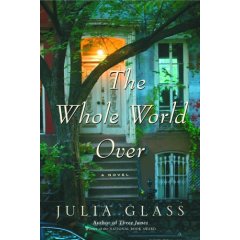
I was awake at 3 a.m. this morning, hungrily devouring Julia Glass’ new book, The Whole World Over. When I first picked up the book, it took me a while to get immersed. Thursday was another extremely warm day in the Bay Area (and the day we learned the earth is the hottest it has been in 2,000 years) and I spent the day at the pool, reading. By dinner time I was hooked. When the heat woke me in the middle of the night I happily turned on the lamp to read some more.

Most of the reviews compare The Whole World Over unfavorably to Glass’ National Book Award winner, Three Junes. I think it stands up well. It tells the story of Greenie Duquette, a Greenwich Village pastry chef who is vaguely dissatisfied with her life. Like Three Junes, Glass brings in all sorts of well-drawn characters who are going through their own domestic disturbances. Glass always has strong male gay characters, and she treats their quests for love and family as seriously as she treats those of her straight characters.

Her writing is peppered with metaphor and detailed descriptions of the food that Greenie cooks. She brings in 9/11, AIDS, parental loss, having babies, Western water wars, and whether little boys are better off living with their mothers and fathers. The characters have to balance their search for personal happiness with responsibility to others and community. I totally believed her characters and their tribulations, and was sorry to have the book end.

Thursday, June 22, 2006

Summer Reading

It’s too hot to blog. The Bay Area is in the grip of a heat wave. The U.S. is playing Ghana in the World Cup. So much book news is depressing:

More on Bay Area bookstore closures.

Slate has a gallery of photos of people reading in unusual places. (via Bookslut)

Oprah magazine has its “First Ever Summer Reading Issue.” It’s very yellow. Some of the tidbits I’ve gleaned:

30: Number of rejection letters John Grisham got before selling his first novel.

28: Percent by which literary reading has dropped among 18 to 24 year olds since 1982.

“Liebrary” is a cool looking new board game that is a “bookworm’s Balderdash.”

Harper Lee breaks her silence to write a letter about how she learned to read. She grew up in the Depression. "Books were scarce. There was nothing you could call a public library, we were a hundred miles away from a department store's books section, so we children began to circulate reading material among ourselves until each child had read another's entire stock."

If you buy a book from Oprah’s recommended reading list, you can get an additional 10% off at Amazon. (At checkout enter code oprahmag)

The blogger at So Many Books likes some of the issue, but chides Oprah for only recommending books put out by big publishers.


Tuesday, June 20, 2006

Tuesday Tidbits


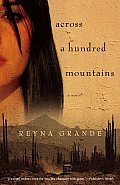
Daniel Olivas has a profile of Reyna Grande, whose new novel about a young illegal immigrant, Across A Hundred Mountains, draws on her own flight from Mexico to the U.S.

“There is no question that Grande is living the American dream. She was born in Guerrero, Mexico, in 1975, and entered the United States at age 9. She earned her bachelor of arts degree in creative writing from the University of California at Santa Cruz. With that, she became the first person in her entire family to obtain a degree. In 2003, Grande became a PEN USA Emerging Voices Fellow, which led to her getting a literary agent who placed Grande's novel with Atria Books.”

Across A Hundred Mountains, which got a starred review in Publisher’s Weekly, will be released this week.

Edward Guthmann has a sympathetic and moving portrait of Berkeley writer Judith Moore in the San Francisco Chronicle. Moore, a senior editor at the San Diego Reader and the author of the acclaimed memoir, Fat Girl, died in May of colon cancer.

Speaking of the Chronicle, its Sunday book review section has gone from six to four pages – all without any comment from the editors. Bad news. But the paper seems to have increased the number of reviews it is running during the week.

A few new blogs from people in the East Bay:

Wendy Lesser, the editor of the ThreePenny Review, is starting a blog called TheLesser Review. It looks interesting, but it has already raised the hackles of the blogosphere with its slightly better-than-thou attitude. (Naturally Ed and Dan Green are already all over this.) She seems to suggest that most blogs are just a collection of random thoughts strung together without intending to make a point. This is from her introduction:

“Speaking of blog rules, this one is not going to follow most of them.

For one thing, it will be very organized, with listings of its contents (once it accumulates any contents, that is).

For another, I will not be making daily or even weekly postings, and the format will in no way resemble a diary or journal. Each posting will be a little (or not so little) self-contained essay, perhaps more chatty than my usual essays in the magazine, but nonetheless resembling a printed article more than most blog entries do."


And finally, I do not plan to include any photos of my cat or best friends or any other personal items that you would be required to take an interest in. This should come as something of a relief — a blessedly impersonal blog."

Other new blogs include Dibs, by a mystery man (or woman) with lots of access to Advanced Readers copies and Confessions of a Crazy Chick, by an unnamed 22-year old in publishing.

Friday, June 16, 2006

Another Independent Bites the Dust

Ed has the bad news: A Clean, Well-Lighted Place for Books in San Francisco is closing its doors.

This is a terrible blow to Bay Area book lovers. A CWLPB is one of the best bookstores in the region, and reading there is like grabbing the brass ring. It’s the store that shows up at community lectures, particularly those put on by City Arts and Lectures down the street, and sells books.

First Kepler’s, which got a second chance.

Then Cody’s on Telegraph

Now A Clean Well Lighted Place for Books.

Somehow, when some of the smaller bookstores closed, I comforted myself by thinking the owners probably didn’t have enough business savvy or they were in the wrong location, or something.

I was deceiving myself. The Bay Area is considered one of the most literate and book-loving areas in the country, yet we are losing major bookstores all over. The closures are in communities that regard themselves as book friendly: Menlo Park, right near Stanford University, Berkeley, right near UC Berkeley, and San Francisco, just a block from City Hall, the Opera House, the Symphony, and a few blocks from the Main Library and Asian Art Museum.

Which store is next?

On a bright note, one of the owners of A CWLPB has opened a new store in West Portal, My writing companion, Sharon Epel, apparently told Neal Sofman, the owner about a vacant space, and he pounced. Here is her report:

“When Neal's wife Anna learned that we lived near West Portal, she said, "I'm always telling Neal he should open a shop there." And I-who have always felt that the one thing missing from our neighborhood shopping district (good restaurants; an arty movie theater, Peets), is a real bookstore--told Anna that an amazing retail space--big, with floor to ceiling windows on two sides, across from the theater, next to an ice cream shop, was up for lease.

To make a long story short, they tried to get the place, almost lost it to some finance company(gasp), and then, one day this fall, they called to thank me---they got it and they were opening up. They've opened now, and it is beautiful. It seems like an amazing story in these times of fabled independents closing.”

Update: The New York Times weighs in on Cody's closure.

Thursday, June 15, 2006

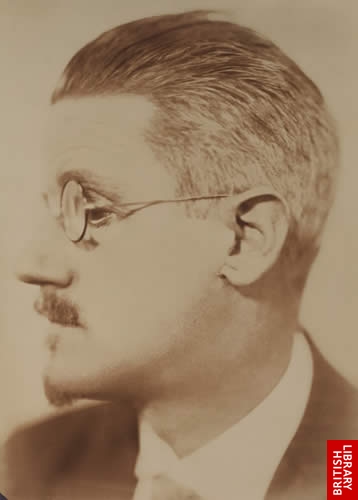
James Joyce


The June 16th issue of the New Yorker has a fascinating story on James Joyce’s grandson.

It turns out that Stephen James Joyce has complete control of the Joyce estate and is the one to dole out permission to quote liberally from his books and letters. But he is so protective of his family’s privacy that he says “no” to practically every request – and in the process has squelched the once-thriving academic field of Joyce studies.

The article, by D.T. Max, makes the case that the grandson is a bit unbalanced.

A Stanford professor who had to completely revise her book on Joyce’s daughter Lucia because of Stephen Joyce’s threats is suing the estate. Carol Shloss, working with Lawrence Lessig, filed a suit in court on Monday.

All of this is timely. The events in Ulysses take place on June 16, 1904. This Friday is Bloomsday.

Wednesday, June 14, 2006

Summer Reading


I haven’t been posting much because life has gotten busy. Summer is here, which means more kids running around. There was a graduation. Three performances of a play. Teachers’ gifts to buy, And of course all the time it took to get the house set up with a new TV for World Cup soccer.

When in a pinch, do a list. So here are the books on my summer reading list:

Sweet and Low: A Family Story by Rich Cohen – I am in the middle of this now. Cohen’s grandfather Ben invented those ubiquitous pink packets. Ben made millions, but cut Cohen’s side of the family out of the estate. He explores why. This is written in a colloquial style. It’s very breezy, but it works, even when he talks about the history of Brooklyn.

The Whole World Over by Julia Glass. I loved Three Junes, which won the National Book Award. Once again, Glass dwells on domestic disturbances in both gay and straight relationships. I have started this book and I am already drawn in by the lush language and plot.

Strange Piece of Paradise by Terri Jentz. I didn’t know anything about this book until I read a glowing review by Mary Roach in the New York Times. Jentz was attacked while on a camping trip and this the story of her long road to recovery.

Heat: An Amateur in the Kitchen by Bill Buford. The author, the former fiction editor of The New Yorker, works as an apprentice for celebrity chef Mario Batali. I love cooking memoirs ala Ruth Reichel’s Comfort Me With Apples. This one promises sweat, blood, lust, and many marvelous descriptions of food.

The Lemon Tree: An Arab, A Jew, and the Heart of the Middle East by Sandy Tolan. The author, who lives in Berkeley, tells the history of the Israeli-Palestinian conflict through one house. It was owned by Arabs before Israel became a nation, and then taken over by an Israeli family. He’s speaking at Mrs. Dalloway’s bookstore in Berkeley Thursday June 15 at 7:30 p.m. I can’t go, but I wish I could.

Water for Elephants: A Novel, by Sara Gruen. I have never read anything by this author but the buzz is incredible.

The Foreign Correspondent by Alan Furst. Ditto

A Field of Darkness by Cornelia Read. I had never heard of this Berkeley author until I saw she would be appearing this weekend at Book Expo San Jose. This is her first mystery and she is touring with Lee Child, so I figure it has to be good.

I read about Suite Francaise by Irene Nemirovsky in the New York Times Book Review. I was intrigued. Then Scott Esposito went crazy over the book, so now I really want to read it. For some reason I have this idea it will remind me of A Woman in Berlin: Eight Weeks in the Conquered City by Anonymous, one of the best books I read last year.


Monday, June 12, 2006

The Pleasure of Private Libraries


The New York Times has a story about the beauty of membership libraries, where people pay dues of around $90 a year to join a private sanctuary. Besides easy access to copies of all the latest books, members get to hear authors talk, lively discussions of books and themes, and access to their own private research librarians.

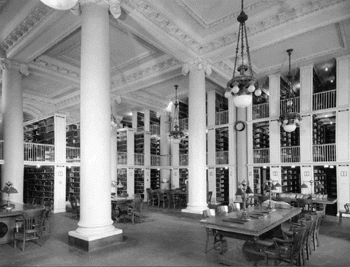
People in the Bay Area are lucky to have The Mechanic’s Institute, a private library, located in our midst. Founded more than 150 years ago, the Mechanics is housed in a gracious five-story building on Post Street in downtown San Francisco. Its chess room – and chess competitions – are famous around the region, and it’s a treasure trove for book lovers, all for $95 a year.

When Joan Didion came to the Bay Area to promote The Year of Magical Thinking, crowds clamored for tickets to her talk at City Arts and Lecture. You could have seen her for free in a small, intimate room at the Mechanics, and even had a good cup of coffee while you sat.

During the 100th anniversary celebration of the San Francisco earthquake, the Mechanics hosted both Dennis Smith, the former New York City firefighter and best-selling author who wrote the narrative, San Francisco is Burning, and Simon Winchester, who wrote A Crack in the Edge of the World.

This Friday is the annual Bloomsday celebration, an extravaganza of everything James Joyce. Put together by the Mechanics Institute’s Mark Singer, a research libraian who has more than 400 piece of Joycean memorabilia, the evening promises:

“Hilarity and ribaldry reign during our annual reading of James Joyce’s, Ulysses, marking the modern day odyssey of its protagonist Leopold Bloom through Dublin. Enjoy performances by local actors, readings by the audience, and our special Bloomsday Menu. Dress smart for the part!”

On Thursday June 22, Mark Danner, a writer and professor of journalism at the Berkeley School of Journalism, will talk about the secret Downing Street memos and the war in Iraq. He will be introduced by Frank Rich, the columnist for the New York Times.

These kinds of programs, put together by the events coordinator Laura Sheppard, rival anything being presented in the Bay Area.

Sunday, June 11, 2006

Rockin' With the Author


Who says all the good book parties are in New York?

I went to a fabulous one on Friday night. It honored Neil MacFarquhar, the New York Times correspondent whose new novel, The Sand Café, has gotten fantastic reviews. Neil read from his book and then talked about various aspects of the Middle East. The audience was rapt.

The party was a who’s who of Bay Area journalism, with a smattering of authors and other creative types. Not everyone knew one another, but you couldn’t tell that from the buzz of voices in the room. Ready for the Bold Faces:

The host was Peter Waldman, a reporter for the Wall Street Journal and a former Middle East correspondent. Peter, an insightful writer, did a lot of research for The Sand Café while Neil was recuperating from a horrific bike accident. Peter figures prominently in the book’s acknowledgments. Charene Zalis, his wife, shared hosting duties (as did I). She is an accomplished broadcast journalist in her own right.

For at least one evening, the New York Times and Wall Street Journal didn’t compete with one another. Neil’s colleague, the investigative journalist Lowell Bergman, called right before the party to say he couldn’t make it. But Jesse McKinley, the new San Francisco-based national correspondent for the New York Times, did. (He’s only been in the Bay Area for a few months, but has already picked up the pulse of the region. He wrote a lengthy article on Oakland Mayor Jerry Brown and another on the TV show Deadwood, which appeared Sunday). Marilyn Chase, a science reporter for the Wall Street Journal and the author of The Barbary Plague, picked Neil’s brain about writing fiction. Julia Flynn Siler, another WSJ type and the author of the forthcoming House of Mondavi, came as well.

There were scads of other reporters/writers as well: Dan Fost, a technology reporter for the San Francisco Chronicle came, as did Frontline correspondent Mark Shapiro, who is writing a book on how American businesses have responded to the formation of the European Union.

Tom Barbash, who works out of the Grotto and writes fiction (The Last Good Chance) and narrative non-fiction (On Top of the World) partied with the crowd. Barbash and Neil (and I) were all reporters at the Syracuse Post-Standard in upstate New York in the 1980s, although at different times.

Much of my wonderful writing group, North 24th, mingled with the crowd. There was Susan Freinkel, who is writing a book for UC Press about the decline of the American Chestnut Tree, Jill Storey, who writes for Salon and other magazines, Allison Hoover Bartlett, whose work has appeared in the New York Times and the Washington Post (she’s started a book project now), Katherine Neilan, a doctor whose personal essays about medicine have won lots of awards, and Sharon Epel, who most recent personal essay was published in Alternative Medicine.

There was a private eye set too: Alex Kline, (the brother of the actor Kevin Kline, who went to Stanford with Neil and whose brother, the actor Kevin Kline starred in the movie The Emperor’s Club, based on a short story written by Ethan Canin, one of Neil’s best friends.) Betsy Blumenthal, who works for Kroll Associates, came as well.

The company was good, the margaritas cold, and the food excellent. Best of, more than 25 people bought copies of The Sand Café.

Thursday, June 08, 2006

Will There Be a Big Bash at Cody's?

Leah Garchik, the Chronicle columnist who seems to have spies everywhere, reports that the last reading at Cody's on Saturday night will include some film cameras:

"On Saturday night, Sean Wilsey and special guests will be among the final readers at about-to-close Cody's Book's on Telegraph, a last rite to be filmed for PBS."

It makes sense. Wilsey is the co-editor of "The Thinking Fan's Guide to the World Cup," and we know how crazy those soccer fans are. (I won't even go into the very large TV and new cable service that are being installed in my house for this particular sporting event. Thank you, hubby) The World Cup starts this week, Cody's ends its reading series this week, so PARTY??

Unfortunately, I can't be there. I'd love to hear what happens, though.


Wednesday, June 07, 2006

Whole Foods Very Politely Criticizes Michael Pollan

In his new book, Michael Pollan spends a lot of time criticizing Whole Foods for becoming an industrialized “Big Organic.” The CEO and co-founder of the company has written an open letter to Pollan, complaining that the author never tried to talk to the company’s top leadership before bashing the grocery store in The Omnivore’s Dilemma.

“I regret that you did not engage in any serious research about how Whole Foods Market actually does business or you would have discovered that we support local and small farm food production all over the United States as well as in other parts of the world. Whole Foods Market, despite its size, does not operate as a typical monolithic corporation such as Wal-Mart (with which you associate Whole Foods Market several times in your book). Our company continues to operate on a decentralized model wherein each of our 11 regions, as well as each store, has a high level of autonomy. Differences in product offerings, suppliers, and seasonal availability result in a significant variation of items on our shelves from region to region and even store to store within the same city. However, our strict quality standards, the highest in the industry, are observed with every supplier and retail outlet. In other words, you may find a variation in the types and kinds of products, but each has been screened by our rigorous quality standards.”

Read the entire letter here.

(via Kevin Smokler)

I'm Not Sure I Can Ever Swing This Performer Thing

MJ Rose who runs the blog Buzz, Balls, & Hype, has some thoughts on the difficulties of promoting a book. She points out that book tours are a crapshoot at best. Who knows if 5 people will show up to hear an author or 50? So publishers now expect authors to turn into solo performers and entertainers to sell books. MJ isn't sure that most writers are up to this:

“Why demand that authors be something they are not. We're not asking our best singers to write novels, not asking our thespians to craft commanding stories.

I think blogs/vlogs/podcasts are the best thing that has happened for authors. We can write - or perform if you will - in the way that we feel comfortable and the way we excel.

Now if we can just harness the power of the net in a more functional way. No, Virginia, Publishing is not broken, but the navagation system is. We still can't get enough new titles in front of enough new readers in an economial and motivating way.”

Monday, June 05, 2006

More Paeans to Cody's Books on Telegraph

From an article in UC Berkeley News, written by Wendy Edelstein:

Maxine Hong Kingston, an emeritus senior lecturer in English, recalls another tribute, one that occurred in 1966 when Anaïs Nin made a much-anticipated appearance for a publication party celebrating the first volume of her memoirs. The petite author wore a long ivory gown, and when she moved into the middle of the room to speak, Lawrence Ferlinghetti stepped behind her, raised a pail over her head, and showered her with red rose petals. "I think that was the most wonderful thing that happened at Cody's," says Kingston, who has often recalled that image. Kingston —whose books include The Woman Warrior, Tripmaster Monkey, and, most recently, The Fifth Book of Peace — says she is gratified to have read from every one of her books at Cody's.

Here’s another wonderful one:

Professor of Asian American Studies Elaine Kim remembers trying to cram her way into the bookstore during a standing-room-only reading in the mid-'80s given by Barbara Christian, the first black woman to earn tenure at Berkeley. The capacity crowd was flowing down the stairs, she says, and kept her from getting close to the upstairs room where Christian was reading.

A former employee, Sumana Harihareswara, shares her memories, too.

Sunday, June 04, 2006

Last Week of Readings at Cody's

This is the last week that Cody’s bookstore will be holding author readings in its Telegraph Avenue store.

It’s painful to consider that this era is at an end. The upstairs loft where Cody’s holds its reading is almost like a sacred place. It’s not beautiful by any means – the floor is scarred from the scraping of thousands of chairs and the fluorescent lighting is not particularly flattering. But high up on the walls there is a gallery of photographs of the authors who have read there. It covers almost the entire canon of American literature. There are pictures of well-established authors – John Updike, Toni Morrison, Phillip Roth, Susan Sontag, Allan Ginsberg, Annie Proulx, Diane Johnson, Amy Tan, and others. (And they look so young!) There are photos of the young Turks, like Daniel Handler, Michael Chabon and Dave Eggers. There’s the poet Adrienne Rich, humorist Garrison Keiller, novelist Dorothy Allison, and more.

The photographs remind me that this is the kind of place where the beauty of literature shines brightest. It’s not in the fancy hotels or halls that hand out the Nobel Prize of the National Book Award, but in bookstores scattered around the country. Authors come to read; readers come to listen and a special bond forms, one that continues long after the store has closed for the night. The photos illustrate that even famous authors cherish that interaction.

Cody’s has lined up – as usual – a wonderful, eclectic mix of authors for this week. You’ve got to admire a place that has such a broad appreciation of authors. (So why aren’t more people shopping there?)

On Monday at 7:30 p.m., my good friend and New York Times reporter Neil MacFarquhar will read from his satirical novel about the first Gulf War, The Sand Café.

On Tuesday, Jason Roberts will read from A Sense of the World, his new biography of the blind traveler James Holman. The book has gotten excellent buzz, and the San Francisco Chronicle Book Review featured it prominently on Sunday.

On Wednesday, Greg Palast will read at 12:30 from Armed Madhouse: Whose Afraid of Osama Wolf, a humorous, yet well-researched investigation into the perils of George W. Bush’s foreign policy.

At 7:30 Nando Parrado will talk about Miracle in the Andes, which details how he survived the famous plane crash in the Andes that killed most of the Chilean rugby team. Parrado and other survivors trekked over 45 miles of glacier to find help.

On Thursday, Chris Abani (his last novel was Graceland) will talk about Becoming Abigail, the novel of a young Nigerian girl whose relatives force her into prostitution when when she moved to London. He will be joined by the Jamaican author Colin Channer, the editor of Iron Balloons, an anthology of emerging Jamaican writers.

The list goes on: Douglas Copeland will speak on Friday night; at 4 p.m. on Saturday Alex Polikoff, an attorney, will talk about Waiting for Gautreaux, his memoir about the landmark Chicago housing discrimination lawsuit he fought all the way to the Supreme Court. That night, Sean Wilsey will talk about the anthology he edited on the World Cup.

Then that’s it. The store won’t close until mid-July, but the readings will stop. Cody’s has two other bookstores – one on Fourth Street in Berkeley and one on Stockton Street in San Francisco, but they have neither the space nor the atmosphere of the Telegraph Avenue store. When you attend a reading at those stores, as well as many other independent bookstores, you feel squeezed into the space. There’s never enough room and all the other patrons milling around can be distracting.

I never felt that tug at Cody’s on Telegraph. When I was in that loft for a reading, I felt as if the author and his or her audience were in a world all their own. I'll miss it.

Friday, June 02, 2006

Elizabeth Rosner

Elizabeth Rosner, the Berkeley author whose new book, The Blue Nude, is getting glowing reviews, will talk and sign books at The Magnes Museum in Berkeley on Sunday. Her book examines a relationship between a German artist whose father was a Nazi and a young Israeli model.

Rosner will talk on the day the Magnes opens “My America,” an exhibit of paintings and photographs from the Jewish Museum in New York. The exhibition features work from 1900-1955, “a period of great social and artistic activity during which Jewish artists played a major role in shaping the direction of America art.”

Rosner’s talk is part of the Magnes’ new literary series, “For Review,” which will bring Jewish authors into the museum to discuss how their Jewish background has – or has not – affected their work. Other authors include Joshua Braff, Ayelet Waldman, and Jack Marshall.

Thursday, June 01, 2006

Maya Angelou Calling Me?

I just got a “personal” phone call from Maya Angelou urging me to vote for Ron Dellums for mayor of Oakland. Gee, that sure beats the phone call I got from current Mayor Jerry Brown suggesting I vote for the candidate Ignacio de la Fuente.


There is something so melodic about Angelou’s voice. Did you know she grew up in Oakland?

Another Way to Measure Yourself

Bud Parr, who put together the interesting site Metaxucafe, which gathers the headlines of various lit blogs, is now editor of related site that will either make you deliriously happy or deeply depressed.

It’s called The Literature List and its on a new site called PubSub. The main purpose seems to be to rank various books blogs and show if their readership goes up or down on any particular day.

For example, a site named Catch and Release got the most new traffic on Wednesday May 31. Other big winners included Gwenda Bond’s site, Shaken and Stirred.

I don’t know what this all means in the greater scheme of things, except to make me depressed by how little traffic Ghost Word gets. (Down 4% on Wednesday) But it’s definitely a great time-waster and an introduction to a bunch of literary blogs I had never heard of. So click through and enjoy!