Ruth Reichl may write entertaining memoirs, but it’s tough to take her to lunch. Debra Pickett, a reporter for the Chicago Sun-Times suffered indigestion when she took the famed restaurant critic to a raw foods eatery:
“Reichl has a charming smile and the infectious laugh of someone who has lived a charmed life and knows it. It's clear that her critic's eye has already assessed this place carefully and that she is not optimistic about the quality of our lunch. But it is also clear that she is ready to have a great time.
"OK," she says, menu in hand, "we know the Buddha bowl [an assortment of vegetables and rice] will be good. So no one can get that. We have to order the things that are really challenging."
Like the meatless "meatball" sub. And the meatless slab of "ribs." And the jerk tofu wrap.
Spirit of fun notwithstanding, Reichl can't help seeing things through a reviewer's lens. She notices that the lemon wedges don't seem juicy -- a sign they've been sitting around too long. She notices the texture of the lettuce and the shape of a baby carrot, which is not, she decides, a baby carrot at all but a hunk of a regular carrot carved to look like one.
She has not found very many positive things to say about our meal.”
(via Bookslut)
There’s an interesting discussion over on Slate on writing history: academics historians vs. populizers. The academics look down with disdain on journalists writing historical non-fiction, in part because narrative trumps analysis. But they look with envy as well, since most history academics write in an inaccessible style.
This interests me because I am writing a biography that includes a slice of the history of California. It’s not enough to have a narrative; you need context and perspective to show the importance of the story, yet too much analysis slows down the experience. It’s a balancing act, one that the historian David Greenberg shows in his 2 essays, “That Barnes and Noble Dream,” has not been resolved.
"The major failing of much popular history is that it betrays no interest in making intellectual contributions to our understanding of an issue. The Barnes & Noble historian seems to treat history as a pageant of larger-than-life events and people to be marveled at, rather than a set of social, political, and cultural problems to engage. Unless you wrestle with the ways in which the problems of the past have been defined, interpreted, ignored, or mischaracterized by other historians—the historiography—your writing will seem unsophisticated. You won't know which of your ideas are novel or trite, simple or complex, suspiciously trendy or embarrassingly out of date, or what avenues of research have already been pursued. Historians have to try to build upon what's been written, while keeping in mind that the goal is broader than just revising or applying other scholars' findings. "
(via Publishers Lunch)
Wednesday, May 18, 2005


Tuesday, May 17, 2005

Not Fat and Old, but Proud and Wise
Fat Girl by Judith Moore has been sitting on my “To Read,” pile for about six weeks now. It’s a slim tone, with an inviting cover of the bottom half of a plump young girl. My husband, who rarely reads memoir, picked it up one night and enjoyed it so much he finished it within a week, which is fast reading for him.
Moore is one of those Bay Area authors who is accomplished, yet under-appreciated. Her book about her struggles with obesity came out months ago and was well reviewed around the country, but she didn’t get a lot of accolades in the local press.
So I was delighted to read David Kipen’s article in Tuesday’s San Francisco Chronicle. He apologizes to Moore for not reading her book sooner – and goes on to compliment her writing style, her struggles to overcome her lonely childhood, and her incredible attitude toward her weight.
“At a cultural moment when Brooke Shields can milk a few weeks of fully insured and successfully medicated postpartum depression for a book deal -- and now a bestseller -- there's something invigorating about a writer who says, in effect, "I'll never be thin, I'll never be well-adjusted, but I can write like a banshee and that'll just have to do."
I haven’t gotten to Moore’s memoir because I am way behind in my reading. I am fully engrossed in what should be one of the big books of the summer, The Historian by Elizabeth Kostova.
This is the book that sold for a $1-$2 million advance and just this week was optioned by Sony Pictures for another $1 million. Lest jealous hives break out over all of us, Kostova, who graduated from Yale and got an MFA from the University of Michigan, took 10 years to write the book. It tells the story of a 16-year old girl on a search for the secret of Dracula, who may still be alive, or Undead, as his state is described in the book. The Historian will be released July 7 and will be published in 22 languages.
There will be a lot of press about The Historian. Bookends, the Book Place magazine interviewed Kostova, who is just 40.
Moore is one of those Bay Area authors who is accomplished, yet under-appreciated. Her book about her struggles with obesity came out months ago and was well reviewed around the country, but she didn’t get a lot of accolades in the local press.
So I was delighted to read David Kipen’s article in Tuesday’s San Francisco Chronicle. He apologizes to Moore for not reading her book sooner – and goes on to compliment her writing style, her struggles to overcome her lonely childhood, and her incredible attitude toward her weight.
“At a cultural moment when Brooke Shields can milk a few weeks of fully insured and successfully medicated postpartum depression for a book deal -- and now a bestseller -- there's something invigorating about a writer who says, in effect, "I'll never be thin, I'll never be well-adjusted, but I can write like a banshee and that'll just have to do."
I haven’t gotten to Moore’s memoir because I am way behind in my reading. I am fully engrossed in what should be one of the big books of the summer, The Historian by Elizabeth Kostova.
This is the book that sold for a $1-$2 million advance and just this week was optioned by Sony Pictures for another $1 million. Lest jealous hives break out over all of us, Kostova, who graduated from Yale and got an MFA from the University of Michigan, took 10 years to write the book. It tells the story of a 16-year old girl on a search for the secret of Dracula, who may still be alive, or Undead, as his state is described in the book. The Historian will be released July 7 and will be published in 22 languages.
There will be a lot of press about The Historian. Bookends, the Book Place magazine interviewed Kostova, who is just 40.
Monday, May 16, 2005
Little Stuff
Read this heartbreaking story of a waitress, Jill Bauerle, who serves a customer, only to realize she’s her agent. Embarrassment ensues. (via Maud Newton)
"On a Friday night not too long ago, I approached a new deuce in my section, a couple. The woman seemed familiar and I pegged her as a publishing type. I don’t know why I decided this, except that I wait on a lot of publishing types and they are different from other business people. She seemed intelligent and fashionable, someone who could reference both Dostoevsky and “Sex and the City” in the same phrase. I thought that perhaps she was someone I had waited on before. I brought drinks and conducted the usual menu FAQ, describing the skate wing and just exactly what Basque-style means in reference to the veal tongue. Meanwhile, a bass drum thudded in my ears. I recognized the woman’s sultry voice. I was waiting on my agent.
The last time my agent and I had met face to face had been four years ago at a restaurant near her office on the Upper West Side. She had just offered to represent my first novel. The next logical step, it seemed, was that my novel would sell; a work that had been four years in the making. No such luck. Now it was almost one full novel later and we were meeting in a restaurant again. Only this time I was wearing a designer uniform and a little leather pouch-belt full of pens, wine key, paper and mints, and I was selling her on the Poached Salmon Tartar. "
OK, it’s time to see if bloggers have any clout. The folks over at the newly formed Lit Blog Coop have selected their first recommendation, Kate Atkinson’s Case Histories. What intrigues me about this recommendation, made by Lizzie Skurnick of the blog Old Hag is that she couldn’t get into the book at first, but loved it on her second try. I couldn’t get into the book the first time either; maybe twice is the charm.
"On a Friday night not too long ago, I approached a new deuce in my section, a couple. The woman seemed familiar and I pegged her as a publishing type. I don’t know why I decided this, except that I wait on a lot of publishing types and they are different from other business people. She seemed intelligent and fashionable, someone who could reference both Dostoevsky and “Sex and the City” in the same phrase. I thought that perhaps she was someone I had waited on before. I brought drinks and conducted the usual menu FAQ, describing the skate wing and just exactly what Basque-style means in reference to the veal tongue. Meanwhile, a bass drum thudded in my ears. I recognized the woman’s sultry voice. I was waiting on my agent.
The last time my agent and I had met face to face had been four years ago at a restaurant near her office on the Upper West Side. She had just offered to represent my first novel. The next logical step, it seemed, was that my novel would sell; a work that had been four years in the making. No such luck. Now it was almost one full novel later and we were meeting in a restaurant again. Only this time I was wearing a designer uniform and a little leather pouch-belt full of pens, wine key, paper and mints, and I was selling her on the Poached Salmon Tartar. "
OK, it’s time to see if bloggers have any clout. The folks over at the newly formed Lit Blog Coop have selected their first recommendation, Kate Atkinson’s Case Histories. What intrigues me about this recommendation, made by Lizzie Skurnick of the blog Old Hag is that she couldn’t get into the book at first, but loved it on her second try. I couldn’t get into the book the first time either; maybe twice is the charm.
Sunday, May 15, 2005

Let the Ugliness Begin ...
The venom doesn’t drip, it pours, out of the New York Times’ take on Sean Wilsey’s memoir, Oh The Glory of It All.
Take the beginning of the story in Sunday’s Style section, written by Joyce Wadler:
“IT'S turning into a dreadful year for Dede Wilsey.
It should have been triumphant: the reopening party for the de Young Museum in Golden Gate Park, for which Ms. Wilsey raised $180 million, is to be the big social event of the fall. So acknowledged is her involvement that people have taken to calling the art museum the Dede Young.
And now comes That Book.
"Oh, the Glory of It All" was written by Ms. Wilsey's stepson, Sean Wilsey, a New York-based editor of the literary magazine McSweeney's, who calls Ms. Wilsey his "evil stepmother." Blurbed by Dave Eggers and already excerpted in The New Yorker, the 482-page memoir arrives in bookstores this week. If there are any family secrets yet unrevealed about one of the most flamboyant women to pass through San Francisco society, it is difficult to know what they might be.
Dede Wilsey, who sits on the boards of the San Francisco Ballet and the San Francisco Opera and is the president of the board of trustees of the Fine Arts Museums of San Francisco, is portrayed as having manipulated the author's father, Al Wilsey, who made his fortune in food and real estate, into giving her the bulk of his $300 million estate. Among other vivid scenes, the book describes a Christmas morning when Al Wilsey, seriously ill, sat wanly by as his wife - who is known in San Francisco for her magnificent jewels - pinned one $200,000 brooch after another to her bathrobe.”
In case anyone has any doubts about Dede Wilsey’s love for expensive jewelry – and she denies the story of the Christmas brooches in the article – the Times plastered a picture of her in the paper wearing an enormous diamond necklace and earrings.
Wadler goes after Sean Wilsey as well, suggesting, despite Wilsey’s protestations, that maybe he is just a trust fund baby with an axe to grind.
“The troublemaker in this case, Mr. Wilsey, is a high-energy and seemingly quite open man, at least to a point.
He declined to be interviewed at his TriBeCa loft, a very handsome loft according to those who have seen it. He preferred to meet at his writing office in a fifth-floor walkup in Chinatown. He said that he and his wife, the writer Daphne Beal, decided their home would be off limits to interviewers. (The two have a 9-month-old son.) Asked how he could afford a TriBeCa loft, given that he writes that his father left all of his money to his stepmother, Mr. Wilsey readily explained: His father had set up a $60,000 trust when he was born and invested it well. Mr. Wilsey had access to that money when he turned 25.
Rich kid?”
Later in the article, his stepmother suggests exactly that.
“They are all multi-multimillionaires," she (Dede) said of Mr. Wilsey and his siblings. "Al took very good care of his children, so it would make no difference if he married me or someone else."
Wadler is the reporter who made a name for herself writing the Times’ Boldface Names column, the newspaper's version of a society column. She drew accolades for her ability to gently mock and skewer those with massive fortunes and more power than the Pope. When she stopped writing the column, Salon made a note of it.
In contrast, the Chronicle’s Sunday profile of Sean Wilsey is much softer, portraying him as a troubled, smart youth who redeems himself through writing. Interestingly, Dede Wilsey wouldn’t talk to Chronicle reporter Carolyne Zinko. (Her lawyer has sent the paper a notice it would be held liable for printing any defamatory material). Dede spoke with the Times at least twice and Danielle Steele, a part player in this high society scandale, also opened up.
“Sean Wilsey denies that the book is a literary act of revenge. "It really is a catharsis," he said to the Chronicle, "although I wasn't crying as I wrote it. I did it because I wanted to understand things better. I really hoped for a long time that this was all a bit of a misunderstanding."
The book will be released this week. I predict it will be an immediate bestseller. (Considering all its pre-publicity, that is not a risky assertion) The truth is, the book is uneven, with many engaging parts. But Wilsey has also chosen to excerpt large chunks of his mother, Pat Montandon’s unpublished memoir, and there is a reason that manuscript never was put into print. Wilsey’s liberal use of other sources slows the book down.
But for whatever reason, this book has struck a nerve. Maybe it’s just that the world loves to see the grimy underside of the rich, and gathers satisfaction that they are no happier than most of the world.
Take the beginning of the story in Sunday’s Style section, written by Joyce Wadler:
“IT'S turning into a dreadful year for Dede Wilsey.
It should have been triumphant: the reopening party for the de Young Museum in Golden Gate Park, for which Ms. Wilsey raised $180 million, is to be the big social event of the fall. So acknowledged is her involvement that people have taken to calling the art museum the Dede Young.
And now comes That Book.
"Oh, the Glory of It All" was written by Ms. Wilsey's stepson, Sean Wilsey, a New York-based editor of the literary magazine McSweeney's, who calls Ms. Wilsey his "evil stepmother." Blurbed by Dave Eggers and already excerpted in The New Yorker, the 482-page memoir arrives in bookstores this week. If there are any family secrets yet unrevealed about one of the most flamboyant women to pass through San Francisco society, it is difficult to know what they might be.
Dede Wilsey, who sits on the boards of the San Francisco Ballet and the San Francisco Opera and is the president of the board of trustees of the Fine Arts Museums of San Francisco, is portrayed as having manipulated the author's father, Al Wilsey, who made his fortune in food and real estate, into giving her the bulk of his $300 million estate. Among other vivid scenes, the book describes a Christmas morning when Al Wilsey, seriously ill, sat wanly by as his wife - who is known in San Francisco for her magnificent jewels - pinned one $200,000 brooch after another to her bathrobe.”
In case anyone has any doubts about Dede Wilsey’s love for expensive jewelry – and she denies the story of the Christmas brooches in the article – the Times plastered a picture of her in the paper wearing an enormous diamond necklace and earrings.
Wadler goes after Sean Wilsey as well, suggesting, despite Wilsey’s protestations, that maybe he is just a trust fund baby with an axe to grind.
“The troublemaker in this case, Mr. Wilsey, is a high-energy and seemingly quite open man, at least to a point.
He declined to be interviewed at his TriBeCa loft, a very handsome loft according to those who have seen it. He preferred to meet at his writing office in a fifth-floor walkup in Chinatown. He said that he and his wife, the writer Daphne Beal, decided their home would be off limits to interviewers. (The two have a 9-month-old son.) Asked how he could afford a TriBeCa loft, given that he writes that his father left all of his money to his stepmother, Mr. Wilsey readily explained: His father had set up a $60,000 trust when he was born and invested it well. Mr. Wilsey had access to that money when he turned 25.
Rich kid?”
Later in the article, his stepmother suggests exactly that.
“They are all multi-multimillionaires," she (Dede) said of Mr. Wilsey and his siblings. "Al took very good care of his children, so it would make no difference if he married me or someone else."
Wadler is the reporter who made a name for herself writing the Times’ Boldface Names column, the newspaper's version of a society column. She drew accolades for her ability to gently mock and skewer those with massive fortunes and more power than the Pope. When she stopped writing the column, Salon made a note of it.
In contrast, the Chronicle’s Sunday profile of Sean Wilsey is much softer, portraying him as a troubled, smart youth who redeems himself through writing. Interestingly, Dede Wilsey wouldn’t talk to Chronicle reporter Carolyne Zinko. (Her lawyer has sent the paper a notice it would be held liable for printing any defamatory material). Dede spoke with the Times at least twice and Danielle Steele, a part player in this high society scandale, also opened up.
“Sean Wilsey denies that the book is a literary act of revenge. "It really is a catharsis," he said to the Chronicle, "although I wasn't crying as I wrote it. I did it because I wanted to understand things better. I really hoped for a long time that this was all a bit of a misunderstanding."
The book will be released this week. I predict it will be an immediate bestseller. (Considering all its pre-publicity, that is not a risky assertion) The truth is, the book is uneven, with many engaging parts. But Wilsey has also chosen to excerpt large chunks of his mother, Pat Montandon’s unpublished memoir, and there is a reason that manuscript never was put into print. Wilsey’s liberal use of other sources slows the book down.
But for whatever reason, this book has struck a nerve. Maybe it’s just that the world loves to see the grimy underside of the rich, and gathers satisfaction that they are no happier than most of the world.
Saturday, May 14, 2005
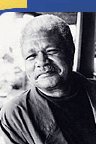
A Jazzy Kind of Guy
Well, Governor Schwarzenegger has finally done something right. A few days ago he nominated Al Young as California’s Poet Laureate.
It’s an inspired choice as Young will be a terrific ambassador for poetry. He’s funny, engaging, and articulate. He can talk about poems, rap about music, rhapsodize about writing, and make audiences laugh.
I’ve listened to Young talk the last two summers when I attended the Squaw Valley Community of Writers. He’s been going to the Lake Tahoe writer’s workshop for decades now, as have many of the teachers. They are all friends and colleagues of the writer Oakley Hall and his wife Barbara, and together they’ve created a welcoming, comradely environment where unpublished authors mingle with the likes of Amy Tan, Anne Lamott, Janet Fitch, and top editors and agents from the New York publishing scene.
Young, who lives in Berkeley, is always among the most relaxed and forthcoming of the teachers. Along with writing poetry, he writes screenplays, novels, and non-fiction meditations on music. He’s won lots of different awards, including the Pushcart Prize and the Pen/Library of Congress award for short fiction.
Young’s got a lot of redeeming to do, as the last Poet Laureate, Quincy Troupe, resigned in 2002 after it turned out he had lied about having a college diploma. But I look forward a new appreciation of poetry.
Here’s a poem Young wrote in 2001: From his website.
TO BE THE PERFECT FOOL
To be the perfect fool ain't all that bad.
You mess yourself up mostly, no one else
cares really what you do. Why should you add
more worry to their night? Go work your spells
elsewhere, someplace where pride and making sense
don't count. Jump to your own conclusion. Run.
Where fools and money part, you can dispense
with chance. All foolishness can be no fun.
You bet against yourself: the perfect fool.
Divine intelligence, the muse, the gods -
whatever works, or doesn't. What's uncool?
To put it plainly: Just what are the odds
of you, the lover, coming out ahead,
when bombs this sad world drops come down with bread?
It’s an inspired choice as Young will be a terrific ambassador for poetry. He’s funny, engaging, and articulate. He can talk about poems, rap about music, rhapsodize about writing, and make audiences laugh.
I’ve listened to Young talk the last two summers when I attended the Squaw Valley Community of Writers. He’s been going to the Lake Tahoe writer’s workshop for decades now, as have many of the teachers. They are all friends and colleagues of the writer Oakley Hall and his wife Barbara, and together they’ve created a welcoming, comradely environment where unpublished authors mingle with the likes of Amy Tan, Anne Lamott, Janet Fitch, and top editors and agents from the New York publishing scene.
Young, who lives in Berkeley, is always among the most relaxed and forthcoming of the teachers. Along with writing poetry, he writes screenplays, novels, and non-fiction meditations on music. He’s won lots of different awards, including the Pushcart Prize and the Pen/Library of Congress award for short fiction.
Young’s got a lot of redeeming to do, as the last Poet Laureate, Quincy Troupe, resigned in 2002 after it turned out he had lied about having a college diploma. But I look forward a new appreciation of poetry.
Here’s a poem Young wrote in 2001: From his website.
TO BE THE PERFECT FOOL
To be the perfect fool ain't all that bad.
You mess yourself up mostly, no one else
cares really what you do. Why should you add
more worry to their night? Go work your spells
elsewhere, someplace where pride and making sense
don't count. Jump to your own conclusion. Run.
Where fools and money part, you can dispense
with chance. All foolishness can be no fun.
You bet against yourself: the perfect fool.
Divine intelligence, the muse, the gods -
whatever works, or doesn't. What's uncool?
To put it plainly: Just what are the odds
of you, the lover, coming out ahead,
when bombs this sad world drops come down with bread?
Friday, May 13, 2005
Steve Wasserman's Exit
The San Francisco Chronicle devotes most of the front of its Datebook section to the departure of Steve Wasserman from the Los Angeles Times Book Review section.
Heidi Benson reports on how Wasserman elevated the book review into a nationally admired section, in part, through the mailing of 2,000 complimentary issues each week to prominent authors and people in the publishing industry. David Kipen ponders the future of book reviews and offers some suggestion for the LA Times’ next editor. Kipen sort of sidesteps the question of whether the Internet and bloggers are cannibalizing the readership of book review sections, but he raises some good points.
"1. Does a newspaper need a freestanding book review section?
OK, that's a softball. Hell yes. So what if it doesn't break even? Neither does any book review section in the country. Neither do most sports sections, and nobody talks about discontinuing them. The L.A. Times as a whole probably doesn't make enough money, but is its parent company, the Tribune Corp., thinking of shutting it down for a tax write-off? Of course not.
The only reason to kill a book review section is if you don't know what happens to anybody fool enough to try it: Book lovers rise up and cancel their subscriptions until you bring it back. Also, and this is a promise, other newspapers committed to keeping their book review sections will ride you like a pony.
2. How should a book review section respond to the challenges posed by the Internet?
Right now, the blogging phenomenon has almost every newspaper in the country scared out of its socks. If folks can get their news and opinion free from a few pundits in pajamas, how's the morning paper supposed to keep readers coughing up their lousy 50 cents a day?
And yet book review sections should really have less to fear from the Internet than just about any other section. Smart newspapers are providing more informed opinion with their news, not less. A good book review should, at least in theory, be the most unapologetically opinionated section in the paper. Rather than sweating a little online second-guessing from the Net, a smart book section would do better to supplement its print edition with some kind of rip-roaring online clearinghouse of ideas.
3. Finally, who is a book review section really for?
In other words, should you give readers what they think they want -- presumably more reviews of writers they've already heard of -- or what you think they need? Do you skew regional, paying special attention to books with a local angle? Or do you go national, on the assumption that regional writing has matured to the point where it no longer requires special pleading?
There's no definitive answer, but California's incredible diversity may suggest one possible way to go. Considering how deplorably oblivious most American book reviewing is to the rest of the world in general, and specifically to literature in translation -- and also considering how many Westerners identify with more than one heritage -- might we finally be due for a book review section that pays equal regard to books both local and international?
Rather than waste time dusting the shoulder blades of Steve Wasserman's famous ice cream suit for prints, it's time to start asking these questions -- and now, when the decision makers might really be listening."
Heidi Benson reports on how Wasserman elevated the book review into a nationally admired section, in part, through the mailing of 2,000 complimentary issues each week to prominent authors and people in the publishing industry. David Kipen ponders the future of book reviews and offers some suggestion for the LA Times’ next editor. Kipen sort of sidesteps the question of whether the Internet and bloggers are cannibalizing the readership of book review sections, but he raises some good points.
"1. Does a newspaper need a freestanding book review section?
OK, that's a softball. Hell yes. So what if it doesn't break even? Neither does any book review section in the country. Neither do most sports sections, and nobody talks about discontinuing them. The L.A. Times as a whole probably doesn't make enough money, but is its parent company, the Tribune Corp., thinking of shutting it down for a tax write-off? Of course not.
The only reason to kill a book review section is if you don't know what happens to anybody fool enough to try it: Book lovers rise up and cancel their subscriptions until you bring it back. Also, and this is a promise, other newspapers committed to keeping their book review sections will ride you like a pony.
2. How should a book review section respond to the challenges posed by the Internet?
Right now, the blogging phenomenon has almost every newspaper in the country scared out of its socks. If folks can get their news and opinion free from a few pundits in pajamas, how's the morning paper supposed to keep readers coughing up their lousy 50 cents a day?
And yet book review sections should really have less to fear from the Internet than just about any other section. Smart newspapers are providing more informed opinion with their news, not less. A good book review should, at least in theory, be the most unapologetically opinionated section in the paper. Rather than sweating a little online second-guessing from the Net, a smart book section would do better to supplement its print edition with some kind of rip-roaring online clearinghouse of ideas.
3. Finally, who is a book review section really for?
In other words, should you give readers what they think they want -- presumably more reviews of writers they've already heard of -- or what you think they need? Do you skew regional, paying special attention to books with a local angle? Or do you go national, on the assumption that regional writing has matured to the point where it no longer requires special pleading?
There's no definitive answer, but California's incredible diversity may suggest one possible way to go. Considering how deplorably oblivious most American book reviewing is to the rest of the world in general, and specifically to literature in translation -- and also considering how many Westerners identify with more than one heritage -- might we finally be due for a book review section that pays equal regard to books both local and international?
Rather than waste time dusting the shoulder blades of Steve Wasserman's famous ice cream suit for prints, it's time to start asking these questions -- and now, when the decision makers might really be listening."
Making New (Blogger) Friends
One of the fun parts of blogging is making the (online) acquaintance of other bloggers. Thus I meet Wendi Kaufman, aka The Happy Booker, who is almost relentlessly cheerful on her blog. She inspires me, as I haven’t mastered much past somber tone.
A few weeks ago, The Happy Booker started to rave about an author I was unfamiliar with, Richard McCann. She praised his new book, Mother of Sorrows, calling it one of her favorite books this year.
McCann’s website describes the book this way:
“With the breadth and cumulative force of a novel, Mother of Sorrows presents ten interwoven stories of an American family starting out in the post-World War II suburbs of Washington, D.C., a world of identical brick houses and sunstruck, treeless lawns.”
It’s a novel that took McCann 18 years to write. In 1990, he came down with serious liver disease; in 1996 he underwent a liver transplant. He talked to the Happy Booker about his experiences:
“So I was quite busy, for some years, with the work of dying and then being resurrected. When I finally rose from the sickbed, I wasn't struck first by the urge to pick up a pencil: I was struck first by the urge to go canoeing and to get a suntan.”
Mother of Sorrows is getting great reviews. The Washington Post, New York and LA Times liked it, using phrases like “exquisitely written,” and “elegant and unfussy prose.” Borders selected it for it Original Voices section for May.
Now Bay Area book fans can get a chance to hear McCann read. He’ll be at Stacey’s Books on Market Street on Monday, May 16 at 12:30 and at Books, Inc. on Market Street Tuesday night at 7:30.
Speaking of new friends, new blogs, there now is a bright orange and black logo in the sidebar of my blog. It’s from Web Del Sol, a great literary magazine. Web Del Sol was looking to partner with a few literary blogs as part of a feature for their House of Blogs. I volunteered. Check out the site. It’s set up as one-stop shopping for book blogs, with links to a lot of good sites and excerpts to give you a taste of various voices.
A few weeks ago, The Happy Booker started to rave about an author I was unfamiliar with, Richard McCann. She praised his new book, Mother of Sorrows, calling it one of her favorite books this year.
McCann’s website describes the book this way:
“With the breadth and cumulative force of a novel, Mother of Sorrows presents ten interwoven stories of an American family starting out in the post-World War II suburbs of Washington, D.C., a world of identical brick houses and sunstruck, treeless lawns.”
It’s a novel that took McCann 18 years to write. In 1990, he came down with serious liver disease; in 1996 he underwent a liver transplant. He talked to the Happy Booker about his experiences:
“So I was quite busy, for some years, with the work of dying and then being resurrected. When I finally rose from the sickbed, I wasn't struck first by the urge to pick up a pencil: I was struck first by the urge to go canoeing and to get a suntan.”
Mother of Sorrows is getting great reviews. The Washington Post, New York and LA Times liked it, using phrases like “exquisitely written,” and “elegant and unfussy prose.” Borders selected it for it Original Voices section for May.
Now Bay Area book fans can get a chance to hear McCann read. He’ll be at Stacey’s Books on Market Street on Monday, May 16 at 12:30 and at Books, Inc. on Market Street Tuesday night at 7:30.
Speaking of new friends, new blogs, there now is a bright orange and black logo in the sidebar of my blog. It’s from Web Del Sol, a great literary magazine. Web Del Sol was looking to partner with a few literary blogs as part of a feature for their House of Blogs. I volunteered. Check out the site. It’s set up as one-stop shopping for book blogs, with links to a lot of good sites and excerpts to give you a taste of various voices.
Thursday, May 12, 2005
What Does The Future Hold?
Well, right after I waxed rhapsodic over the libraries at Berkeley, here comes a Berkeley professor and futurist, William Crossman, who thinks the written word and books will be extinct by 2050. (via Bookslut)
“But can we picture life without Shakespeare, without Tom Clancy? How could we live without reading and writing?
Patiently, Crossman explains that people wouldn't have to give up literacy if they didn't want to. It would gain the status of a hobby, somewhat the way quilting is now. Instead, he said we will have an oral-aural culture, just as we did before some early civilization first drew lines in the sand with a twig. Crossman likens our future with talking computers to our experience with the calculator of some 30 years ago. “
The Chronicle’s very-own editor, Phil Bronstein, gets the once-over in Editor & Publisher, where it is once again pointed out that he is best known for once being married to Sharon Stone.
“NEW YORK After 35 years in San Francisco newspapers (including jobs as top editor at both of the city's major dailies), eight years of overseas reporting that nearly won a Pulitzer Prize, and directing investigative reporting that turned the baseball world upside-down this year, you'd think Phil Bronstein would be best known for strong journalism. But to many San Franciscans — and readers of gossip and entertainment pages nationwide — Bronstein's reputation is often decidedly different. To them, he's the macho editor who married and later divorced Sharon Stone, once broke a political consultant's ankle during a newsroom argument, donned a wetsuit to go diving for an alligator in a local lake, and ended up in the hospital after a Komodo dragon took a bite out of his foot.
"I've led the life I've led, and I can't change what has happened," Bronstein, now in his fifth year as editor of the San Francisco Chronicle, declares during a chat inside his third-floor office, which overlooks busy Mission Street. "Those kinds of things don't define who you are. Those are the people whose view of me I can't change."
But Steve Martin is true celebrity with class. He is interviewed in this month’s Believer.
“BLVR: You have an aura about you that makes you seem more normal than many celebrities. Somehow you’ve managed to live a fairly normal life.
SM: I don’t know. I made two decisions that I suddenly recall for no reason. One was, when I was like eighteen and had a car, I said, “I’m never not going to go anywhere because of the price of gas.” And the other thing I remember thinking, when I was starting to become famous, was, “I am never not going to go anywhere because I’m famous.” Although I do choose not to go some places because I’m famous. But I travel alone. I don’t have an entourage. I don’t want that.
BLVR: I guess that makes your life easier.
SM: It’s really easier. You know, there’s a moment when you’re famous when it’s unbearable to go out because you’re too famous. And then there’s a moment when you’re famous just right. [Laughs] And then there’s kind of a respect or distance or something, but you have a little bit more grease.
BLVR: When did the “just right” occur for you?
SM: I would say mid-eighties. There’s a kind of heat fever that just dissipates. You’re not someone who’s constantly being followed.
BLVR: Where can’t you go?
SM: It’s not where I can’t, it’s where I don’t want to. “
“But can we picture life without Shakespeare, without Tom Clancy? How could we live without reading and writing?
Patiently, Crossman explains that people wouldn't have to give up literacy if they didn't want to. It would gain the status of a hobby, somewhat the way quilting is now. Instead, he said we will have an oral-aural culture, just as we did before some early civilization first drew lines in the sand with a twig. Crossman likens our future with talking computers to our experience with the calculator of some 30 years ago. “
The Chronicle’s very-own editor, Phil Bronstein, gets the once-over in Editor & Publisher, where it is once again pointed out that he is best known for once being married to Sharon Stone.
“NEW YORK After 35 years in San Francisco newspapers (including jobs as top editor at both of the city's major dailies), eight years of overseas reporting that nearly won a Pulitzer Prize, and directing investigative reporting that turned the baseball world upside-down this year, you'd think Phil Bronstein would be best known for strong journalism. But to many San Franciscans — and readers of gossip and entertainment pages nationwide — Bronstein's reputation is often decidedly different. To them, he's the macho editor who married and later divorced Sharon Stone, once broke a political consultant's ankle during a newsroom argument, donned a wetsuit to go diving for an alligator in a local lake, and ended up in the hospital after a Komodo dragon took a bite out of his foot.
"I've led the life I've led, and I can't change what has happened," Bronstein, now in his fifth year as editor of the San Francisco Chronicle, declares during a chat inside his third-floor office, which overlooks busy Mission Street. "Those kinds of things don't define who you are. Those are the people whose view of me I can't change."
But Steve Martin is true celebrity with class. He is interviewed in this month’s Believer.
“BLVR: You have an aura about you that makes you seem more normal than many celebrities. Somehow you’ve managed to live a fairly normal life.
SM: I don’t know. I made two decisions that I suddenly recall for no reason. One was, when I was like eighteen and had a car, I said, “I’m never not going to go anywhere because of the price of gas.” And the other thing I remember thinking, when I was starting to become famous, was, “I am never not going to go anywhere because I’m famous.” Although I do choose not to go some places because I’m famous. But I travel alone. I don’t have an entourage. I don’t want that.
BLVR: I guess that makes your life easier.
SM: It’s really easier. You know, there’s a moment when you’re famous when it’s unbearable to go out because you’re too famous. And then there’s a moment when you’re famous just right. [Laughs] And then there’s kind of a respect or distance or something, but you have a little bit more grease.
BLVR: When did the “just right” occur for you?
SM: I would say mid-eighties. There’s a kind of heat fever that just dissipates. You’re not someone who’s constantly being followed.
BLVR: Where can’t you go?
SM: It’s not where I can’t, it’s where I don’t want to. “
Wednesday, May 11, 2005
Where Marketability Doesn't Matter .... Much
Writers are an anxious bunch, especially when it comes to publishing books. The blog-o-sphere is full of ruminations about the sorry state of publishing, particularly how little support midlist books receive. In today’s cutthroat environment, where 175,000 books are released each year, authors are expected not only to write well, but also to market themselves.
It’s hard to set aside these anxieties. One way is to focus on the places where commercial instincts are tamped down – libraries.
I was in the Bancroft Library on Tuesday, the place where University of California at Berkeley keeps its rare books and manuscripts. As I was waiting to look at some old diaries written by 19th century Los Angeles pioneers, I ran into Paul Hamburg, the librarian for the Judaica collections.
Hamburg took a circuitous route to becoming a librarian, but one that informed his passion for books concerning the life, language and culture of Jews. He was a farmer on a kibbutz in Israel for 17 years, raising cattle and citrus trees. He returned to the United States in 1989 to attend the School of Library Science at UC Berkeley – a program that has since been abolished – and then worked around the country at various libraries, including at the Museum of Tolerance at the Simon Wiesenthal Center, until returning to UC Berkeley two and a half years ago.
A university library is a fine place to wallow in an appreciation of books. It’s as far removed from the best-seller section at a Barnes & Noble as possible, yet the appreciation for fine literature and fiction runs deep. Hamburg told me there are 10 million books in Berkeley’s libraries. Only 4.5 million are stored on the sprawling campus and another 5.5 million are kept in an off-site storage facility.
But the best news was the university’s book-buying habit. Hamburg himself acquires 1,500 books a year for the Hebraic collection, which are books mostly in Hebrew. Other librarians (and there are about 100 of these and 300 other library workers) purchase another 3,500 Jewish-themed books annually. The school accumulates 100,000 new titles a year, Hamburg estimates.
I reveled in that figure. It serves as a testament to what is right in this world. Clearly, academia has its own sort of commercialism, its rigid hierarchy, its own type of bestseller list, but those earthly concerns are temporal. A university library is a monument to books, a place that will outlive us all – and safely carry our words for future generations.
In a more commercial vein …..
Dede Wilsey’s attorney has sent a letter to the San Francisco Chronicle and San Francisco Magazine informing them that Penguin Press did not fact check her stepson Sean Wilsey’s book, Oh The Glory of It All. The attorney notified the publications that if they print any defamatory statements they will held legally liable.
Well, I guess that tells us how much Dede likes the book.
It’s hard to set aside these anxieties. One way is to focus on the places where commercial instincts are tamped down – libraries.
I was in the Bancroft Library on Tuesday, the place where University of California at Berkeley keeps its rare books and manuscripts. As I was waiting to look at some old diaries written by 19th century Los Angeles pioneers, I ran into Paul Hamburg, the librarian for the Judaica collections.
Hamburg took a circuitous route to becoming a librarian, but one that informed his passion for books concerning the life, language and culture of Jews. He was a farmer on a kibbutz in Israel for 17 years, raising cattle and citrus trees. He returned to the United States in 1989 to attend the School of Library Science at UC Berkeley – a program that has since been abolished – and then worked around the country at various libraries, including at the Museum of Tolerance at the Simon Wiesenthal Center, until returning to UC Berkeley two and a half years ago.
A university library is a fine place to wallow in an appreciation of books. It’s as far removed from the best-seller section at a Barnes & Noble as possible, yet the appreciation for fine literature and fiction runs deep. Hamburg told me there are 10 million books in Berkeley’s libraries. Only 4.5 million are stored on the sprawling campus and another 5.5 million are kept in an off-site storage facility.
But the best news was the university’s book-buying habit. Hamburg himself acquires 1,500 books a year for the Hebraic collection, which are books mostly in Hebrew. Other librarians (and there are about 100 of these and 300 other library workers) purchase another 3,500 Jewish-themed books annually. The school accumulates 100,000 new titles a year, Hamburg estimates.
I reveled in that figure. It serves as a testament to what is right in this world. Clearly, academia has its own sort of commercialism, its rigid hierarchy, its own type of bestseller list, but those earthly concerns are temporal. A university library is a monument to books, a place that will outlive us all – and safely carry our words for future generations.
In a more commercial vein …..
Dede Wilsey’s attorney has sent a letter to the San Francisco Chronicle and San Francisco Magazine informing them that Penguin Press did not fact check her stepson Sean Wilsey’s book, Oh The Glory of It All. The attorney notified the publications that if they print any defamatory statements they will held legally liable.
Well, I guess that tells us how much Dede likes the book.
Tuesday, May 10, 2005
A Little of This, A Little of That
This guy deserves the right to feel ambivalent about his father. I wonder why it took him so long to write it? (From Publisher’s Marketplace)
“Infamous dictator Benito Mussolini's last surviving son, seventy-seven-year old Romano Mussolini's MY FATHER, IL DUCE, about his love for his father; the dictator's struggles with his place in life; and the family's heartaches, attempted suicides, and legacies, to Kenneth Kales at Kales Press, for publication in spring 2006, by Vittoria Casarotti at Rizzoli RCS Italy (US).”
Not everybody was impressed with the Huffington Report. Nikki Finke from the LA Weekly, who is known for her lashing tongue, reports:
“Judging from today's horrific debut of the humongously pre-hyped celebrity blog the Huffington Post, the Madonna of the mediapolitic world has gone one reinvention too many. She has now made an online ass of herself.” (via Fishbowl LA)
In contrast, the web site run by Jim Romenesko gets high praise from Jack Shafer at Slate. Romensko has been writing about media matters for six years this month. His site is now part of the Poynter Institute and it is a must-read for all the machers in the business, as well as all those slogging in the trenches. It’s the first website I read each day (Publisher’s Marketplace is second) and keeps the spotlight on journalistic highlights and transgressions.
“If not for Jim Romenesko's Web site, the recent journalistic lapses of Mitch Albom and Barbara Stewart probably wouldn't have gotten much coverage outside of the local media in Detroit and Boston. Then, a couple of months after the fact, the writers might have earned a brief chiding mention in the Columbia Journalism Review before being forgotten.
But thanks to Romenesko's influential readership, every journalistic sin—venial or cardinal—that's published and gets billboarded on his Web page becomes a national story. Everybody from news aides to media moguls reads the site, which is hosted by the Poynter Institute, a gold-plated nonprofit that specializes in remedial education for journalists. A big splash on Romenesko obliges the Washington Post's Howard Kurtz to write about it in his column and examine it on his television show, the New York Times to digest it, and columnists everywhere to riff on it. "
Actor-Playwright Wallace Shawn won a career achievement award from PEN, the writer’s organization. Other winners include Sam Harris for his non-fiction book, “The End of Faith.”
“Infamous dictator Benito Mussolini's last surviving son, seventy-seven-year old Romano Mussolini's MY FATHER, IL DUCE, about his love for his father; the dictator's struggles with his place in life; and the family's heartaches, attempted suicides, and legacies, to Kenneth Kales at Kales Press, for publication in spring 2006, by Vittoria Casarotti at Rizzoli RCS Italy (US).”
Not everybody was impressed with the Huffington Report. Nikki Finke from the LA Weekly, who is known for her lashing tongue, reports:
“Judging from today's horrific debut of the humongously pre-hyped celebrity blog the Huffington Post, the Madonna of the mediapolitic world has gone one reinvention too many. She has now made an online ass of herself.” (via Fishbowl LA)
In contrast, the web site run by Jim Romenesko gets high praise from Jack Shafer at Slate. Romensko has been writing about media matters for six years this month. His site is now part of the Poynter Institute and it is a must-read for all the machers in the business, as well as all those slogging in the trenches. It’s the first website I read each day (Publisher’s Marketplace is second) and keeps the spotlight on journalistic highlights and transgressions.
“If not for Jim Romenesko's Web site, the recent journalistic lapses of Mitch Albom and Barbara Stewart probably wouldn't have gotten much coverage outside of the local media in Detroit and Boston. Then, a couple of months after the fact, the writers might have earned a brief chiding mention in the Columbia Journalism Review before being forgotten.
But thanks to Romenesko's influential readership, every journalistic sin—venial or cardinal—that's published and gets billboarded on his Web page becomes a national story. Everybody from news aides to media moguls reads the site, which is hosted by the Poynter Institute, a gold-plated nonprofit that specializes in remedial education for journalists. A big splash on Romenesko obliges the Washington Post's Howard Kurtz to write about it in his column and examine it on his television show, the New York Times to digest it, and columnists everywhere to riff on it. "
Actor-Playwright Wallace Shawn won a career achievement award from PEN, the writer’s organization. Other winners include Sam Harris for his non-fiction book, “The End of Faith.”
Monday, May 09, 2005
Society Scandals
The San Francisco Chronicle started its 6-part series (not 7-part as I had written previously) on Sean Wilsey’s book, Oh The Glory of It All. It will be interesting to see if the excerpts stimulate interest in the book and catapult it onto the best-seller list or satiate readers’ curiosity. Clearly, the publisher Penguin Press thinks the exposure will be good for Wilsey. (The newspaper is not posting the series on its web site). He’s going to talk at a Clean Well-Lighted Place for Books in San Francisco on Tuesday, May 31 at 7 p.m.
In Sunday’s excerpt, The Chronicle included pictures of Wilsey’s mom, Pat Montandon, in 1969. She was remarkably beautiful then – blonde and lithe, with a mixture of sophistication and approachability. She far outshone the woman her husband left her for, Dede Wilsey. It’s understandable why Wilsey felt bewildered and confused by his father’s actions.
In the book, Wilsey portays his stepmother as the villain – a woman who befriended Montandon, only to deceive her and steal her husband. Wilsey clearly loved Dede for a time and was desperate for her to return that love. He says she never did, and Wilsey conveys his resentment throughout the book. I wonder how she is reacting to all this negative publicity. Will she talk to the Chronicle now?
In other San Francisco news, Craig’s List founder Craig Newmark – who has already managed to take away millions of dollars in revenue from local newspapers with his on-line classified ads – is going to add a journalistic component to his website.
“Craig Newmark told Associated Press editors and writers in a bureau visit, his newest fascination is community journalism. Newmark hopes to develop a pool of "talented amateurs" who could investigate scandals, cover politics and promote the most important and credible stories. Articles would be published on Internet sites ranging from Craigslist to individual Web logs, or blogs.”
I bet this is making editors nervous. They’re also keeping their eyes on Arianna Huffington’s new community blog site, the Huffington Post, which debuts today. She’s got an interesting line-up of bloggers, including Arthur Schlesinger, Jr., John Cusak, Ellen DeGeneres, David Mamet, Julia Louis-Dreyfuss, and others. So reading her site will take time. No quick blog hits.
In Sunday’s excerpt, The Chronicle included pictures of Wilsey’s mom, Pat Montandon, in 1969. She was remarkably beautiful then – blonde and lithe, with a mixture of sophistication and approachability. She far outshone the woman her husband left her for, Dede Wilsey. It’s understandable why Wilsey felt bewildered and confused by his father’s actions.
In the book, Wilsey portays his stepmother as the villain – a woman who befriended Montandon, only to deceive her and steal her husband. Wilsey clearly loved Dede for a time and was desperate for her to return that love. He says she never did, and Wilsey conveys his resentment throughout the book. I wonder how she is reacting to all this negative publicity. Will she talk to the Chronicle now?
In other San Francisco news, Craig’s List founder Craig Newmark – who has already managed to take away millions of dollars in revenue from local newspapers with his on-line classified ads – is going to add a journalistic component to his website.
“Craig Newmark told Associated Press editors and writers in a bureau visit, his newest fascination is community journalism. Newmark hopes to develop a pool of "talented amateurs" who could investigate scandals, cover politics and promote the most important and credible stories. Articles would be published on Internet sites ranging from Craigslist to individual Web logs, or blogs.”
I bet this is making editors nervous. They’re also keeping their eyes on Arianna Huffington’s new community blog site, the Huffington Post, which debuts today. She’s got an interesting line-up of bloggers, including Arthur Schlesinger, Jr., John Cusak, Ellen DeGeneres, David Mamet, Julia Louis-Dreyfuss, and others. So reading her site will take time. No quick blog hits.
Friday, May 06, 2005
The San Francisco Chronicle Book Review
Steve Wasserman, the editor of the Los Angeles Times book review section, quit his job this week, and his resignation has prompted all sorts of comment in the blogosphere. It seems that book lovers around southern California had strong feelings about The Man in the White Suit ( his famously affected attire) and his long helm at the review. (Wasserman will now return to New York to work as a literary agent).
The talk made me wonder about the San Francisco Chronicle Book Review and its editor, Oscar Villalon. San Francisco regards itself as a literary town. On any given night, an interested reader can find an author talking at a bookstore. Toss a coin and walk into A Clean Well-Lighted Place For Books, Book Passage, Modern Times, or A Great Good Place For Books, among others, and you will find a worthy literary event.
Yet I hear very few people talking about the Chronicle Book Review. And virtually no discussion about Villalon's vision for it, which was definitely not the case in Los Angeles.
If you run Wasserman’s name through Technorati, a blog search engine, you get dozens of web hits. The same is not true for Villalon. (One of the hits is a Ghost Word post of a panel discussion featuring Villalon talking about the book review).
Scott over at Conversational Reading does a thumbnail review each week of the contents of the Book Review and often wishes the Chronicle reviewed more fiction – and fewer memoirs. Most weeks, Scott only hands the Chronicle a decent, not outstanding grade. (Another Bay Area literary blogger, Ed at the Return of the Reluctant, reviews the New York Times Book Review each week, either rewarding or denying editor Sam Tannenhaus a brownie.)
It’s hard to gauge the influence of the book review. How much does its reviews drive sales, particularly for its bestseller list? But I know it has loyal readers. When Chronicle editor Phil Bronstein eliminated the pullout, stand-alone book review from the Sunday Pink section a few years ago, readers rose up and complained so loudly that he reversed his decision.
Are we more polite in San Francisco? Are we less critical than our fellow Californians? Is the book review already doing its job? Is it just that Villalon is a genuinely nice person who often agrees to appear at charity events and makes apparent his appreciation for lesser-known books?
Does anyone have any ideas why LA seems more passionate about its book review section than SF does?
The talk made me wonder about the San Francisco Chronicle Book Review and its editor, Oscar Villalon. San Francisco regards itself as a literary town. On any given night, an interested reader can find an author talking at a bookstore. Toss a coin and walk into A Clean Well-Lighted Place For Books, Book Passage, Modern Times, or A Great Good Place For Books, among others, and you will find a worthy literary event.
Yet I hear very few people talking about the Chronicle Book Review. And virtually no discussion about Villalon's vision for it, which was definitely not the case in Los Angeles.
If you run Wasserman’s name through Technorati, a blog search engine, you get dozens of web hits. The same is not true for Villalon. (One of the hits is a Ghost Word post of a panel discussion featuring Villalon talking about the book review).
Scott over at Conversational Reading does a thumbnail review each week of the contents of the Book Review and often wishes the Chronicle reviewed more fiction – and fewer memoirs. Most weeks, Scott only hands the Chronicle a decent, not outstanding grade. (Another Bay Area literary blogger, Ed at the Return of the Reluctant, reviews the New York Times Book Review each week, either rewarding or denying editor Sam Tannenhaus a brownie.)
It’s hard to gauge the influence of the book review. How much does its reviews drive sales, particularly for its bestseller list? But I know it has loyal readers. When Chronicle editor Phil Bronstein eliminated the pullout, stand-alone book review from the Sunday Pink section a few years ago, readers rose up and complained so loudly that he reversed his decision.
Are we more polite in San Francisco? Are we less critical than our fellow Californians? Is the book review already doing its job? Is it just that Villalon is a genuinely nice person who often agrees to appear at charity events and makes apparent his appreciation for lesser-known books?
Does anyone have any ideas why LA seems more passionate about its book review section than SF does?
Wednesday, May 04, 2005
Sean Wilsey Redux
Can this Sean Wilsey book, Oh The Glory of It All get any bigger? It looks like the San Francisco Chronicle plans to run a 7-part serialization of the book, due to be released any day now. Seven parts? That’s nearly as long as one of reporter Mike Weiss’ pieces. (Remember, he’s the one who followed a grape from the vine to the bottle. The story ran for something like 39 parts and will now be made into a book, A Thing of Desire).
The Chronicle is banking that society types and wanna be society types will be interested in the dirty details of the Pat Montandon-Al Wilsey-Dede Traina Wilsey triangle, the one sprinkled with a bit of Danielle Steele. There is sex and drugs and acting out as well. This must be a circulation ploy.
Not to be left out, San Francisco Magazine is also planning a close look at the book.
The Chronicle is banking that society types and wanna be society types will be interested in the dirty details of the Pat Montandon-Al Wilsey-Dede Traina Wilsey triangle, the one sprinkled with a bit of Danielle Steele. There is sex and drugs and acting out as well. This must be a circulation ploy.
Not to be left out, San Francisco Magazine is also planning a close look at the book.
The Stories of Mothers With Cancer
For the past nine years, Linda Blachman has been on a mission: to help women with cancer record their life stories for the children they will leave behind. She and other volunteers have spent hours talking to sick women, recording their hopes and dreams and messages for their children.
The idea to talk to dying women came to Blachman after she had been confined to her Berkeley home for three years in order to recover from a disabling back injury. Blachman’s mother, who lived in Milwaukee, died during that time and Blachman regretted not asking the questions that had always swirled in her mind.
"The hardest part of my grief was that I never really knew my mother's story,'' Blachman told the San Francisco Chronicle. "I hadn't asked her all the questions that children hopefully ask their parents so they know them as adults.''
The oral histories are meant as much for the mothers as for their children, a form of healing as well as a way to regain some dignity and control when your life has been turned upside down. "The illness becomes very large and opens up these large questions about your identity and your values and issues of faith,'' Blachman said.
The mothers said they found it comforting that they could still do something for their children. One mom referred to it as "emotional insurance. '' Even those who did the listening found the meetings inspiring. "I've done my whole family,'' said Carol Charlton, one of 10 interviewers for the project. "I've learned things I've never heard before.''
I met Blachman last summer at the Community of Writers at Squaw Valley, a week-long writing conference that brings together agents, publishers, published and aspiring authors. It was clear in our non-fiction workshop that Blachman was determined to share these mothers’s stories, and her dedication has paid off. Publisher’s Marketplace just announced the sale of her book:
“Linda Blachman's ANOTHER MORNING: How Mothers Live With and Battle Cancer, the inspiring and poignant voices of women speaking out about the challenges and surprising gifts of parenting through a cancer diagnosis, based on the author's Mothers' Living Stories Project, to Jill Rothenberg at Seal Press, in a nice deal, by Felicia Eth at Felicia Eth Literary Representation .”
The idea to talk to dying women came to Blachman after she had been confined to her Berkeley home for three years in order to recover from a disabling back injury. Blachman’s mother, who lived in Milwaukee, died during that time and Blachman regretted not asking the questions that had always swirled in her mind.
"The hardest part of my grief was that I never really knew my mother's story,'' Blachman told the San Francisco Chronicle. "I hadn't asked her all the questions that children hopefully ask their parents so they know them as adults.''
The oral histories are meant as much for the mothers as for their children, a form of healing as well as a way to regain some dignity and control when your life has been turned upside down. "The illness becomes very large and opens up these large questions about your identity and your values and issues of faith,'' Blachman said.
The mothers said they found it comforting that they could still do something for their children. One mom referred to it as "emotional insurance. '' Even those who did the listening found the meetings inspiring. "I've done my whole family,'' said Carol Charlton, one of 10 interviewers for the project. "I've learned things I've never heard before.''
I met Blachman last summer at the Community of Writers at Squaw Valley, a week-long writing conference that brings together agents, publishers, published and aspiring authors. It was clear in our non-fiction workshop that Blachman was determined to share these mothers’s stories, and her dedication has paid off. Publisher’s Marketplace just announced the sale of her book:
“Linda Blachman's ANOTHER MORNING: How Mothers Live With and Battle Cancer, the inspiring and poignant voices of women speaking out about the challenges and surprising gifts of parenting through a cancer diagnosis, based on the author's Mothers' Living Stories Project, to Jill Rothenberg at Seal Press, in a nice deal, by Felicia Eth at Felicia Eth Literary Representation .”
What Do Book Blurbs Say Anyway?
William Safire of the New York Times has finally sorted out the hidden clues in book blurbs. (via Galleycat)
"Acclaimed, in this fulsome lingo of book ads and catalogs, now means merely ''the author received at least one good review.''
Widely acclaimed means ''two or more, plus a cable-TV plug.''
Critically acclaimed means ''it was decently reviewed in a specialized publication but didn't sell.''
How do you blurb a dull book? Meticulously researched, or if you're really in trouble, definitive, exhaustive, spiced with profoundly insightful.
For novels in which characters determine the plot, San Francisco likes absorbing and satisfying, and New York pushes moving and masterly."
"Acclaimed, in this fulsome lingo of book ads and catalogs, now means merely ''the author received at least one good review.''
Widely acclaimed means ''two or more, plus a cable-TV plug.''
Critically acclaimed means ''it was decently reviewed in a specialized publication but didn't sell.''
How do you blurb a dull book? Meticulously researched, or if you're really in trouble, definitive, exhaustive, spiced with profoundly insightful.
For novels in which characters determine the plot, San Francisco likes absorbing and satisfying, and New York pushes moving and masterly."
Tuesday, May 03, 2005

Jonathan Franzen meets Oprah Winfrey

Patricia Storms of Booklust does it again in this funny cartoon, a reaction to the Open Letter to Oprah. Do you think Franzen's obituary will mention his rejection of Oprah? He can't seem to escape it.
You’re Not Going To Read This in Your Daily Newspaper
Readership of large daily newspapers is down around the country again, accelerating a trend that began a decade ago, according to Editor and Publisher. That golden demographic, the 18-35 year old group, seems to be either ignoring newspapers or getting their news elsewhere, like the Internet. The exception is USA Today, which saw its circulation climb 0.05 percent to 2,281,831 copies sold each day.
"On "Bloody Monday," E&P calculated the circ numbers in the new Fas-Fax report and found steep percentage drops at many large papers. A few show modest gains, but in some spots it's downright ugly.
The San Francisco Chronicle reported a daily decline of 6% and a Sunday decline of 7.7%.The Los Angeles Times dropped 6.4% daily and 7.9% Sunday. The Los Angeles Daily News, however, was up a bit with a .09% increase in daily copies and declining slightly on Sunday."
I remember the early 1990s, when my techno-husband predicted that newspapers would wither and people would get their information electronically. I was still a die-hard newspaper reporter, one who loved the smudge of newsprint on my hands, and I insisted there would always be a place for a tangible object. A decade later, I find myself spending more and more time on the Internet, browsing blogs and news sites. By the time I read my morning newspaper, I am already aware of much of the content.
That said, I still love my morning ritual of coffee and the paper. But it’s up to newspapers more than ever to go beyond reporting of breaking news and to present interesting features and analysis.
"On "Bloody Monday," E&P calculated the circ numbers in the new Fas-Fax report and found steep percentage drops at many large papers. A few show modest gains, but in some spots it's downright ugly.
The San Francisco Chronicle reported a daily decline of 6% and a Sunday decline of 7.7%.The Los Angeles Times dropped 6.4% daily and 7.9% Sunday. The Los Angeles Daily News, however, was up a bit with a .09% increase in daily copies and declining slightly on Sunday."
I remember the early 1990s, when my techno-husband predicted that newspapers would wither and people would get their information electronically. I was still a die-hard newspaper reporter, one who loved the smudge of newsprint on my hands, and I insisted there would always be a place for a tangible object. A decade later, I find myself spending more and more time on the Internet, browsing blogs and news sites. By the time I read my morning newspaper, I am already aware of much of the content.
That said, I still love my morning ritual of coffee and the paper. But it’s up to newspapers more than ever to go beyond reporting of breaking news and to present interesting features and analysis.
Monday, May 02, 2005
100,000 Readers and Counting ....
Beatrice is one of my favorite blogs, with its mix of author interviews, book reviews, and general observations about the literary life. Its writer, Ron Hogan, has just revealed this astonishing fact: 100,000 people visited his site in April. That is an amazing statistic, one that puts some meat behind the oft-suggested notion that literary blogs are making a difference in the book world. Hogan is way too modest about this milestone:
"I just took a look at my stats, folks, and thanks to a huge leap in daily readership over the last few weeks, the Beatrice audience has easily surpassed 100,000 readers for the month of April. Thanks for coming--and staying! I hope I'll be able to make May even more exciting for you... and since it's both Latino Books Month and time to start Reading the World, things should be pretty lively. (Plus we've got three Author2Author chats already in the can, covering everything from chick lit crime to historical fantasy and transsexual fiction. But not all at once."
I’m lucky to have 100 readers a day.
Still, this blogging business is so much fun. I do it because I love books, writing, authors, etc, not because there’s any glory in it. I've met fellow bloggers -- on-line and in person, talked to new authors, been inspired to go to more literary events than every before. I can express my opinion whenever about whatever. I think everyone should try it
"I just took a look at my stats, folks, and thanks to a huge leap in daily readership over the last few weeks, the Beatrice audience has easily surpassed 100,000 readers for the month of April. Thanks for coming--and staying! I hope I'll be able to make May even more exciting for you... and since it's both Latino Books Month and time to start Reading the World, things should be pretty lively. (Plus we've got three Author2Author chats already in the can, covering everything from chick lit crime to historical fantasy and transsexual fiction. But not all at once."
I’m lucky to have 100 readers a day.
Still, this blogging business is so much fun. I do it because I love books, writing, authors, etc, not because there’s any glory in it. I've met fellow bloggers -- on-line and in person, talked to new authors, been inspired to go to more literary events than every before. I can express my opinion whenever about whatever. I think everyone should try it
Garlic and Sapphires
Maybe it’s her unruly hair. Maybe it’s her lusty appetite, both at the table and in the bed. Maybe it’s her writing. I can’t quite determine it, but I know that when I pick up a book by Ruth Reichl, I will have a multi-sensory feast.
Reichl, now the editor of Gourmet Magazine, is part of the food revolution that has swept America – you know, the one that insists American food is much more complex than burgers and fries. She’s documented her transformation from food Luddite to gourmet in three highly-entertaining memoirs.
I just finished Garlic and Sapphires, an account of Riechl’s six years as a restaurant critic for the New York Times. Reichl, who once owned the Swallow, a wonderful, simple café in the Berkeley Art Museum on Bancroft Avenue, left the Bay Area to review restaurants for the Los Angeles Times. When she was tapped to go to New York in 1993, she instantly became the most powerful critic in the country.
From the opening pages of the book, Reichl shows the impact of her new fame. She’s on a plane to New York to scope out the scene. She hasn’t even officially started her job, but is eager to understand what’s involved. Sitting in her plane seat, cramped, tired, and minding her own business, the woman sitting next to her says, “Aren’t you Ruth Reichl, the new restaurant critic for the New York Times? All the restaurants in town have your picture up in their kitchens and are offering awards if you are spotted.”
The conversation horrifies Riechl, and prompts her to adopt a series of disguises so she can dine anonymously in some of the city’s most celebrated restaurants. (And part of her book argues that Reichl became some of those disguises). Her most famous review compares her experience dining at Le Cirque as an older, rather bland woman and as her fabulous wavy haired self. When she appears as the New York Times restaurant critic, the service is fawning. When she appears anonymously, she’s seated in Siberia and treated haughtily.
Not all of the scenes that Reichl describes ring true. They are too perfect, too convenient, like the encounter in the airplane. At the end of the book, Reichl admits that she has compressed scenes and combined characters – a journalistic no-no.
Yet I really didn’t care. I am not in the restaurant world in New York. I just went along for the read so I could sit on Reichl’s shoulder as she tasted creamy fois gras, fresh cod wrapped in seaweed, lobster bisque soup, and many other delicacies. Yum, yum.
Reichl, now the editor of Gourmet Magazine, is part of the food revolution that has swept America – you know, the one that insists American food is much more complex than burgers and fries. She’s documented her transformation from food Luddite to gourmet in three highly-entertaining memoirs.
I just finished Garlic and Sapphires, an account of Riechl’s six years as a restaurant critic for the New York Times. Reichl, who once owned the Swallow, a wonderful, simple café in the Berkeley Art Museum on Bancroft Avenue, left the Bay Area to review restaurants for the Los Angeles Times. When she was tapped to go to New York in 1993, she instantly became the most powerful critic in the country.
From the opening pages of the book, Reichl shows the impact of her new fame. She’s on a plane to New York to scope out the scene. She hasn’t even officially started her job, but is eager to understand what’s involved. Sitting in her plane seat, cramped, tired, and minding her own business, the woman sitting next to her says, “Aren’t you Ruth Reichl, the new restaurant critic for the New York Times? All the restaurants in town have your picture up in their kitchens and are offering awards if you are spotted.”
The conversation horrifies Riechl, and prompts her to adopt a series of disguises so she can dine anonymously in some of the city’s most celebrated restaurants. (And part of her book argues that Reichl became some of those disguises). Her most famous review compares her experience dining at Le Cirque as an older, rather bland woman and as her fabulous wavy haired self. When she appears as the New York Times restaurant critic, the service is fawning. When she appears anonymously, she’s seated in Siberia and treated haughtily.
Not all of the scenes that Reichl describes ring true. They are too perfect, too convenient, like the encounter in the airplane. At the end of the book, Reichl admits that she has compressed scenes and combined characters – a journalistic no-no.
Yet I really didn’t care. I am not in the restaurant world in New York. I just went along for the read so I could sit on Reichl’s shoulder as she tasted creamy fois gras, fresh cod wrapped in seaweed, lobster bisque soup, and many other delicacies. Yum, yum.
Friday, April 29, 2005
Blogging Addiction
I knew there was a reason I spend way too much time blogging:
Says Andrea Curtis, a Toronto writer:
"I’m sure I’m not the only writer for whom cruising the lit blogs is a bit like eating a chocolate bar — it seems like an innocuous enough treat sitting among its kind on the convenience store shelf, but even as you take that first bite, you know you’re going to regret it. You can’t possibly stop with just one section, so it’s going to be a spiral into gorging on the whole thing, feeling squishy, undisciplined and, just to amplify the misery, the deep lowdown of a sugar crash.
When I take a break to check out Bookninja or Bookslut or Bookangst 101 (not to mention Buzz, Balls & Hype, Maud Newton and Babies are Fireproof), I know that only an act of enormous willpower will prevent me from spending the rest of the day hopping from author interview to gossip about who got a book deal to the Guardian newspaper’s list of top 10 books for six- to eight-year-olds to a literary bitch session, sinking deeper and deeper into the endless possibilities of internet procrastination. Plus, I’ll spend an inordinate amount of my so-called break wondering how it is that these by-and-large funny, talented and enthusiastic bloggers have the time and mental space to create their blog and maintain careers as freelance writers, poets, novelists, editors, etc., while I can barely squeak out 1,000 words before collapsing into bed at 9 p.m.
And yet, it’s infinitely appealing for a person who loves to read and aims to write to slip through the wardrobe into a parallel world where other people actually care about books; where Michael Chabon and Jonathan Lethem aren’t just boldface names but animated superheroes forced to face the wrath of supervixen Candace Bushnell (check out the comic strip Patricia Storms of Booklust has created to take the mickey out of Chabon and Lethem’s obsession with comics); where people, lots of people, get exercised, really exercised, when someone complains that women writers are boring and too focused on the domestic. Many of the lit blogs are also unusually well written and even nice to look at (two qualities the blogosphere is not generally known for). They’re like mini-magazines with attitude and quirk to spare — and they actually provide time and space for new writers who may not have a forum elsewhere. (Though with news of blogger book deals plugging up the bandwidth, this is becoming less and less the case.)
There’s no question poking around the lit blogs makes me feel less isolated, as if I’m part of something larger than my 10 x 10 room. "
(Via Maud Newton)
Says Andrea Curtis, a Toronto writer:
"I’m sure I’m not the only writer for whom cruising the lit blogs is a bit like eating a chocolate bar — it seems like an innocuous enough treat sitting among its kind on the convenience store shelf, but even as you take that first bite, you know you’re going to regret it. You can’t possibly stop with just one section, so it’s going to be a spiral into gorging on the whole thing, feeling squishy, undisciplined and, just to amplify the misery, the deep lowdown of a sugar crash.
When I take a break to check out Bookninja or Bookslut or Bookangst 101 (not to mention Buzz, Balls & Hype, Maud Newton and Babies are Fireproof), I know that only an act of enormous willpower will prevent me from spending the rest of the day hopping from author interview to gossip about who got a book deal to the Guardian newspaper’s list of top 10 books for six- to eight-year-olds to a literary bitch session, sinking deeper and deeper into the endless possibilities of internet procrastination. Plus, I’ll spend an inordinate amount of my so-called break wondering how it is that these by-and-large funny, talented and enthusiastic bloggers have the time and mental space to create their blog and maintain careers as freelance writers, poets, novelists, editors, etc., while I can barely squeak out 1,000 words before collapsing into bed at 9 p.m.
And yet, it’s infinitely appealing for a person who loves to read and aims to write to slip through the wardrobe into a parallel world where other people actually care about books; where Michael Chabon and Jonathan Lethem aren’t just boldface names but animated superheroes forced to face the wrath of supervixen Candace Bushnell (check out the comic strip Patricia Storms of Booklust has created to take the mickey out of Chabon and Lethem’s obsession with comics); where people, lots of people, get exercised, really exercised, when someone complains that women writers are boring and too focused on the domestic. Many of the lit blogs are also unusually well written and even nice to look at (two qualities the blogosphere is not generally known for). They’re like mini-magazines with attitude and quirk to spare — and they actually provide time and space for new writers who may not have a forum elsewhere. (Though with news of blogger book deals plugging up the bandwidth, this is becoming less and less the case.)
There’s no question poking around the lit blogs makes me feel less isolated, as if I’m part of something larger than my 10 x 10 room. "
(Via Maud Newton)
Thursday, April 28, 2005
Don't Throw The Baby Out With The Bathwater
Katherine Ellison overturns common perceptions of mothers in her new book Mommy Brain: How Motherhood Makes Us Smarter. Having children actually increases brain synapses, makes women more efficient, better at forming friendships, and learning new things. Here are some excerpts from a Time magazine interview:
“Every mom has a story that could support the notion that child rearing turns a woman's mind into mush: putting milk in the pantry and cereal in the fridge, losing the thread of a conversation in midsentence, misplacing the car keys for the 10th time. So widespread is the belief that babies make women brainless that when a satirical website released a fake study showing parents lost IQ points when their first child was born, MSNBC picked it up. But Katherine Ellison, a Pulitzer-prizewinning reporter and mother of two, doesn't believe in the dumbed-down mom. In her new book, The Mommy Brain: How Motherhood Makes Us Smarter (Basic Books; 279 pages), Ellison lays out the scientific evidence for a baby-boosted brain. She explained her thinking in an interview with TIME.
Q: Surely sleep deprivation and demanding toddlers are an intellectual distraction, not an asset?
A: As a mom myself, I would never deny that children challenge parents' mental resources. And of course sustained sleep deprivation can have a serious impact on your thinking, which is why you have to be smart enough from the get-go to negotiate for naps with your partner, spouse or mother-in-law. My argument is that there are many surprising and fundamental ways in which, despite all the boring time you now have to spend picking up Lego bits from the floor, the experiences of having and rearing children can stimulate and enrich your brain and make you smarter.
Q: Are there concrete changes to the brain during motherhood?
A: Craig Kinsley and Kelly Lambert, two Virginia neuroscientists who have done truly pioneering work, have dissected rats' brains and found that during pregnancy there was a tremendous blossoming of what are called dendritic spines--the parts of the neurons that reach out and form synapses, necessary for new learning. Dr. Kinsley compares it to a computer acquiring extra bandwidth to help it run more than one program at a time. There has also been some intriguing recent research on the impacts of two hormones important to motherhood, oxytocin and prolactin, on mental functioning--specifically, learning and memory and the reduction of fear and anxiety.
This is Ellison’s third book and she’s already getting a lot of press about its findings. Last week she appeared on the Early Show on CBS and then did dozens of satellite interviews with stations around the country. I asked her what the whirlwind media tour was like.
“I was fairly petrified until roughly 9:05 a.m. Wednesday, when I realized that a) the Early Show appearance was over and b) I hadn't completely stuck my foot in it. But after that was done, I started truly enjoying New York. I hung out with a good friend from my Rio days, dropped by the new Moma, and turned in early because on Thursday I had about 30 local TV interviews by satellite, from Pennsylvania to Alabama to California (Santa Rosa and San Diego).
We had to be there at 5:30 to get settled and do makeup; it was grueling, but by the end I suspected I may have actually vanquished my panic about TV. The high point of the trip was a phone conversation with Sara Ruddick, a philosopher who wrote a book called "Maternal Thinking" in 1989, which really inspired me. She is very ill now, unfortunately, but has been very supportive, and I loved sharing this experience with her. Any time I start getting a swelled head, it helps to keep in perspective how many great people have been part of this book.”
I saw Ellison at Cody’s in Berkeley Tuesday night. You can catch her Monday, May 2 on KQED’s Forum with Michael Krasny, where she will be talking on a panel with other mother/writers.
“Every mom has a story that could support the notion that child rearing turns a woman's mind into mush: putting milk in the pantry and cereal in the fridge, losing the thread of a conversation in midsentence, misplacing the car keys for the 10th time. So widespread is the belief that babies make women brainless that when a satirical website released a fake study showing parents lost IQ points when their first child was born, MSNBC picked it up. But Katherine Ellison, a Pulitzer-prizewinning reporter and mother of two, doesn't believe in the dumbed-down mom. In her new book, The Mommy Brain: How Motherhood Makes Us Smarter (Basic Books; 279 pages), Ellison lays out the scientific evidence for a baby-boosted brain. She explained her thinking in an interview with TIME.
Q: Surely sleep deprivation and demanding toddlers are an intellectual distraction, not an asset?
A: As a mom myself, I would never deny that children challenge parents' mental resources. And of course sustained sleep deprivation can have a serious impact on your thinking, which is why you have to be smart enough from the get-go to negotiate for naps with your partner, spouse or mother-in-law. My argument is that there are many surprising and fundamental ways in which, despite all the boring time you now have to spend picking up Lego bits from the floor, the experiences of having and rearing children can stimulate and enrich your brain and make you smarter.
Q: Are there concrete changes to the brain during motherhood?
A: Craig Kinsley and Kelly Lambert, two Virginia neuroscientists who have done truly pioneering work, have dissected rats' brains and found that during pregnancy there was a tremendous blossoming of what are called dendritic spines--the parts of the neurons that reach out and form synapses, necessary for new learning. Dr. Kinsley compares it to a computer acquiring extra bandwidth to help it run more than one program at a time. There has also been some intriguing recent research on the impacts of two hormones important to motherhood, oxytocin and prolactin, on mental functioning--specifically, learning and memory and the reduction of fear and anxiety.
This is Ellison’s third book and she’s already getting a lot of press about its findings. Last week she appeared on the Early Show on CBS and then did dozens of satellite interviews with stations around the country. I asked her what the whirlwind media tour was like.
“I was fairly petrified until roughly 9:05 a.m. Wednesday, when I realized that a) the Early Show appearance was over and b) I hadn't completely stuck my foot in it. But after that was done, I started truly enjoying New York. I hung out with a good friend from my Rio days, dropped by the new Moma, and turned in early because on Thursday I had about 30 local TV interviews by satellite, from Pennsylvania to Alabama to California (Santa Rosa and San Diego).
We had to be there at 5:30 to get settled and do makeup; it was grueling, but by the end I suspected I may have actually vanquished my panic about TV. The high point of the trip was a phone conversation with Sara Ruddick, a philosopher who wrote a book called "Maternal Thinking" in 1989, which really inspired me. She is very ill now, unfortunately, but has been very supportive, and I loved sharing this experience with her. Any time I start getting a swelled head, it helps to keep in perspective how many great people have been part of this book.”
I saw Ellison at Cody’s in Berkeley Tuesday night. You can catch her Monday, May 2 on KQED’s Forum with Michael Krasny, where she will be talking on a panel with other mother/writers.
Tuesday, April 26, 2005
In Defense of Oprah
Ed Champion, who writes the frequently funny blog Return of the Reluctant, has concluded that it is better that Oprah not resurrect her book club. In responding to the Open Letter put out by 150 mostly female writers, Ed writes:
"But with nearly every selection you picked, your book club championed safe middlebrow titles that avoided the realities of life and were largely devoid of literary experimentation. They soothed rather than provoked. They spoon-fed readers instead of challenging them. While that might go down well over coffee and pastries in a New Hampshire suburban home, if people are going to throw down their hard-earned money for a book they'll never read, certainly their money should be siphoned off to people like David Markson, Kazuo Ishiguro, William T. Vollman, Stephen Dixon, Jeanette Winterson, A.L. Kennedy or Gilbert Sorrentino.
So I beg you, if you have any sense of decency at all, not to revive your book club."
He also points out that most of the signatories to the letter were “midlisters hoping for a big break.”
Now, I am not a New Hampshire suburban resident, pondering the complexities of an Oprah book over coffee and pastries. But enough of those characterizations, if tweaked a bit, could fit me. (I live in Berkeley, which is sort of a suburb, I have two children, so I am sort of the type that will watch Oprah on occasion, and I do like coffee and pastries) But the implication is that Oprah only selected books that comforted, not challenged, so they didn’t contribute much to the literary canon.
I went back and looked at Oprah’s list of recommended books. It turns out I have read 15 of the 49 she recommended before she turned to the classics. And while I didn’t like all of them, there were plenty of books on that list that made me think, and cry, and didn’t comfort me at all. I thought Janet Fitch’s White Oleander, besides being a page-turner, was a heartbreaking story of abuse and betrayal through the generations. I thought Robert Morgan’s Gap Creek, the story of a young, struggling pioneer family, was one of the best books I had ever read. Ditto for The Map of the World, by Jane Hamilton.
Many of the books on the list weren’t experimental or important. But THEY WERE GOOD READS.
Maybe this is a male/female thing. Ed likes William Vollman. I have never read him, but I have the impression he’s a testosterone-laden writer who lives on the edge. It’s obvious Oprah is wildly popular with women, even if they all don’t agree with her. Maybe people like Ed, and Jonathan Franzen, just don’t get what Oprah was doing. They just hear her platitudes, and miss the fact that she's inspiring millions to read.
Another thing I must take issue with: there is nothing wrong with being a midlist writer. We all know how the publishing business works these days – there are a handful of big writers and many handfuls of small writers. Ed understands this. He is part of a new cooperative of literary blogs that have banded together to promote 4 books a year – SMALLISH books that might otherwise not get the attention they deserve. So don’t dis midlist writers. They are the backbone of our country’s literary canon – and among my favorite authors.
"But with nearly every selection you picked, your book club championed safe middlebrow titles that avoided the realities of life and were largely devoid of literary experimentation. They soothed rather than provoked. They spoon-fed readers instead of challenging them. While that might go down well over coffee and pastries in a New Hampshire suburban home, if people are going to throw down their hard-earned money for a book they'll never read, certainly their money should be siphoned off to people like David Markson, Kazuo Ishiguro, William T. Vollman, Stephen Dixon, Jeanette Winterson, A.L. Kennedy or Gilbert Sorrentino.
So I beg you, if you have any sense of decency at all, not to revive your book club."
He also points out that most of the signatories to the letter were “midlisters hoping for a big break.”
Now, I am not a New Hampshire suburban resident, pondering the complexities of an Oprah book over coffee and pastries. But enough of those characterizations, if tweaked a bit, could fit me. (I live in Berkeley, which is sort of a suburb, I have two children, so I am sort of the type that will watch Oprah on occasion, and I do like coffee and pastries) But the implication is that Oprah only selected books that comforted, not challenged, so they didn’t contribute much to the literary canon.
I went back and looked at Oprah’s list of recommended books. It turns out I have read 15 of the 49 she recommended before she turned to the classics. And while I didn’t like all of them, there were plenty of books on that list that made me think, and cry, and didn’t comfort me at all. I thought Janet Fitch’s White Oleander, besides being a page-turner, was a heartbreaking story of abuse and betrayal through the generations. I thought Robert Morgan’s Gap Creek, the story of a young, struggling pioneer family, was one of the best books I had ever read. Ditto for The Map of the World, by Jane Hamilton.
Many of the books on the list weren’t experimental or important. But THEY WERE GOOD READS.
Maybe this is a male/female thing. Ed likes William Vollman. I have never read him, but I have the impression he’s a testosterone-laden writer who lives on the edge. It’s obvious Oprah is wildly popular with women, even if they all don’t agree with her. Maybe people like Ed, and Jonathan Franzen, just don’t get what Oprah was doing. They just hear her platitudes, and miss the fact that she's inspiring millions to read.
Another thing I must take issue with: there is nothing wrong with being a midlist writer. We all know how the publishing business works these days – there are a handful of big writers and many handfuls of small writers. Ed understands this. He is part of a new cooperative of literary blogs that have banded together to promote 4 books a year – SMALLISH books that might otherwise not get the attention they deserve. So don’t dis midlist writers. They are the backbone of our country’s literary canon – and among my favorite authors.
Literary Leftovers
Kazuo Ishiguro was in town the last few days, giving readings at Cody’s and other bookstores to promote his new novel, Never Let Me Go. On Monday, he also met privately with a group of booksellers from independent bookstores, as part of a new push by publishers to get books “hand sold.”
When Sean Wilsey was in town a few weeks to promote his forthcoming book, Oh the Glory of It All, he also met with the Northern California Independent Booksellers Association at their offices in the Presidio. Elaine Petrocelli of the Book Passage says she gets invitations to five prepublication events a week, although she usually only accepts two. Newsweek says its all part of a new trend.
The Bancroft Library on the UC Berkeley campus is very crowded these days. By late afternoon, there often is a line of young scholars crowded into the library’s anteroom, waiting their turn to enter the large reading room.
The Bancroft Library is preparing to retrofit its walls in case of a major earthquake. To do so, the library has cut its hours in half as the staff prepares to move to temporary quarters in downtown Berkeley. The change means there are days when patrons have to take numbers to use the collections. If you’re not there by 1 p.m. – when the doors open – you might not get in easily.
Library overcrowding might be considered a good problem. But it can also cause grumpiness, as evidenced by this recent article on the overcrowded British museum. It turns out that the venerable British institution, which until recently had imposed strict standards on who could do research, has recently opened its doors to the 100,000 students of London University. They grab the good seats, plug in their laptops, and talk on their cell phones. Scholars are squawking. (via Booksquare)
Be sure to catch Katherine Ellison tonight at Cody’s Books on Fourth Street in Berkeley. She’s the author of Mommy Brain: How Motherhood Makes Us Smarter. I plan to go and leave feeling much smarter.
When Sean Wilsey was in town a few weeks to promote his forthcoming book, Oh the Glory of It All, he also met with the Northern California Independent Booksellers Association at their offices in the Presidio. Elaine Petrocelli of the Book Passage says she gets invitations to five prepublication events a week, although she usually only accepts two. Newsweek says its all part of a new trend.
The Bancroft Library on the UC Berkeley campus is very crowded these days. By late afternoon, there often is a line of young scholars crowded into the library’s anteroom, waiting their turn to enter the large reading room.
The Bancroft Library is preparing to retrofit its walls in case of a major earthquake. To do so, the library has cut its hours in half as the staff prepares to move to temporary quarters in downtown Berkeley. The change means there are days when patrons have to take numbers to use the collections. If you’re not there by 1 p.m. – when the doors open – you might not get in easily.
Library overcrowding might be considered a good problem. But it can also cause grumpiness, as evidenced by this recent article on the overcrowded British museum. It turns out that the venerable British institution, which until recently had imposed strict standards on who could do research, has recently opened its doors to the 100,000 students of London University. They grab the good seats, plug in their laptops, and talk on their cell phones. Scholars are squawking. (via Booksquare)
Be sure to catch Katherine Ellison tonight at Cody’s Books on Fourth Street in Berkeley. She’s the author of Mommy Brain: How Motherhood Makes Us Smarter. I plan to go and leave feeling much smarter.
Monday, April 25, 2005
Reading, Writing, and All That Jazz
What would you do if you wrote a book that was well received – but then two good friends wrote one that was an international bestseller?
They appear on Oprah three times, while all you get is an appearance on Leeza Gibbons – not even on TV, but on her radio show.
If you are former Sex and the City writer Cindy Chupack, author of The Between Boyfriends Book: A Collection of Hopeful Essays, you write about it for the New York Times Book Review. You don’t exactly slam your friends, the authors of He’s Not That Into You, but you point out – politely – the virtues of your predicament.”
“I used to be known as the writer from “Sex in the City,” who wrote a book," writes Chupack. "Until two other writers from “Sex in the City” wrote a book “He’s Just Not That Into Your,” and then I became known as someone who actually knows the people who wrote “He’s Just Not That Into You.”
Read the hilarious piece here.
The Happy Booker reports today that Oprah is hinting she may choose contemporary fiction for her next book club. The Happy Booker, aka Wendi Kaufman, is one of the 150+ writers who sent an open letter to Oprah last week asking her to reinstate her literary fiction book club.
I have subscribed to the New Yorker for years. It makes very nice piles around my house. Apparently, I am not the only one who regards the weekly as decoration. (via Bookslut)
They appear on Oprah three times, while all you get is an appearance on Leeza Gibbons – not even on TV, but on her radio show.
If you are former Sex and the City writer Cindy Chupack, author of The Between Boyfriends Book: A Collection of Hopeful Essays, you write about it for the New York Times Book Review. You don’t exactly slam your friends, the authors of He’s Not That Into You, but you point out – politely – the virtues of your predicament.”
“I used to be known as the writer from “Sex in the City,” who wrote a book," writes Chupack. "Until two other writers from “Sex in the City” wrote a book “He’s Just Not That Into Your,” and then I became known as someone who actually knows the people who wrote “He’s Just Not That Into You.”
Read the hilarious piece here.
The Happy Booker reports today that Oprah is hinting she may choose contemporary fiction for her next book club. The Happy Booker, aka Wendi Kaufman, is one of the 150+ writers who sent an open letter to Oprah last week asking her to reinstate her literary fiction book club.
I have subscribed to the New Yorker for years. It makes very nice piles around my house. Apparently, I am not the only one who regards the weekly as decoration. (via Bookslut)
Saturday, April 23, 2005
All Those Books ... In Los Angeles?
This is a weekend I wish I lived in Los Angeles …
I can’t say that often, but today it’s true. The Los Angeles Times Festival of Books is this weekend, and its bigger, better, more glamorous, more literary than anything I’ve ever seen in the Bay Area. There are dozens of panels, authors, and BOOKS galore. I like the Books By the Bay in July a lot, but for sheer size and scope the Festival of Books sets the standard for the West Coast.
Mark Sarvas of the literary blog The Elegant Variation attended the Los Angeles Times Book Awards on Friday night and he covered it with a live blogcast. Sarvas does a thumbnail review each week of the Los Angeles Times Book Review and he is generally unimpressed. He reports amusingly on meeting Steve Wasserman, the editor of the book review. Wasserman, like Tom Wolfe, apparently is known for a certain white suit.
“As we headed out to call it an early night (we have a 7a.m. bike ride ahead of us), we were stopped short by the apparition of The Man in the White Suit. We couldn't resist, and we marched right up and introduced ourselves to Steve Wasserman. He was extraordinarily genial, said he admired our "passion" and that he hoped we'd find more to be enthusiastic about in the Book Review ... We told him we planned to attend his panel on Sunday (to give him a fair shot at barring us at the door) but he seemed pleased at the notion ... We admit we were slightly disappointed to not even perceive a narrowing of the eyes, a slight hand movement toward his holster ... Instead, he did make sure that we knew that the White Suit had been purchased in NY, not LA, and that fifteen years later, it still fits. Duly noted.
On the way out, SF Chronicle critic David Kipen accused us of being swayed, of going soft and falling under the spell of Wasserman's charm ... We assured we were the same uncorruptable, smart-mouthed ruffian we've always been. Then we ate some more of the L.A. Times' food, and called it a night.”
In another interesting blog, Scott Esposito of Conversational Reading provides an interesting perspective on the Open Letter to Oprah, signed by dozens of mostly female authors. I was never a critic of Oprah’s Book Club, in part because I thought she chose entertaining books with a literary bent. I understood the coffee clatch aspect of the book club. That clubbiness with a quasi-corporate bent (Oprah is a billion-dollar brand) irritated many, including Jonathan Franzen, who refused to allow The Corrections to be a book club selection.
Here’s Scott take on why the world doesn’t need Oprah’s stamp of approval:
“So there are many factors for a decline in fiction sales, but I am sure Oprah was one of them. However, if it is really true that nowadays Oprah's "readers have trouble finding contemporary books they'll like," then I can't agree that Oprah really generated readers. Buyers, yes, but readers no.
If it's true that as soon as Oprah stopped making picks these readers stopped looking around for living authors to read, then I must question how good of readers these people were. I must question how many of the 650,000-1.2 million copies bought of each book actually got read. What's clear is that Oprah generated sales, but if these people were really at sea without Oprah to guide them, then I don't think Oprah generated readers.”
So is Oprah going to respond to this open letter asking her to choose literary fiction for her book club? I can't see her doing it on TV or in her magazine. But she can't remain silent, can she? Stay tuned....
I can’t say that often, but today it’s true. The Los Angeles Times Festival of Books is this weekend, and its bigger, better, more glamorous, more literary than anything I’ve ever seen in the Bay Area. There are dozens of panels, authors, and BOOKS galore. I like the Books By the Bay in July a lot, but for sheer size and scope the Festival of Books sets the standard for the West Coast.
Mark Sarvas of the literary blog The Elegant Variation attended the Los Angeles Times Book Awards on Friday night and he covered it with a live blogcast. Sarvas does a thumbnail review each week of the Los Angeles Times Book Review and he is generally unimpressed. He reports amusingly on meeting Steve Wasserman, the editor of the book review. Wasserman, like Tom Wolfe, apparently is known for a certain white suit.
“As we headed out to call it an early night (we have a 7a.m. bike ride ahead of us), we were stopped short by the apparition of The Man in the White Suit. We couldn't resist, and we marched right up and introduced ourselves to Steve Wasserman. He was extraordinarily genial, said he admired our "passion" and that he hoped we'd find more to be enthusiastic about in the Book Review ... We told him we planned to attend his panel on Sunday (to give him a fair shot at barring us at the door) but he seemed pleased at the notion ... We admit we were slightly disappointed to not even perceive a narrowing of the eyes, a slight hand movement toward his holster ... Instead, he did make sure that we knew that the White Suit had been purchased in NY, not LA, and that fifteen years later, it still fits. Duly noted.
On the way out, SF Chronicle critic David Kipen accused us of being swayed, of going soft and falling under the spell of Wasserman's charm ... We assured we were the same uncorruptable, smart-mouthed ruffian we've always been. Then we ate some more of the L.A. Times' food, and called it a night.”
In another interesting blog, Scott Esposito of Conversational Reading provides an interesting perspective on the Open Letter to Oprah, signed by dozens of mostly female authors. I was never a critic of Oprah’s Book Club, in part because I thought she chose entertaining books with a literary bent. I understood the coffee clatch aspect of the book club. That clubbiness with a quasi-corporate bent (Oprah is a billion-dollar brand) irritated many, including Jonathan Franzen, who refused to allow The Corrections to be a book club selection.
Here’s Scott take on why the world doesn’t need Oprah’s stamp of approval:
“So there are many factors for a decline in fiction sales, but I am sure Oprah was one of them. However, if it is really true that nowadays Oprah's "readers have trouble finding contemporary books they'll like," then I can't agree that Oprah really generated readers. Buyers, yes, but readers no.
If it's true that as soon as Oprah stopped making picks these readers stopped looking around for living authors to read, then I must question how good of readers these people were. I must question how many of the 650,000-1.2 million copies bought of each book actually got read. What's clear is that Oprah generated sales, but if these people were really at sea without Oprah to guide them, then I don't think Oprah generated readers.”
So is Oprah going to respond to this open letter asking her to choose literary fiction for her book club? I can't see her doing it on TV or in her magazine. But she can't remain silent, can she? Stay tuned....
Friday, April 22, 2005
The Inside Skinny on the Book Business
Another one of my secret addictions is to the website Publisher’s Marketplace. It’s put out by Michael Cader, whom I think is a former publishing company executive, and it is an indispensable compilation of book deals around the world.
The website and daily e-mail digest have become must reads for agents, publishers, editors, authors, and those hankering for a book deal. You can go to the site numerous times a day and see who sold what, who paid what, and who has had the same book idea as you.
I’ve been subscribing to Publisher’s Marketplace for the last 3 years, ever since I decided to write a book. By reading about various deals, as well as Cader’s daily digest of book news, I’ve learned a lot about the publishing industry. The site has a searchable data base, so if you’re looking for an agent, you can see who he or she represents and what kinds of books that person has sold. You can figure out which publishing houses put out a lot of women’s literature or how-to books. As my agent circulated my book proposal, I looked at which kind of books interested those editors.
Today set a record. When I went onto the website there was a note that there were 47 NEW DEALS since I last visited. 47! In less than 24 hours. (As I said, I’m kind of addicted to this site and I check it a lot) What is going on here? The weather’s been good in New York the past few weeks, so maybe spring fever has put everyone in the book business in such a good mood they’re buying and selling like crazy.
Here is just a taste of what was revealed today:
"Jack Kerouac's BEAT GENERATION, an unpublished, unproduced play that was written in 1957 (the same year On the Road was released) butunknown until last year, when Sterling Lord found it while sorting through Kerouac's old files, with an introduction by A.M. Homes, to John Oakes at Thunder's Mouth, by Sterling Lord at Sterling Lord Literistic (NA). Canadian rights to Harper Canada."
"Yale grad Diana Peterfreund's CONFESSIONS OF A (SECRET) SOCIETY GIRL, following the irreverent and intrigue-filled adventures of an average college student who just happens to be a member of one of the most notorious secret societies in the world, to Kerri Buckley at Bantam Dell, in a significant deal, at auction, by Deidre Knight of The Knight Agency (NA). Film rights are with Matthew Snyder at CAA."
"Star of Subway TV commercials and spokesperson for the American Heart Association, Jared Fogle's JARED, THE SUBWAY GUY, using his unusual but effective weight loss plan -- a diet of nothing but Subway sandwiches, on which he lost 245 pounds -- to provide inspiration and advice to others fighting obesity, to Elizabeth Beier at St. Martin's, in a nice deal, by Al Zuckerman at Writers House ."
And how could I fail to share this:
"Salon columnist and author of the forthcoming LOVE AND OTHER IMPOSSIBLE PURSUITS Ayelet Waldman's WINTER'S END, a novel about contemporary motherhood, marriage, and women's lives, in which a woman struggles with what appears to be the perfect life...a successful husband and a bevy of healthy and happy children, but her inner dissatisfactions take on new vitality when she meets a recently widowed artist and her entire world turns upside down, to Phyllis Grann at Doubleday, by Mary Evans at Mary Evans (NA)."
The website charges a fee, $15 a month, but Cader puts out a weekly list of deals for free. Check into it here.
The website and daily e-mail digest have become must reads for agents, publishers, editors, authors, and those hankering for a book deal. You can go to the site numerous times a day and see who sold what, who paid what, and who has had the same book idea as you.
I’ve been subscribing to Publisher’s Marketplace for the last 3 years, ever since I decided to write a book. By reading about various deals, as well as Cader’s daily digest of book news, I’ve learned a lot about the publishing industry. The site has a searchable data base, so if you’re looking for an agent, you can see who he or she represents and what kinds of books that person has sold. You can figure out which publishing houses put out a lot of women’s literature or how-to books. As my agent circulated my book proposal, I looked at which kind of books interested those editors.
Today set a record. When I went onto the website there was a note that there were 47 NEW DEALS since I last visited. 47! In less than 24 hours. (As I said, I’m kind of addicted to this site and I check it a lot) What is going on here? The weather’s been good in New York the past few weeks, so maybe spring fever has put everyone in the book business in such a good mood they’re buying and selling like crazy.
Here is just a taste of what was revealed today:
"Jack Kerouac's BEAT GENERATION, an unpublished, unproduced play that was written in 1957 (the same year On the Road was released) butunknown until last year, when Sterling Lord found it while sorting through Kerouac's old files, with an introduction by A.M. Homes, to John Oakes at Thunder's Mouth, by Sterling Lord at Sterling Lord Literistic (NA). Canadian rights to Harper Canada."
"Yale grad Diana Peterfreund's CONFESSIONS OF A (SECRET) SOCIETY GIRL, following the irreverent and intrigue-filled adventures of an average college student who just happens to be a member of one of the most notorious secret societies in the world, to Kerri Buckley at Bantam Dell, in a significant deal, at auction, by Deidre Knight of The Knight Agency (NA). Film rights are with Matthew Snyder at CAA."
"Star of Subway TV commercials and spokesperson for the American Heart Association, Jared Fogle's JARED, THE SUBWAY GUY, using his unusual but effective weight loss plan -- a diet of nothing but Subway sandwiches, on which he lost 245 pounds -- to provide inspiration and advice to others fighting obesity, to Elizabeth Beier at St. Martin's, in a nice deal, by Al Zuckerman at Writers House ."
And how could I fail to share this:
"Salon columnist and author of the forthcoming LOVE AND OTHER IMPOSSIBLE PURSUITS Ayelet Waldman's WINTER'S END, a novel about contemporary motherhood, marriage, and women's lives, in which a woman struggles with what appears to be the perfect life...a successful husband and a bevy of healthy and happy children, but her inner dissatisfactions take on new vitality when she meets a recently widowed artist and her entire world turns upside down, to Phyllis Grann at Doubleday, by Mary Evans at Mary Evans (NA)."
The website charges a fee, $15 a month, but Cader puts out a weekly list of deals for free. Check into it here.
Thursday, April 21, 2005
Why Can't People Figure Out Books To Read on Their Own?
A group of female authors, including Jennifer Egan, Beth Gutcheon, Mary Gordon, Ruth Ozeki, Amy Tan, Lily Tuck and Meg Wolitzer has written an open letter to Oprah Winfrey, asking her to reinstate her book club.
The authors argue that fiction book sales have plummeted ever since Oprah started recommending classics, rather than contemporary fiction.
"A country in which ordinary people flock to bookstores to buy the latest talked-about work of fiction is a vibrantly literate country. Every month your show sent hundreds of thousands of people (mostly women, who are the largest group of literary fiction readers) into bookstores. The contemporary books you chose sold between 650,000 and 1,200,000 copies apiece. Each Oprah selection gave readers a title to investigate and a subject to explore. Importantly, your Book Club also gave readers a chance to see these authors on the air and to hear their words. Not only books but the writers themselves became accessible to everyone, inviting all readers into the community of literature.
Few people have taken advantage of the extravagant scope and power of television to do good. But you have. From the start, you used your role in the media to encourage literacy, thought and intellectual curiosity. You made yourself a champion of contemporary fiction. You tempted publishers to take chances on new writers, for whom you became a beacon of hope. First novelists and literary authors felt emboldened to write because of the outside chance that an editor would see their work as potential Book Club material. You dared to take contemporary literary fiction seriously, and your daring enabled a new generation of writers to appear.
We'd also like to make a request: We'd like to ask that you consider focusing, once again, on contemporary writers in your Book Club.
The American literary landscape is in distress. Sales of contemporary fiction are still falling, and so are the numbers of people who are reading. Readers complain that, although daunting numbers of new books are published, too few of them are brought to the public's attention in a meaningful way. Readers have trouble finding contemporary books they'll like. They, the readers, need you. And we, the writers, need you. America needs a strong voice that addresses everyone who can read, a voice that will say, "Let's explore the books that are coming out today. Let's see what moves us, what delights us, what speaks to us in a way that only fiction does."
Oprah Winfrey, we wish you'd come back."
But maybe the book club would conflict with Oprah’s newest, sure-to-be-a-hit project: publishing content from her magazine in book form. Would that be considered contemporary fiction?
It’s amazing that one woman has this much power over American reading tastes. It’s depressing that people who clearly like to read – Oprah inspired hundreds of thousands of women to buy her recommended books – can’t find good ones on their own. (via Publisher's Lunch)
The authors argue that fiction book sales have plummeted ever since Oprah started recommending classics, rather than contemporary fiction.
"A country in which ordinary people flock to bookstores to buy the latest talked-about work of fiction is a vibrantly literate country. Every month your show sent hundreds of thousands of people (mostly women, who are the largest group of literary fiction readers) into bookstores. The contemporary books you chose sold between 650,000 and 1,200,000 copies apiece. Each Oprah selection gave readers a title to investigate and a subject to explore. Importantly, your Book Club also gave readers a chance to see these authors on the air and to hear their words. Not only books but the writers themselves became accessible to everyone, inviting all readers into the community of literature.
Few people have taken advantage of the extravagant scope and power of television to do good. But you have. From the start, you used your role in the media to encourage literacy, thought and intellectual curiosity. You made yourself a champion of contemporary fiction. You tempted publishers to take chances on new writers, for whom you became a beacon of hope. First novelists and literary authors felt emboldened to write because of the outside chance that an editor would see their work as potential Book Club material. You dared to take contemporary literary fiction seriously, and your daring enabled a new generation of writers to appear.
We'd also like to make a request: We'd like to ask that you consider focusing, once again, on contemporary writers in your Book Club.
The American literary landscape is in distress. Sales of contemporary fiction are still falling, and so are the numbers of people who are reading. Readers complain that, although daunting numbers of new books are published, too few of them are brought to the public's attention in a meaningful way. Readers have trouble finding contemporary books they'll like. They, the readers, need you. And we, the writers, need you. America needs a strong voice that addresses everyone who can read, a voice that will say, "Let's explore the books that are coming out today. Let's see what moves us, what delights us, what speaks to us in a way that only fiction does."
Oprah Winfrey, we wish you'd come back."
But maybe the book club would conflict with Oprah’s newest, sure-to-be-a-hit project: publishing content from her magazine in book form. Would that be considered contemporary fiction?
It’s amazing that one woman has this much power over American reading tastes. It’s depressing that people who clearly like to read – Oprah inspired hundreds of thousands of women to buy her recommended books – can’t find good ones on their own. (via Publisher's Lunch)
Wednesday, April 20, 2005
Ayelet Does Oprah
Ayelet Waldman’s celebrity quotient shot up considerably Wednesday after she appeared on the Oprah Winfrey show to talk about her provocative New York Times article on loving her husband more than her children.
Looking well-coiffed and made up – her red curls bounced sprightly and her makeup was both subdued and flattering – Ayelet explained how she really does love her children – but the relationship she has with her husband, Pulitzer-Prize winning novelist Michael Chabon is primary.
Oprah reduced the meaning of Ayelet’s article to one fact – that she has a sizzling sex life – despite her four children. That’s a contrast to all those tired mamas who refuse to put out for their husbands. (There was one woman on the show who admitted she watched television – Oprah or the Price is Right – while her husband "did his business.") It seems Oprah put Ayelet on the show to argue the importance of maintaining an intimate relationship with your significant other.
BUT THAT argument was not what infuriated mothers around the country. (Apparently, even Star Jones of The View took Ayelet to task). What women objected to was Ayelet’s insistence on ranking her love. Instead of saying she loves her husband and children differently, Ayelet declared that she loved her husband more. Ayelet even wrote that she could imagine continuing life if all her children had been killed, but not a life without Chabon.
But Ayelet may have had a change of heart. During the show, she admitted that she could not say out loud to her 10-year old daughter that she loved her husband more.
“I started to say (to her 10 year old) that I wrote about how I love Daddy more than I love you – because I say that in the piece – and there was this catch,” Ayelet explained on television. “When I started to say that I realized I didn’t want to say those words to her because at 10 I don’t trust that she can understand that…
In that admission, Ayelet acknowledges why her piece provoked so much controversy. Is it necessary to say out loud all our secret thoughts? Isn’t discretion necessary at times, particularly to shelter our children?
But not to worry. Ayelet continued, “But I do trust she (Sophie) knows she is loved. She knows absolutely and profoundly how much I love her. I have made many mistakes as a mother but one thing I know is I do make sure my children know how much I love them. They are absolutely secure about that.”
Looking well-coiffed and made up – her red curls bounced sprightly and her makeup was both subdued and flattering – Ayelet explained how she really does love her children – but the relationship she has with her husband, Pulitzer-Prize winning novelist Michael Chabon is primary.
Oprah reduced the meaning of Ayelet’s article to one fact – that she has a sizzling sex life – despite her four children. That’s a contrast to all those tired mamas who refuse to put out for their husbands. (There was one woman on the show who admitted she watched television – Oprah or the Price is Right – while her husband "did his business.") It seems Oprah put Ayelet on the show to argue the importance of maintaining an intimate relationship with your significant other.
BUT THAT argument was not what infuriated mothers around the country. (Apparently, even Star Jones of The View took Ayelet to task). What women objected to was Ayelet’s insistence on ranking her love. Instead of saying she loves her husband and children differently, Ayelet declared that she loved her husband more. Ayelet even wrote that she could imagine continuing life if all her children had been killed, but not a life without Chabon.
But Ayelet may have had a change of heart. During the show, she admitted that she could not say out loud to her 10-year old daughter that she loved her husband more.
“I started to say (to her 10 year old) that I wrote about how I love Daddy more than I love you – because I say that in the piece – and there was this catch,” Ayelet explained on television. “When I started to say that I realized I didn’t want to say those words to her because at 10 I don’t trust that she can understand that…
In that admission, Ayelet acknowledges why her piece provoked so much controversy. Is it necessary to say out loud all our secret thoughts? Isn’t discretion necessary at times, particularly to shelter our children?
But not to worry. Ayelet continued, “But I do trust she (Sophie) knows she is loved. She knows absolutely and profoundly how much I love her. I have made many mistakes as a mother but one thing I know is I do make sure my children know how much I love them. They are absolutely secure about that.”
Books I Couldn't Put Down
Some books I have enjoyed lately:
The History of Love by Nicole Krauss
We all want to be remembered when we die. As human beings, one of our greatest fears is not leaving a mark on this world, not contributing to it in any significant way.
Krauss’ unlikely protagonist, Leo Gursky, a Holocaust survivor who is living an isolated, lonely life in New York City, commits outrageous acts on a regular basis to make sure that he is noticed. When the Chinese deliveryman brings him dinner (four nights out of seven) Gursky makes a big point of finding his wallet. When he’s in a crowded store, he drops his change, and makes a production of crawling on the floor to pick up his nickels and dimes. He even poses nude for a drawing class.
Gursky acts like this because every previous act of his life has been erased. His family was wiped out in the Holocaust. His son thinks another man is his father. And his manuscript was lost in the turmoil of post World War II Europe.
Or was it? It turns out that Gursky’s book was published – but under someone else’s name. This is the central mystery of Krauss’ book. So Gursky has made his mark on the world, although he doesn’t realize it. The History of Love tells his journey of discovery, his search for significance.
The Company You Keep by Neil Gordon
Set against the turbulent background of the 1960s and told through a series of modern-day e-mails, Gordon’s book explores how the decisions of our past shape our future and those around us. Jason Sinai, a member of the Weather Underground, abandoned his six-year old daughter Isabel and went into hiding. Now in the 1990s, he has resurfaced and is trying to explain to his daughter the events of his past. Sinai’s former colleagues also send e-mails to Isabel, presenting a Rashomon-type explanation for why well-educated, dedicated student activists turned to violence to protest the Vietnam War.
This is a page turner, particularly if you are fascinated with that era, as I am. I liked it so much I read another of Gordon’s books, The Sacrifice of Isaac. I was very disappointed with that one. He is the literary editor of the Boston Review.
Arc of Justice: A Saga of Race, Civil Rights and Murder in the Jazz Age by Kevin Boyle
This was probably the best book I read last year. I’m not the only one who thinks this, because it won the National Book Award and was a finalist for the Pulitzer Prize. I learned so much from this book. I thought I was well educated on the difficulties African-Americans faced after the end of slavery. I knew about Jim Crow, lynching, the difficulty that blacks had in voting. But I didn’t realize how deep the antipathy toward integration went, and not that the north was as culpable as the south in repressing blacks.
Boyle tells the story of Ossian Sweet, the grandson of a slave and an up and coming black doctor in Detroit. Sweet had been born in the south and had overcome numerous hardships to become a doctor, and didn’t view himself as overtly political. He married, had a child, and did what most Americans want to do – buy a house.
But Sweet bought a house in a white neighborhood and on the first night of his occupancy in 1925, a white mob gathered outside. Sweet had asked a group of friends and business acquaintances to keep his family company that night, and protect them from violence. The situation escalated, and someone inside the house – not Sweet – fired into the mob, killing one man and injuring some others.
Sweet, his wife, and his friends were put on trial for murder. None other than Clarence Darrow defended them – and turned the trial into an indictment of race relations in the United States. Sweet was acquitted, but not before his family fell apart and his life was ruined.
Boyle does an excellent job of capturing the tensions in American society in the 1920s during the Jazz Age. He describes the competing ideologies that existed in the NAACP, and why whites were so fearful of integration. He documents how the rise of the Ku Klux Klan influenced big-city northern politics, particularly in Detroit. Boyle is a historian at Ohio State University, and in Arc of Justice he has managed to write a fascinating, important book.
The History of Love by Nicole Krauss
We all want to be remembered when we die. As human beings, one of our greatest fears is not leaving a mark on this world, not contributing to it in any significant way.
Krauss’ unlikely protagonist, Leo Gursky, a Holocaust survivor who is living an isolated, lonely life in New York City, commits outrageous acts on a regular basis to make sure that he is noticed. When the Chinese deliveryman brings him dinner (four nights out of seven) Gursky makes a big point of finding his wallet. When he’s in a crowded store, he drops his change, and makes a production of crawling on the floor to pick up his nickels and dimes. He even poses nude for a drawing class.
Gursky acts like this because every previous act of his life has been erased. His family was wiped out in the Holocaust. His son thinks another man is his father. And his manuscript was lost in the turmoil of post World War II Europe.
Or was it? It turns out that Gursky’s book was published – but under someone else’s name. This is the central mystery of Krauss’ book. So Gursky has made his mark on the world, although he doesn’t realize it. The History of Love tells his journey of discovery, his search for significance.
The Company You Keep by Neil Gordon
Set against the turbulent background of the 1960s and told through a series of modern-day e-mails, Gordon’s book explores how the decisions of our past shape our future and those around us. Jason Sinai, a member of the Weather Underground, abandoned his six-year old daughter Isabel and went into hiding. Now in the 1990s, he has resurfaced and is trying to explain to his daughter the events of his past. Sinai’s former colleagues also send e-mails to Isabel, presenting a Rashomon-type explanation for why well-educated, dedicated student activists turned to violence to protest the Vietnam War.
This is a page turner, particularly if you are fascinated with that era, as I am. I liked it so much I read another of Gordon’s books, The Sacrifice of Isaac. I was very disappointed with that one. He is the literary editor of the Boston Review.
Arc of Justice: A Saga of Race, Civil Rights and Murder in the Jazz Age by Kevin Boyle
This was probably the best book I read last year. I’m not the only one who thinks this, because it won the National Book Award and was a finalist for the Pulitzer Prize. I learned so much from this book. I thought I was well educated on the difficulties African-Americans faced after the end of slavery. I knew about Jim Crow, lynching, the difficulty that blacks had in voting. But I didn’t realize how deep the antipathy toward integration went, and not that the north was as culpable as the south in repressing blacks.
Boyle tells the story of Ossian Sweet, the grandson of a slave and an up and coming black doctor in Detroit. Sweet had been born in the south and had overcome numerous hardships to become a doctor, and didn’t view himself as overtly political. He married, had a child, and did what most Americans want to do – buy a house.
But Sweet bought a house in a white neighborhood and on the first night of his occupancy in 1925, a white mob gathered outside. Sweet had asked a group of friends and business acquaintances to keep his family company that night, and protect them from violence. The situation escalated, and someone inside the house – not Sweet – fired into the mob, killing one man and injuring some others.
Sweet, his wife, and his friends were put on trial for murder. None other than Clarence Darrow defended them – and turned the trial into an indictment of race relations in the United States. Sweet was acquitted, but not before his family fell apart and his life was ruined.
Boyle does an excellent job of capturing the tensions in American society in the 1920s during the Jazz Age. He describes the competing ideologies that existed in the NAACP, and why whites were so fearful of integration. He documents how the rise of the Ku Klux Klan influenced big-city northern politics, particularly in Detroit. Boyle is a historian at Ohio State University, and in Arc of Justice he has managed to write a fascinating, important book.
Monday, April 18, 2005
Our Cup Runneth Over
It’s a great week to be a book lover in the Bay Area. There are so many interesting author events in the coming days that rushing around to see them could cause a serious case of disorientation.
High on the gossip scale is an event Wednesday night at the Acqua Hotel in Mill Valley. Ayelet Waldman, who wrote the recent provocative piece for the New York Times on how she is a bad mother because she puts her love life with her husband before her relationship with her four children, will talk about her essay. It is part of the anthology Because I Said So. That book’s editors, Camille Peri and Kate Moses will also be there. Call 415 388 4956 for information.
Jonathan Safer Froer is in town this week to promote Extremely Loud and Incredibly
Close. He’s at Book Passage Monday at 1 p.m. and at City Arts & Lectures Tuesday evening. Meg Wolitzer, whose new novel, The Position, is terrific, will be at A Clean Well-Lighted Place for Books on Tuesday. Philip Fradkin, who has a new book on the 1906 San Francisco earthquake, speaks tonight at a Clean Well-Lighted Place for Books, Kepler’s on Wednesday and at the Mechanics’ Institute on Thursday. Asne Seierstad, the remarkable Norwegian journalist whose Bookseller of Kabul revealed the inner workings of an Afghani patriarchal family, will talk about her latest book on the Iraqi war at the World Affairs Council Wednesday at 5:30.
And I haven’t even mentioned: William T. Vollman at Booksmith on Haight on Wednesday; Wesley Stace, (aka John Wesley Harding) at Book Passage Wednesday at 1 p.m. and at Cody’s at 7:30. (His book, Misfortune was discussed in Monday’s Chronicle). That still leaves room for more Wednesday events, including ZZ Packer at USF Lone Mountain campus at 7: 30 (415 422-6066); Mark Kurlansky at Black Oak Books, and the 25th anniversary celebration of ThreePenny Review at the Herbst Theater with Wayne Thiebaud and Wendy Lesser.
Thursday brings Liz Smith to Book Passage at 1 p.m.; Anne Perry at Stacy’s at noon; and Camille Paglia at Diesel at 7:30 p.m. On Friday, Dave Eggers and Michael Lewis will be at the Herbst (415 863-3762); Ira Glass will be on the Peninsula 408-961-5858; Sue Miller will be at Kepler’s in the evening; and Richard Parker and Robert Reich will talk about John Kenneth Galbraith at Cody’s at 7:30 p.m.
Gee, wouldn’t it be fun just to take a day and see how many of these events one person could attend. But which day to choose …..
High on the gossip scale is an event Wednesday night at the Acqua Hotel in Mill Valley. Ayelet Waldman, who wrote the recent provocative piece for the New York Times on how she is a bad mother because she puts her love life with her husband before her relationship with her four children, will talk about her essay. It is part of the anthology Because I Said So. That book’s editors, Camille Peri and Kate Moses will also be there. Call 415 388 4956 for information.
Jonathan Safer Froer is in town this week to promote Extremely Loud and Incredibly
Close. He’s at Book Passage Monday at 1 p.m. and at City Arts & Lectures Tuesday evening. Meg Wolitzer, whose new novel, The Position, is terrific, will be at A Clean Well-Lighted Place for Books on Tuesday. Philip Fradkin, who has a new book on the 1906 San Francisco earthquake, speaks tonight at a Clean Well-Lighted Place for Books, Kepler’s on Wednesday and at the Mechanics’ Institute on Thursday. Asne Seierstad, the remarkable Norwegian journalist whose Bookseller of Kabul revealed the inner workings of an Afghani patriarchal family, will talk about her latest book on the Iraqi war at the World Affairs Council Wednesday at 5:30.
And I haven’t even mentioned: William T. Vollman at Booksmith on Haight on Wednesday; Wesley Stace, (aka John Wesley Harding) at Book Passage Wednesday at 1 p.m. and at Cody’s at 7:30. (His book, Misfortune was discussed in Monday’s Chronicle). That still leaves room for more Wednesday events, including ZZ Packer at USF Lone Mountain campus at 7: 30 (415 422-6066); Mark Kurlansky at Black Oak Books, and the 25th anniversary celebration of ThreePenny Review at the Herbst Theater with Wayne Thiebaud and Wendy Lesser.
Thursday brings Liz Smith to Book Passage at 1 p.m.; Anne Perry at Stacy’s at noon; and Camille Paglia at Diesel at 7:30 p.m. On Friday, Dave Eggers and Michael Lewis will be at the Herbst (415 863-3762); Ira Glass will be on the Peninsula 408-961-5858; Sue Miller will be at Kepler’s in the evening; and Richard Parker and Robert Reich will talk about John Kenneth Galbraith at Cody’s at 7:30 p.m.
Gee, wouldn’t it be fun just to take a day and see how many of these events one person could attend. But which day to choose …..
Friday, April 15, 2005
That New York Electricity
I just spent four days in New York, a whirlwind trip of eating, walking, talking, taking cabs, and peeking inside the high-powered worlds of journalism and publishing. It was fantastic and fun and I must report, with dismay, something obvious that those of us living on the West Coast know but try to repress: the action is there.
The most high-octane moment came Wednesday at the National Magazine Awards. Thousands of journalists, publishers, publicists, and writers crammed into a massive three-tiered ballroom at the Waldorf-Astoria on Park Avenue. My brother Steven Dinkelspiel is publisher of San Francisco magazine, which had been nominated for an award in the public interest category. Nina Martin wrote an disturbing piece, Innocence Lost, about how as many as 1,500 innocent people sentenced to life in prison have much less of a chance of exoneration than those on death row. There are many people who fight to free the innocent on death row, but spend less effort helping those with just long prison terms. The editor, Bruce Kelley, and his wife Susan Kelley, were also there. The magazine didn’t win, alas, but lost to Seymour Hersh’s New Yorker articles on Abu Ghraib.
It was a star-studded event and the Bay Area was well represented. While New York may be the center for publishing, this region clearly produces excellent work. Two local magazines won for general excellence in their respective circulation categories – Dwell and Wired. Dwell’s editor-in-chief, Allison Arieff talked about how when she was growing up she had always dreamed about being editor of Time Magazine, prompting Time managing editor James Kelley to quip, when he accepted his award, that he had always dreamed of being editor in chief of Dwell.
Of course, the big buzz came when Martha Stewart, fresh from prison, unexpectedly took the stage to accept an award. She was humble and gracious, and dressed in a black leather coat, her version of convict chic. David Remnick, the New Yorker’s editor, had so many awards to carry at the end of the afternoon (5) that he could only hold 2, and left the remaining Ellies to others to carry. The most ironic moment came when the Atlantic won in the fiction category, just days after it announced it was eliminating fiction from its pages.
Cutler Durkee, the managing editor of People magazine, is a Bay Area native, although he hasn’t lived in the region for decades. He was seated at a People table in the front of the room. (Those of us from San Francisco magazine didn’t really mind that we had to lean around a pillar to see the stage) Other Bay Area people included Roger Cohen, the former editor of Mother Jones, who is now teaching at Berkeley’s journalism school and Katie Tamony, the editor of Sunset Magazine. Other west coasters included Kit Rachlis, the editor of Los Angeles Magazine, which had been nominated for 2 awards. It didn’t win.
I didn’t go to New York for the awards; I went to meet an editor who is interested in buying my book on Isaias Hellman. I had lunch with her, met with my agent, and then asked: Who is this person? I didn’t recognize myself. When you toil and labor on a book project for years, you dream of having an agent and editor. It seems like an unattainable goal, something that happens to other people. When it happens to you, it’s exhilarating and slightly unreal.
The most high-octane moment came Wednesday at the National Magazine Awards. Thousands of journalists, publishers, publicists, and writers crammed into a massive three-tiered ballroom at the Waldorf-Astoria on Park Avenue. My brother Steven Dinkelspiel is publisher of San Francisco magazine, which had been nominated for an award in the public interest category. Nina Martin wrote an disturbing piece, Innocence Lost, about how as many as 1,500 innocent people sentenced to life in prison have much less of a chance of exoneration than those on death row. There are many people who fight to free the innocent on death row, but spend less effort helping those with just long prison terms. The editor, Bruce Kelley, and his wife Susan Kelley, were also there. The magazine didn’t win, alas, but lost to Seymour Hersh’s New Yorker articles on Abu Ghraib.
It was a star-studded event and the Bay Area was well represented. While New York may be the center for publishing, this region clearly produces excellent work. Two local magazines won for general excellence in their respective circulation categories – Dwell and Wired. Dwell’s editor-in-chief, Allison Arieff talked about how when she was growing up she had always dreamed about being editor of Time Magazine, prompting Time managing editor James Kelley to quip, when he accepted his award, that he had always dreamed of being editor in chief of Dwell.
Of course, the big buzz came when Martha Stewart, fresh from prison, unexpectedly took the stage to accept an award. She was humble and gracious, and dressed in a black leather coat, her version of convict chic. David Remnick, the New Yorker’s editor, had so many awards to carry at the end of the afternoon (5) that he could only hold 2, and left the remaining Ellies to others to carry. The most ironic moment came when the Atlantic won in the fiction category, just days after it announced it was eliminating fiction from its pages.
Cutler Durkee, the managing editor of People magazine, is a Bay Area native, although he hasn’t lived in the region for decades. He was seated at a People table in the front of the room. (Those of us from San Francisco magazine didn’t really mind that we had to lean around a pillar to see the stage) Other Bay Area people included Roger Cohen, the former editor of Mother Jones, who is now teaching at Berkeley’s journalism school and Katie Tamony, the editor of Sunset Magazine. Other west coasters included Kit Rachlis, the editor of Los Angeles Magazine, which had been nominated for 2 awards. It didn’t win.
I didn’t go to New York for the awards; I went to meet an editor who is interested in buying my book on Isaias Hellman. I had lunch with her, met with my agent, and then asked: Who is this person? I didn’t recognize myself. When you toil and labor on a book project for years, you dream of having an agent and editor. It seems like an unattainable goal, something that happens to other people. When it happens to you, it’s exhilarating and slightly unreal.
Sunday, April 10, 2005
Mommy Brain: How Motherhood Makes Us Smarter
When I arrived at the San Jose Mercury News, I had already heard of Katherine Ellison. She was one of the Merc’s overseas reporters and part of a trio that had won a Pulitzer Prize for reporting on the Philippines’s dictatorial rulers, Fernando and Imelda Marcos.
I always admired her stories: they were full of telling details and context.
Our paths never crossed physically at the Mercury News. She left. I left. I heard bits and pieces about her through the years. I knew she was doing a lot of science writing.
But a few months ago, we met through a mutual friend. I was delighted to learn that Kathy, the mother of 2 sons, had written a book that argued that women actually get smarter through parenting. It is a revolutionary thesis, one based on scientific evidence. I’m not the only one who thinks her book is provocative; her publisher is putting a lot of marketing muscle into its promotion.
I asked Kathy to share with Ghost Word readers and me what it’s like to have a new book on the market. Her book will be released April 12 and she will appear on the CBS Early Show April 20.
“I finished writing "The Mommy Brain: How Motherhood Makes Us Smarter" last winter, just under the wire to make the deadline to get it on the shelves by Mothers Day. I feel like I'm still recuperating from the last go-round with the copyeditor, as the publicity around the April 12 launch is now starting to take off. Time Magazine sent a photographer over to my house today, Sunday afternoon. He spent three hours in all, including setting up and winding down and snapping more than 100 shots. My two kids and their playdate stood behind him making faces to see if I'd look especially dorky.
I just got back last Friday from a day in Washington DC doing "media training" that a good friend arranged as a favor, since I'm set to be on the CBS Early Show April 20. And after that, a "satellite tour" of at least twenty cities, where I go into a booth and do them all on the same day. I bought a new jacket that cost more than half what the Netherlands paid for the Dutch rights plus chopped off my hair so I don't look quite so much like I've been doing what I did all last year -- writing alone in my converted garden toolshed all morning and cleaning house and shlepping my kids around in the afternoon.
It all seems vaguely like it's happening to someone else. I've written three previous books. (One was never published). This one is the first that a publisher has decided to really help promote, and it also seems to be the most commercial topic. Oddly enough, this book was also the most fun to write. Or perhaps not so oddly. I wrote a book I really wanted to read, and it looks, at least so far, like a lot of other mothers feel the same way. Especially now. We seem to be a kind of tipping point in the motherhood literature where people are tired of the confessional, mournful memoirs and are ready to hear something more encouraging. My fondest hope for the book is that it gives mothers more confidence in ourselves as we negotiate for a better deal -- from our spouses, bosses and society at large."
I'm off to New York for a few days. Radio silence for a while.
I always admired her stories: they were full of telling details and context.
Our paths never crossed physically at the Mercury News. She left. I left. I heard bits and pieces about her through the years. I knew she was doing a lot of science writing.
But a few months ago, we met through a mutual friend. I was delighted to learn that Kathy, the mother of 2 sons, had written a book that argued that women actually get smarter through parenting. It is a revolutionary thesis, one based on scientific evidence. I’m not the only one who thinks her book is provocative; her publisher is putting a lot of marketing muscle into its promotion.
I asked Kathy to share with Ghost Word readers and me what it’s like to have a new book on the market. Her book will be released April 12 and she will appear on the CBS Early Show April 20.
“I finished writing "The Mommy Brain: How Motherhood Makes Us Smarter" last winter, just under the wire to make the deadline to get it on the shelves by Mothers Day. I feel like I'm still recuperating from the last go-round with the copyeditor, as the publicity around the April 12 launch is now starting to take off. Time Magazine sent a photographer over to my house today, Sunday afternoon. He spent three hours in all, including setting up and winding down and snapping more than 100 shots. My two kids and their playdate stood behind him making faces to see if I'd look especially dorky.
I just got back last Friday from a day in Washington DC doing "media training" that a good friend arranged as a favor, since I'm set to be on the CBS Early Show April 20. And after that, a "satellite tour" of at least twenty cities, where I go into a booth and do them all on the same day. I bought a new jacket that cost more than half what the Netherlands paid for the Dutch rights plus chopped off my hair so I don't look quite so much like I've been doing what I did all last year -- writing alone in my converted garden toolshed all morning and cleaning house and shlepping my kids around in the afternoon.
It all seems vaguely like it's happening to someone else. I've written three previous books. (One was never published). This one is the first that a publisher has decided to really help promote, and it also seems to be the most commercial topic. Oddly enough, this book was also the most fun to write. Or perhaps not so oddly. I wrote a book I really wanted to read, and it looks, at least so far, like a lot of other mothers feel the same way. Especially now. We seem to be a kind of tipping point in the motherhood literature where people are tired of the confessional, mournful memoirs and are ready to hear something more encouraging. My fondest hope for the book is that it gives mothers more confidence in ourselves as we negotiate for a better deal -- from our spouses, bosses and society at large."
I'm off to New York for a few days. Radio silence for a while.
Saturday, April 09, 2005
Great Beginnings
When you open the cover of a book, how do you know if you are going to finish it? What propels you past the first pages into the heart of a book?
For me, it’s the voice. If the author has created a credible character, one whose thoughts and dilemmas intrigue me, I continue. I don’t have to be immediately swept into a complex plot or ethical dilemma; I just have to feel that the author eventually will carry me into another world.
I have just started to read Nicole Krauss’ new novel, The History of Love. Krauss is the wife of the novelist-of-the-moment, Jonathan Safran Foer. His new book Extremely Loud and Incredibly Close has just been released and he has been interviewed, profiled, reviewed and debated in numerous publications. Both Krauss’ and Foer’s books play with the presentation of words, not necessarily presenting them in a linear fashion. Sometimes there are just a few words on a page. Other times, there are so many words that they crowd and overlap at the end, becoming unreadable. These similarities have led some on-line columnists to wonder if the couple wrote the same book.
Krauss’ book won’t be released until May 2, but it has already gotten favorable advance publicity. It was named Book Sense’s #1 Top Pick for May. (Krauss’s book was nominated by Kepler’s Books in Menlo Park and she will speak there June 9.)
From the moment I started on the first page, I was drawn in. Here is the beginning:
"When they write my obituary. Tomorrow. Or the next day. It will say, LEO GURSKY IS SURVIVED BY AN APARTMENT FULL OF SHIT. I’m surprised I haven’t been buried alive. The place isn’t big. I have to struggle to keep a path clear between bed and toilet, toilet and kitchen table, kitchen table and front door. If I want to get from the toilet to the front door, impossible, I have to go by the way of the kitchen table. I like to imagine the bed as home plate, the toilet as first, the kitchen table as second, the front door as third: should the doorbell ring while I am lying in bed, I have to round the toilet and the kitchen table in order or arrive at the door. If it happens to be Bruno, I let him in without a word and then jog back to bed, the roar of the invisible crowd ringing in my ears."
Now can’t you just imagine this guy? Caught in his own clutter, in an old apartment that probably smells musty? He’s a pack rat, someone who has lived in the same place for decades, followed the same routines for much too long and is probably caught in a rut.
I liked the voice so much that even when I got slightly tired of the man, say around page 20, I kept going. I ignored the critic in my head that asked if I could sustain interest for another 230 pages in a man with no seeming future. Since I trusted this narrator, I continued. And sure enough, the next chapter introduced a completely new character that suggested a plot twist. I was drawn into the book even further.
That’s the secret of a good book. A contract between author and reader that starts on page one and continues until “The End.”
For me, it’s the voice. If the author has created a credible character, one whose thoughts and dilemmas intrigue me, I continue. I don’t have to be immediately swept into a complex plot or ethical dilemma; I just have to feel that the author eventually will carry me into another world.
I have just started to read Nicole Krauss’ new novel, The History of Love. Krauss is the wife of the novelist-of-the-moment, Jonathan Safran Foer. His new book Extremely Loud and Incredibly Close has just been released and he has been interviewed, profiled, reviewed and debated in numerous publications. Both Krauss’ and Foer’s books play with the presentation of words, not necessarily presenting them in a linear fashion. Sometimes there are just a few words on a page. Other times, there are so many words that they crowd and overlap at the end, becoming unreadable. These similarities have led some on-line columnists to wonder if the couple wrote the same book.
Krauss’ book won’t be released until May 2, but it has already gotten favorable advance publicity. It was named Book Sense’s #1 Top Pick for May. (Krauss’s book was nominated by Kepler’s Books in Menlo Park and she will speak there June 9.)
From the moment I started on the first page, I was drawn in. Here is the beginning:
"When they write my obituary. Tomorrow. Or the next day. It will say, LEO GURSKY IS SURVIVED BY AN APARTMENT FULL OF SHIT. I’m surprised I haven’t been buried alive. The place isn’t big. I have to struggle to keep a path clear between bed and toilet, toilet and kitchen table, kitchen table and front door. If I want to get from the toilet to the front door, impossible, I have to go by the way of the kitchen table. I like to imagine the bed as home plate, the toilet as first, the kitchen table as second, the front door as third: should the doorbell ring while I am lying in bed, I have to round the toilet and the kitchen table in order or arrive at the door. If it happens to be Bruno, I let him in without a word and then jog back to bed, the roar of the invisible crowd ringing in my ears."
Now can’t you just imagine this guy? Caught in his own clutter, in an old apartment that probably smells musty? He’s a pack rat, someone who has lived in the same place for decades, followed the same routines for much too long and is probably caught in a rut.
I liked the voice so much that even when I got slightly tired of the man, say around page 20, I kept going. I ignored the critic in my head that asked if I could sustain interest for another 230 pages in a man with no seeming future. Since I trusted this narrator, I continued. And sure enough, the next chapter introduced a completely new character that suggested a plot twist. I was drawn into the book even further.
That’s the secret of a good book. A contract between author and reader that starts on page one and continues until “The End.”
Friday, April 08, 2005
Those All-Powerful Blogs
Nobody really knows the power and reach of literary blogs. Are they read mostly by other bloggers? Or are there thousands of book-loving fans out there who troll book blogs regularly just because of their admiration of the written word?
Well, we’re about to find out. A group of the best-known literary bloggers has formed a co-op where they plan to highlight 4 books a year and see the impact of their laser beam. It's called the lit-blog co-op. (no capitals)
“What this venture ultimately amounts to is a group of book lovers who, because they’ve managed to establish a platform for discussing the books they love, have joined together to call attention to a few (four times a year) that might otherwise be buried in the deluge of the newly-published. …. It’s a worthy attempt to counteract the rush to commercial mediocrity so much of American publishing has become.”
In other words, the group won’t be reviewing “The Plot Against America,” or “Saturday.” I applaud a place that tries to bring attention to the works of lesser known writers. There are so many books I've read and loved that never even break 100,000 in the Amazon rankings.
Well, we’re about to find out. A group of the best-known literary bloggers has formed a co-op where they plan to highlight 4 books a year and see the impact of their laser beam. It's called the lit-blog co-op. (no capitals)
“What this venture ultimately amounts to is a group of book lovers who, because they’ve managed to establish a platform for discussing the books they love, have joined together to call attention to a few (four times a year) that might otherwise be buried in the deluge of the newly-published. …. It’s a worthy attempt to counteract the rush to commercial mediocrity so much of American publishing has become.”
In other words, the group won’t be reviewing “The Plot Against America,” or “Saturday.” I applaud a place that tries to bring attention to the works of lesser known writers. There are so many books I've read and loved that never even break 100,000 in the Amazon rankings.
Subscribe to:
Posts (Atom)